


The fatty acid desaturase 2 (FADS2) gene product catalyzes Δ4 desaturation to yield n-3 docosahexaenoic acid and n-6 docosapentaenoic acid in human cells
- PMID: 26065859
- PMCID: PMC4550368
- DOI: 10.1096/fj.15-271783
The fatty acid desaturase 2 (FADS2) gene product catalyzes Δ4 desaturation to yield n-3 docosahexaenoic acid and n-6 docosapentaenoic acid in human cells
Abstract
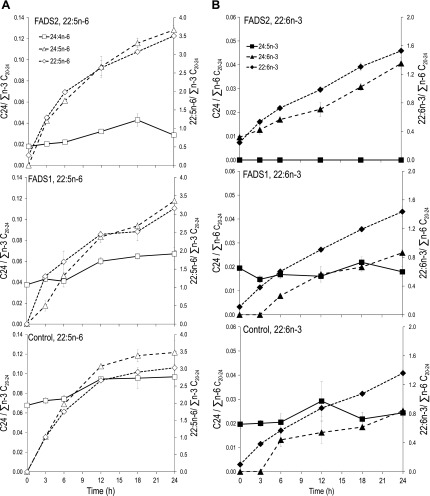
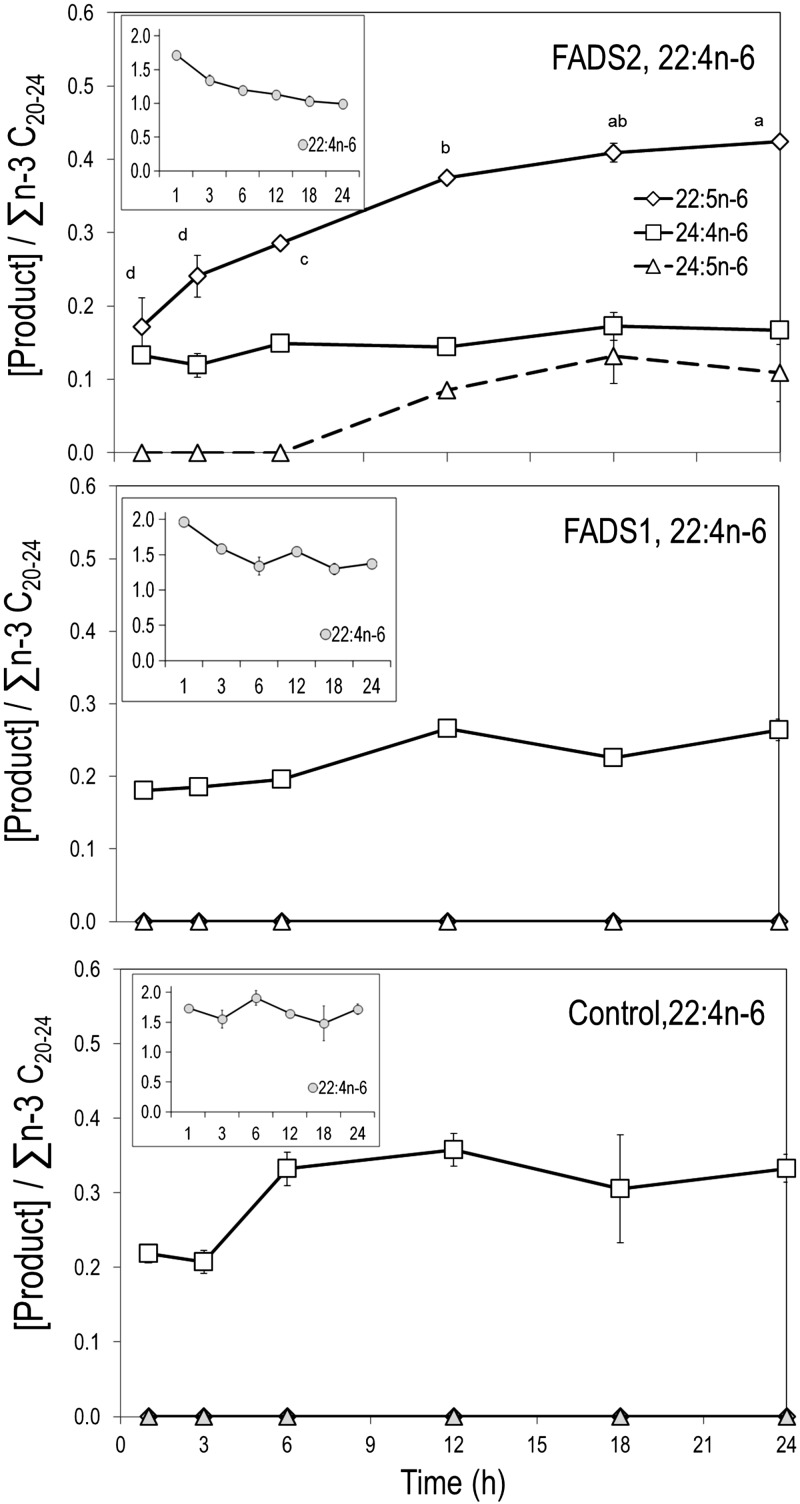
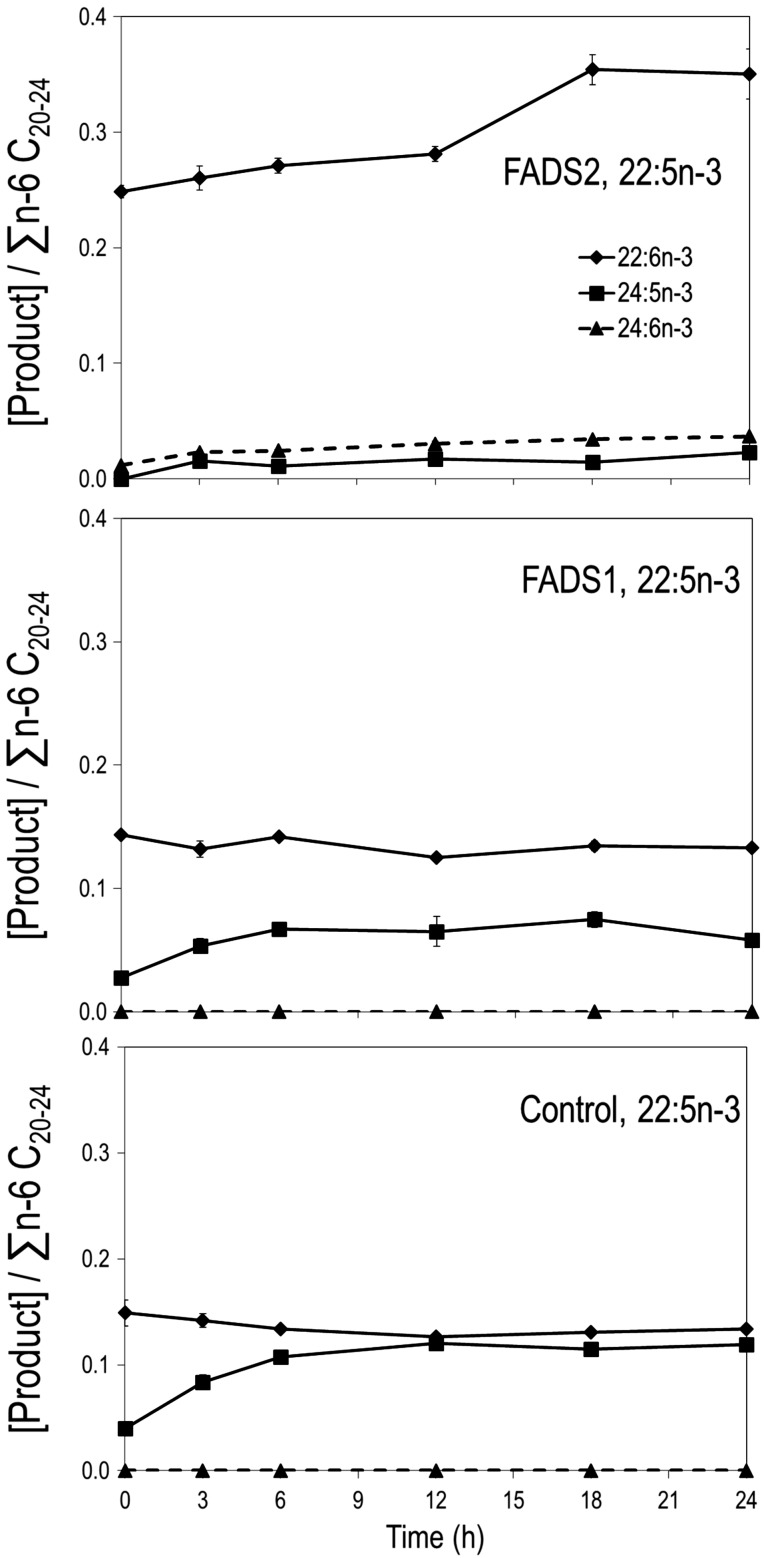
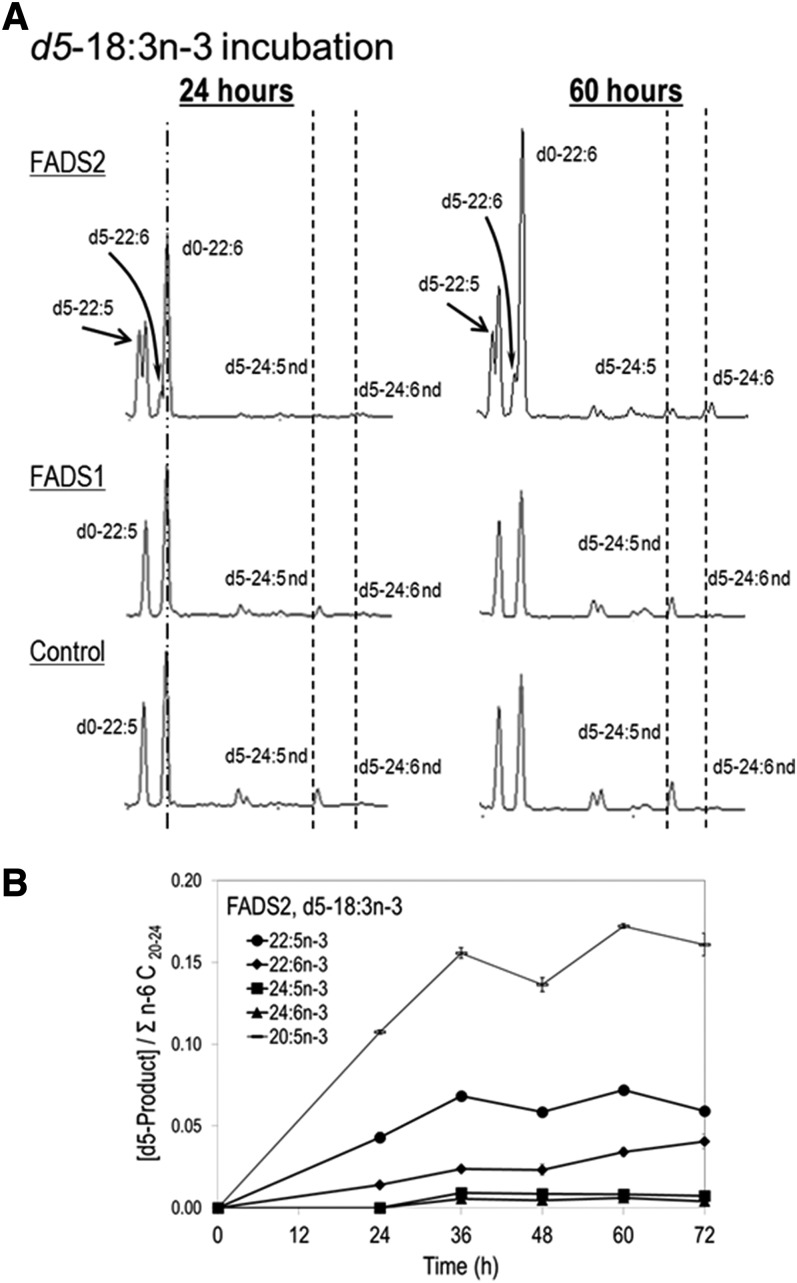
Docosahexaenoic acid (DHA) is a Δ4-desaturated C22 fatty acid and the limiting highly unsaturated fatty acid (HUFA) in neural tissue. The biosynthesis of Δ4-desaturated docosanoid fatty acids 22:6n-3 and 22:5n-6 are believed to proceed via a circuitous biochemical pathway requiring repeated use of a fatty acid desaturase 2 (FADS2) protein to perform Δ6 desaturation on C24 fatty acids in the endoplasmic reticulum followed by 1 round of β-oxidation in the peroxisomes. We demonstrate here that the FADS2 gene product can directly Δ4-desaturate 22:5n-3→22:6n-3 (DHA) and 22:4n-6→22:5n-6. Human MCF-7 cells lacking functional FADS2-mediated Δ6-desaturase were stably transformed with FADS2, FADS1, or empty vector. When incubated with 22:5n-3 or 22:4n-6, FADS2 stable cells produce 22:6n-3 or 22:5n-6, respectively. Similarly, FADS2 stable cells when incubated with d5-18:3n-3 show synthesis of d5-22:6n-3 with no labeling of 24:5n-3 or 24:6n-3 at 24 h. Further, both C24 fatty acids are shown to be products of the respective C22 fatty acids via elongation. Our results demonstrate that the FADS2 classical transcript mediates direct Δ4 desaturation to yield 22:6n-3 and 22:5n-6 in human cells, as has been widely shown previously for desaturation by fish and many other organisms.
Keywords: metabolism; nutrition; polyunsaturated fatty acids; Δ6 desaturation.
© FASEB.
Figures
References
-
- Breckenreidge W. C., Gombos G., Morgan I. G. (1971) The docosahexaenoic acid of the phospholipids of synaptic membranes, vesicles and mitochondria. Brain Res. 33, 581–583 - PubMed
-
- Lapillonne A., Groh-Wargo S., Gonzalez C. H., Uauy R. (2013) Lipid needs of preterm infants: updated recommendations. J. Pediatr. 162(3, Suppl)S37–S47 - PubMed
-
- Brenna J. T. (2002) Efficiency of conversion of alpha-linolenic acid to long chain n-3 fatty acids in man. Curr. Opin. Clin. Nutr. Metab. Care 5, 127–132 - PubMed
Publication types
MeSH terms
Substances
Grants and funding
LinkOut - more resources
Full Text Sources
Other Literature Sources
Molecular Biology Databases
