


Applying the ethoexperimental approach to neurodevelopmental syndrome research reveals exaggerated defensive behavior in Mecp2 mutant mice
- PMID: 26066729
- PMCID: PMC4584164
- DOI: 10.1016/j.physbeh.2015.03.035
Applying the ethoexperimental approach to neurodevelopmental syndrome research reveals exaggerated defensive behavior in Mecp2 mutant mice
Abstract
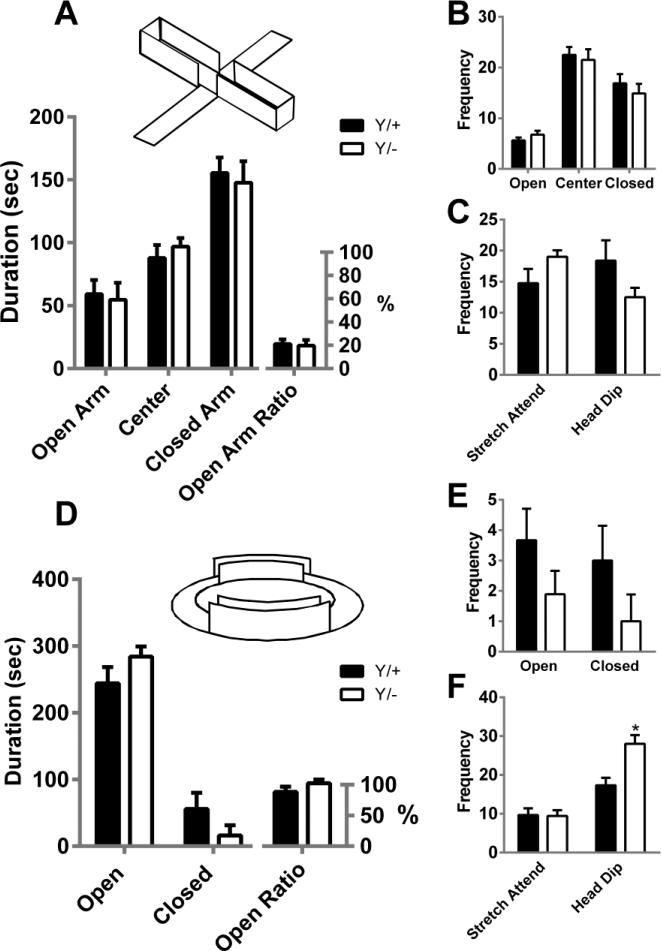
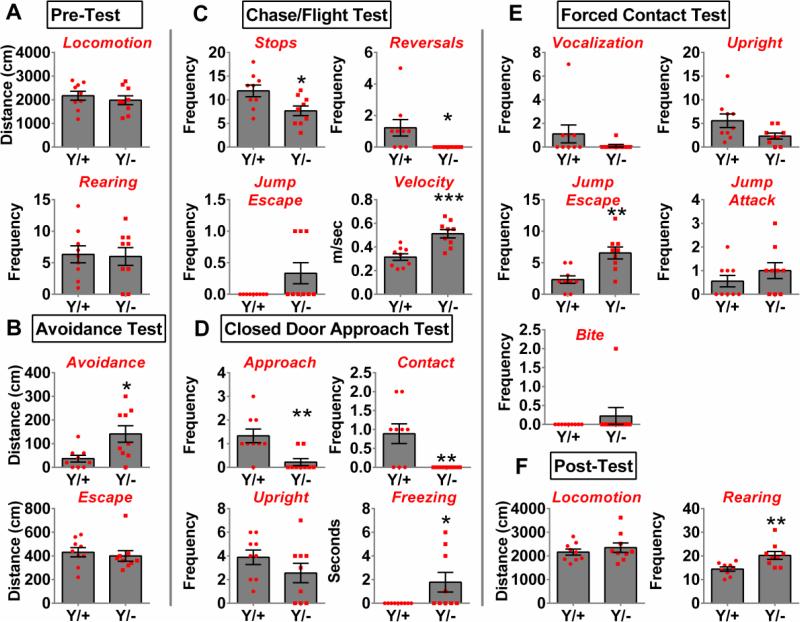
Rett syndrome is a Pervasive Developmental Disorder (PDD) associated with de novo mutations of the methyl CpG-binding protein 2 (MECP2) gene. Mecp2 functions as a transcription factor that regulates the expression of hundreds of genes. Identification of the role of Mecp2 in specific neurodevelopmental symptoms remains an important research aim. We previously demonstrated that male mice possessing a truncation mutation in Mecp2 are hyper-social. We predicted that reduced fear or anxiety might underlie this enhanced affiliation. In order to probe risk assessment and anxiety-like behavior, we compared Mecp2 truncation mutants to their wild-type littermates in the elevated plus maze and elevated zero maze. Additionally, subjects were administered the mouse defense test battery to evaluate unconditioned fear- and panic-like behavior to a graded set of threat scenarios and a predator stimulus. Mutant mice showed no significant changes in anxiety-like behavior. Yet, they displayed hyper-reactive escape and defensive behaviors to an animate predatory threat stimulus. Notably, mutant mice engaged in exaggerated active defense responding to threat stimuli at nearly all phases of the fear battery. These results reveal abnormalities in emotion regulation in Mecp2 mutants particularly in response to ecologically relevant threats. This hyper-responsivity suggests that transcriptional targets of Mecp2 are critical to emotion regulation. Moreover, we suggest that detailed analysis of defensive behavior and aggression with ethologically relevant tasks provides an avenue to interrogate gene-behavior mechanisms of neurodevelopmental and other psychiatric conditions.
Figures
References
-
- Blanchard DC, Blanchard RJ. Ethoexperimental approaches to the biology of emotion. Annu Rev Psychol. 1988;39:43–68. - PubMed
Publication types
MeSH terms
Substances
Grants and funding
LinkOut - more resources
Full Text Sources
Other Literature Sources
Medical
Molecular Biology Databases
