


A critical review of pharmacological significance of Hydrogen Sulfide in hypertension
- PMID: 26069359
- PMCID: PMC4450547
- DOI: 10.4103/0253-7613.157106
A critical review of pharmacological significance of Hydrogen Sulfide in hypertension
Erratum in
-
A critical review of pharmacological significance of Hydrogen Sulfide in hypertension: Erratum.Indian J Pharmacol. 2015 Sep-Oct;47(5):577. doi: 10.4103/0253-7613.165411. Indian J Pharmacol. 2015. PMID: 26600659 Free PMC article. No abstract available.
Abstract
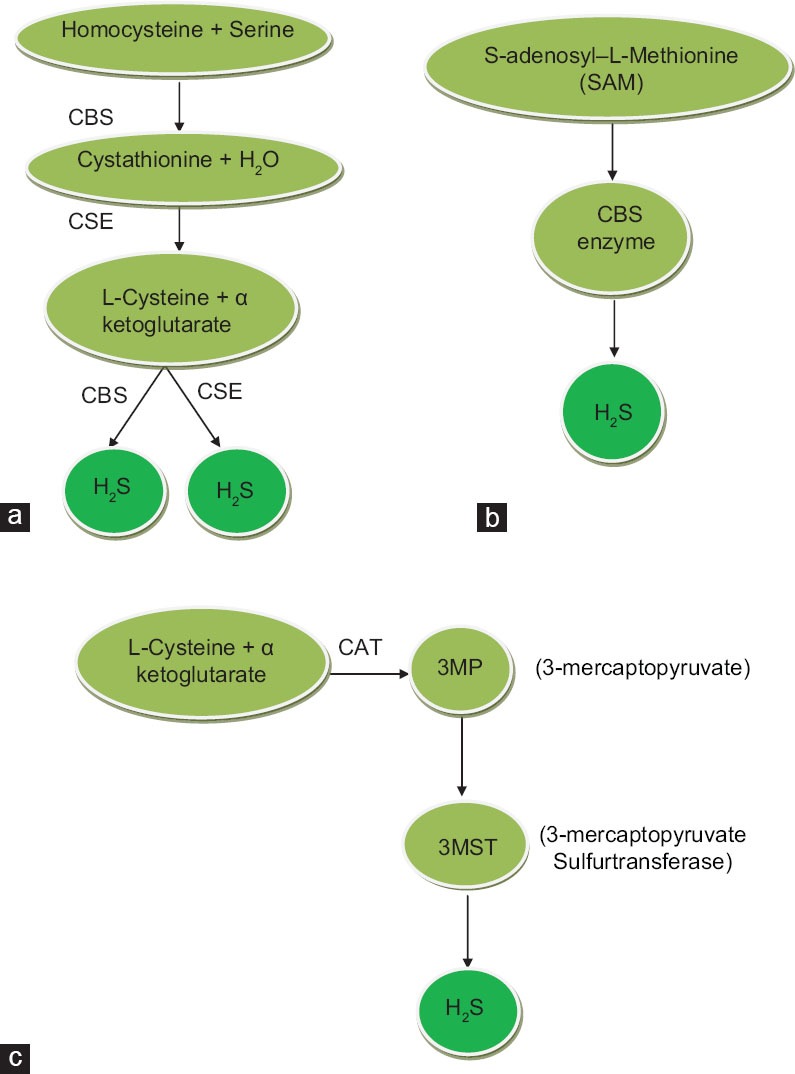
In the family of gas transmitters, hydrogen sulfide (H2S) is yet not adequately researched. Known for its rotten egg smell and adverse effects on the brain, lungs, and kidneys for more than 300 years, the vasorelaxant effects of H2S on blood vessel was first observed in 1997. Since then, research continued to explore the possible therapeutic effects of H2S in hypertension, inflammation, pancreatitis, different types of shock, diabetes, and heart failure. However, a considerable amount of efforts are yet needed to elucidate the mechanisms involved in the therapeutic effects of H2S, such as nitric oxide-dependent or independent vasodilation in hypertension and regression of left ventricular hypertrophy. More than a decade of good repute among researchers, H2S research has certain results that need to be clarified or reevaluated. H2S produces its response by multiple modes of action, such as opening the ATP-sensitive potassium channel, angiotensin-converting enzyme inhibition, and calcium channel blockade. H2S is endogenously produced from two sulfur-containing amino acids L-cysteine and L-methionine by the two enzymes cystathionine γ lyase and cystathionine β synthase. Recently, the third enzyme, 3-mercaptopyruvate sulfur transferase, along with cysteine aminotransferase, which is similar to aspartate aminotransferase, has been found to produce H2S in the brain. The H2S has interested researchers, and a great deal of information is being generated every year. This review aims to provide an update on the developments in the research of H2S in hypertension amid the ambiguity in defining the exact role of H2S in hypertension because of insufficient number of research results on this area. This critical review on the role of H2S in hypertension will clarify the gray areas and highlight its future prospects.
Keywords: 3-3-mercaptopyruvate sulfur transferase; cystathionine β synthase; cystathionine γ lyase; cysteine aminotransferase; hydrogen sulfide; hypertension.
Conflict of interest statement
Figures






References
-
- Hydrogen sulfide. Baltimore, MD: University Park Press; 1979. US National Research Council, Subcommittee on Hydrogen Sulfide, Division of Medical Sciences.
-
- Beauchamp RO, Jr, Bus JS, Popp JA, Boreiko CJ, Andjelkovich DA. A critical review of the literature on hydrogen sulfide toxicity. Crit Rev Toxicol. 1984;13:25–97. - PubMed
-
- Guidotti TL. Hydrogen sulphide. Occup Med (Lond) 1996;46:367–71. - PubMed
-
- Warenycia MW, Goodwin LR, Benishin CG, Reiffenstein RJ, Francom DM, Taylor JD, et al. Acute hydrogen sulfide poisoning. Demonstration of selective uptake of sulfide by the brainstem by measurement of brain sulfide levels. Biochem Pharmacol. 1989;38:973–81. - PubMed
Publication types
MeSH terms
Substances
LinkOut - more resources
Full Text Sources
Other Literature Sources
Medical
