


Recent progress in the genetics of diabetic microvascular complications
- PMID: 26069720
- PMCID: PMC4458500
- DOI: 10.4239/wjd.v6.i5.715
Recent progress in the genetics of diabetic microvascular complications
Abstract
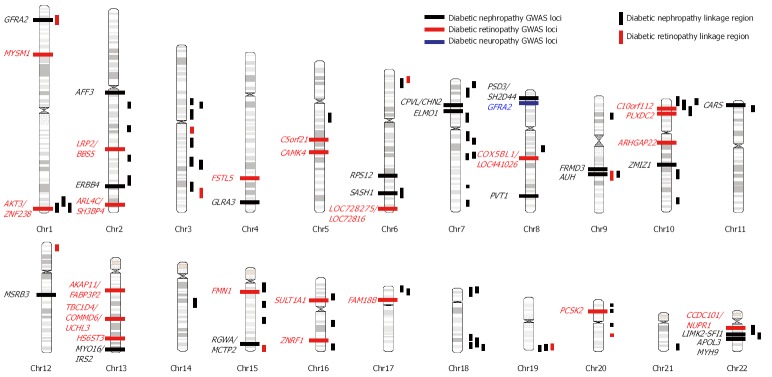
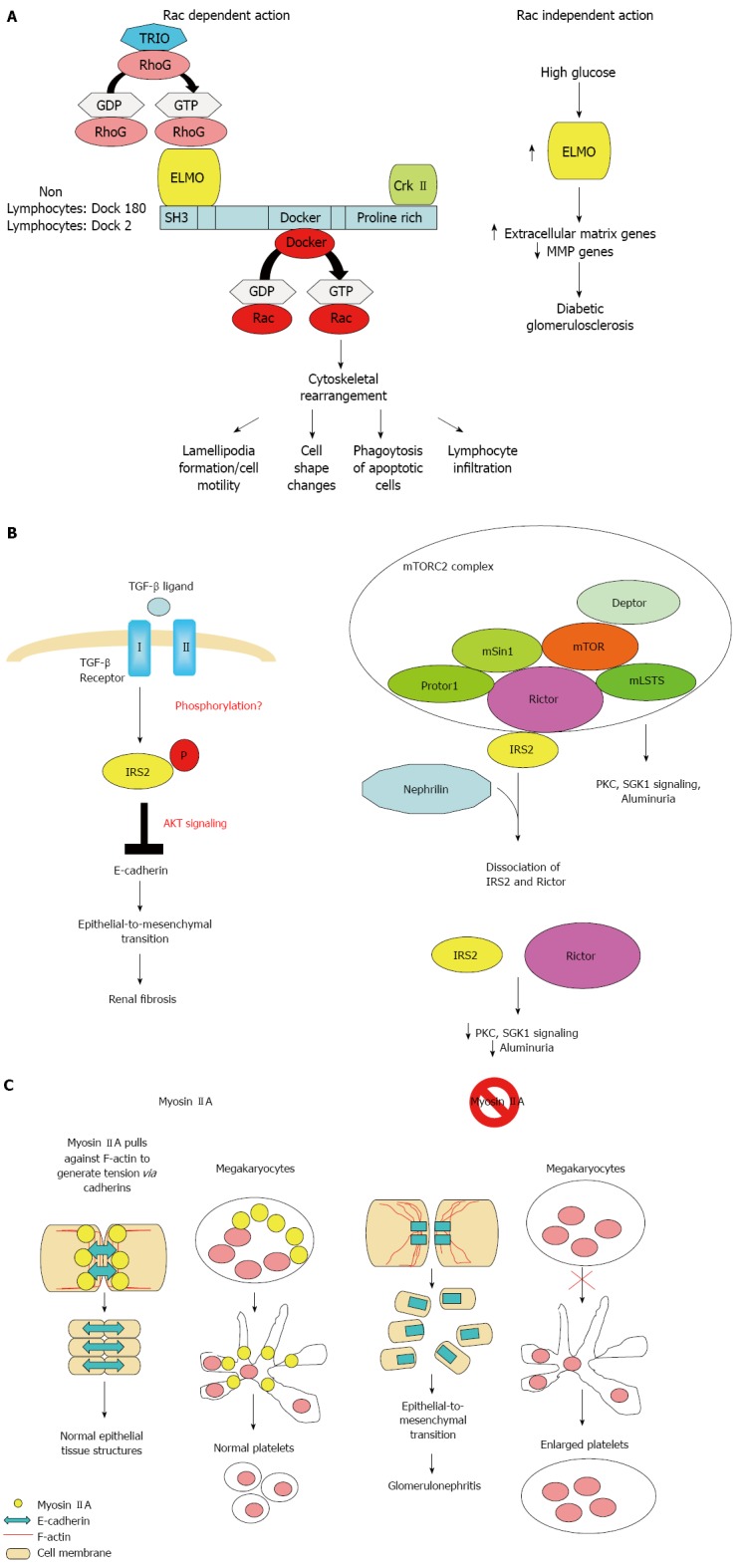
Diabetic complications including diabetic nephropathy, retinopathy, and neuropathy are as major causes of morbidity and mortality in diabetes individuals worldwide and current therapies are still unsatisfactory. One of the reasons for failure to develop effective treatment is the lack of fundamental understanding for underlying mechanisms. Genetic studies are powerful tools to dissect disease mechanism. The heritability (h (2)) was estimated to be 0.3-0.44 for diabetic nephropathy and 0.25-0.50 for diabetic retinopathy respectively. Previous linkage studies for diabetic nephropathy have identified overlapped linkage regions in 1q43-44, 3q21-23, 3q26, 10p12-15, 18q22-23, 19q13, 22q11-12.3 in multiple ethnic groups. Genome-wide association studies (GWAS) of diabetic nephropathy have been conducted in several populations. However, most of the identified risk loci could not be replicated by independent studies with a few exceptions including those in ELMO1, FRMD3, CARS, MYO16/IRS2, and APOL3-MYH9 genes. Functional studies of these genes revealed the involvement of cytoskeleton reorganization (especially non-muscle type myosin), phagocytosis of apoptotic cells, fibroblast migration, insulin signaling, and epithelial clonal expansion in the pathogenesis of diabetic nephropathy. Linkage analyses of diabetic retinopathy overlapped only in 1q36 region and current results from GWAS for diabetic retinopathy are inconsistent. Conclusive results from genetic studies for diabetic neuropathy are lacking. For now, small sample sizes, confounding by population stratification, different phenotype definitions between studies, ethnic-specific associations, the influence of environmental factors, and the possible contribution of rare variants may explain the inconsistencies between studies.
Keywords: Diabetes; Microvascular complications; Nephropathy; Neuropathy; Retionopathy.
Figures
References
-
- Wild S, Roglic G, Green A, Sicree R, King H. Global prevalence of diabetes: estimates for the year 2000 and projections for 2030. Diabetes Care. 2004;27:1047–1053. - PubMed
-
- Brownlee M. The pathobiology of diabetic complications: a unifying mechanism. Diabetes. 2005;54:1615–1625. - PubMed
-
- Gosmanov AR, Wall BM, Gosmanova EO. Diagnosis and treatment of diabetic kidney disease. Am J Med Sci. 2014;347:406–413. - PubMed
-
- Spallone V, Lacerenza M, Rossi A, Sicuteri R, Marchettini P. Painful diabetic polyneuropathy: approach to diagnosis and management. Clin J Pain. 2012;28:726–743. - PubMed
Publication types
LinkOut - more resources
Full Text Sources
Other Literature Sources
Miscellaneous
