


Interaction between parental psychosis and early motor development and the risk of schizophrenia in a general population birth cohort
- PMID: 26070841
- PMCID: PMC4623356
- DOI: 10.1016/j.eurpsy.2015.04.006
Interaction between parental psychosis and early motor development and the risk of schizophrenia in a general population birth cohort
Abstract
Background: Delayed motor development in infancy and family history of psychosis are both associated with increased risk of schizophrenia, but their interaction is largely unstudied.
Aim: To investigate the association of the age of achieving motor milestones and parental psychosis and their interaction in respect to risk of schizophrenia.
Methods: We used data from the general population-based prospective Northern Finland Birth Cohort 1966 (n=10,283). Developmental information of the cohort members was gathered during regular visits to Finnish child welfare clinics. Several registers were used to determine the diagnosis of schizophrenia among the cohort members and psychosis among the parents. Altogether 152 (1.5%) individuals had schizophrenia by the age of 46 years, with 23 (15.1%) of them having a parent with psychosis. Cox regression analysis was used in analyses.
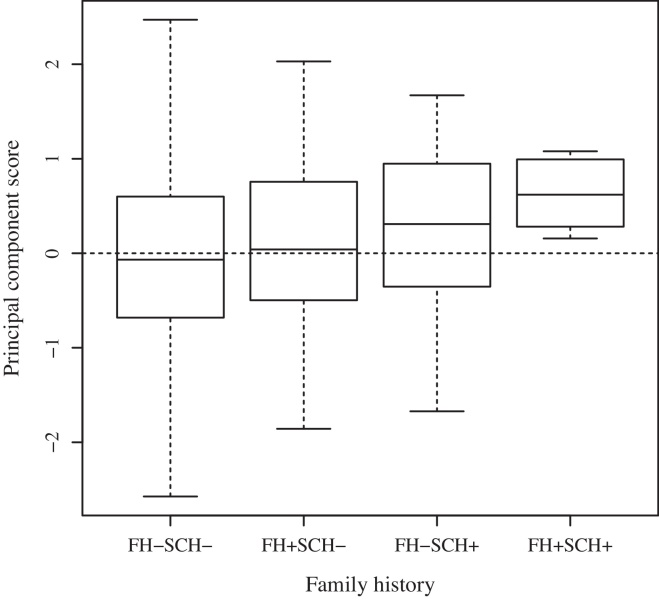
Results: Parental psychosis was associated (P<0.05) with later achievement of holding the head up, grabbing an object, and walking without support. In the parental psychosis group, the risk for schizophrenia was increased if holding the head up (hazard ratio [HR]: 2.46; degrees of freedom [df]=1; 95% confidence interval [95% CI]: 1.07-5.66) and touching the thumb with the index finger (HR: 1.84; df=1; 95% CI: 1.11-3.06) was later. In the group without parental psychosis, a delay in the following milestones increased the risk of schizophrenia: standing without support and walking without support. Parental psychosis had an interaction with delayed touching thumb with index finger (HR: 1.87; df=1; 95% CI: 1.08-3.25) when risk of schizophrenia was investigated.
Conclusions: Parental psychosis was associated with achieving motor milestones later in infancy, particularly the milestones that appear early in a child's life. Parental psychosis and touching the thumb with the index finger had a significant interaction on risk of schizophrenia. Genetic risk for psychosis may interact with delayed development to raise future risk of schizophrenia, or delayed development may be a marker of other risk processes that interact with genetic liability to cause later schizophrenia.
Keywords: Birth cohort; Motor developmental milestone; Parental psychosis; Risk factor; Schizophrenia.
Copyright © 2015 Elsevier Masson SAS. All rights reserved.
Figures
References
-
- Cardno A., Marshall E., Coid B., Macdonald A., Ribchester T., Davies N. Heritability estimates for psychotic disorders. The Maudsley twin psychosis series. Arch Gen Psychiatry. 1999;56(2):162–168. - PubMed
-
- Cioni G., Sgandurra G. Normal psychomotor development. In: Dulac O., Lassonde M., Sarnat H.B., editors. Handbook of clinical neurology. Vol. III (3rd series), Pediatric neurology part I. 2013.
-
- Clarke M., Tanskanen A., Huttunen M., Leon D., Murray R., Jones P. Increased risk of schizophrenia from additive interaction between infant motor developmental delay and obstetric complications: evidence from a population-based longitudinal study. Am J Psychiatry. 2011;168(12):1295–1302. - PubMed
-
- Dubois J., Dehaene-Lambertz G., Kulikova S., Poupon C., Hüppi P.S., Hertz-Pannier L. The early development of brain white matter: a review of imaging studies in fetuses, newborns and infants. Neuroscience. 2014;276:48–71. - PubMed
Publication types
MeSH terms
Grants and funding
LinkOut - more resources
Full Text Sources
Other Literature Sources
Medical
Miscellaneous
