


The glucagon-like peptide 1 (GLP-1) receptor agonist exendin-4 reduces cocaine self-administration in mice
- PMID: 26072178
- PMCID: PMC4668599
- DOI: 10.1016/j.physbeh.2015.06.013
The glucagon-like peptide 1 (GLP-1) receptor agonist exendin-4 reduces cocaine self-administration in mice
Abstract
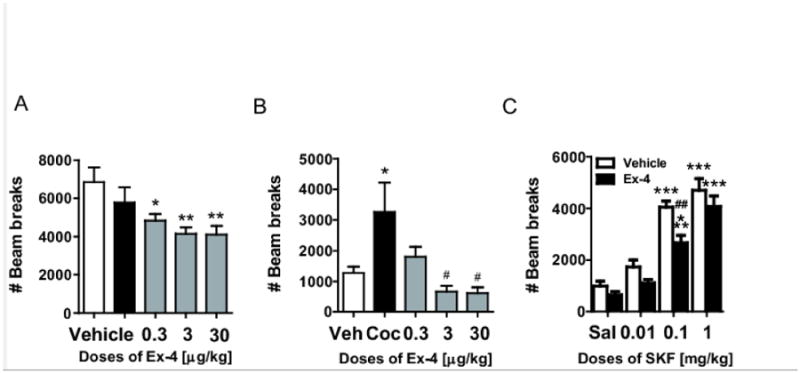
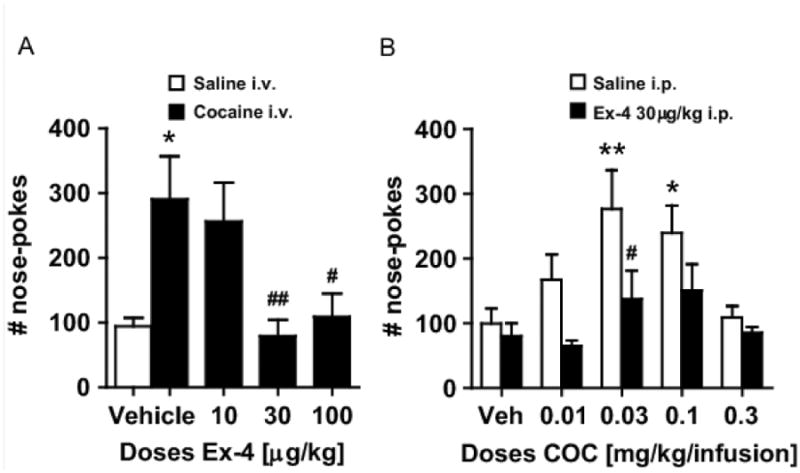
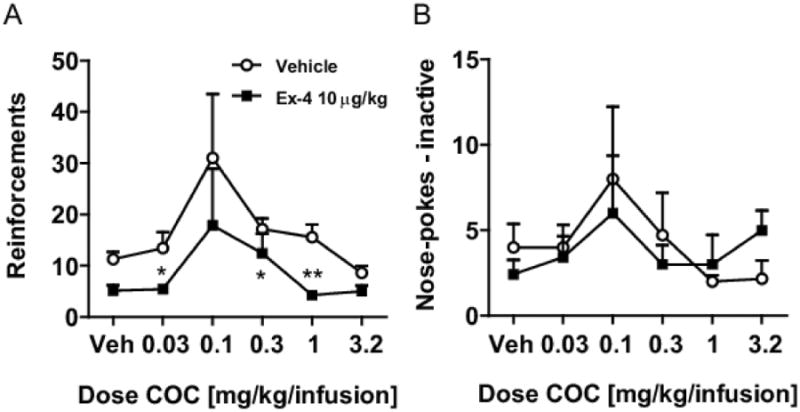
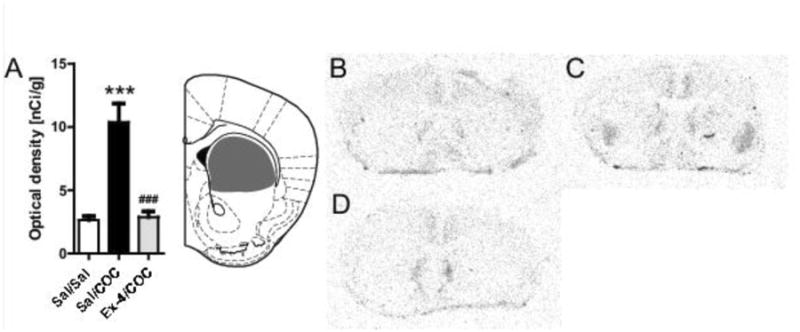
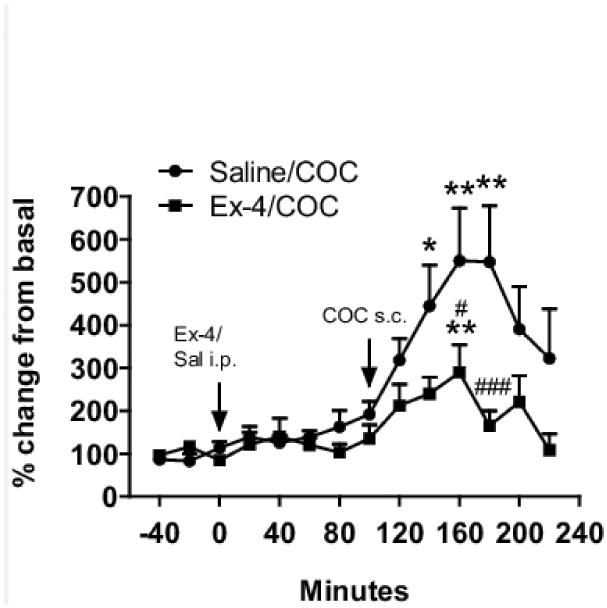
Glucagon-like peptide 1 (GLP-1) analogues are used for the treatment of type 2 diabetes. The ability of the GLP-1 system to decrease food intake in rodents has been well described and parallels results from clinical trials. GLP-1 receptors are expressed in the brain, including within the ventral tegmental area (VTA) and the nucleus accumbens (NAc). Dopaminergic neurons in the VTA project to the NAc, and these neurons play a pivotal role in the rewarding effects of drugs of abuse. Based on the anatomical distribution of GLP-1 receptors in the brain and the well-established effects of GLP-1 on food reward, we decided to investigate the effect of the GLP-1 analogue exendin-4 on cocaine- and dopamine D1-receptor agonist-induced hyperlocomotion, on acute and chronic cocaine self-administration, on cocaine-induced striatal dopamine release in mice and on cocaine-induced c-fos activation. Here, we report that GLP-1 receptor stimulation reduces acute and chronic cocaine self-administration and attenuates cocaine-induced hyperlocomotion. In addition, we show that peripheral administration of exendin-4 reduces cocaine-induced elevation of striatal dopamine levels and striatal c-fos expression implicating central GLP-1 receptors in these responses. The present results demonstrate that the GLP-1 system modulates cocaine's effects on behavior and dopamine homeostasis, indicating that the GLP-1 receptor may be a novel target for the pharmacological treatment of drug addiction.
Keywords: Addiction; Cocaine; Dopamine; Exendin-4; GLP-1; Self-administration; c-Fos.
Copyright © 2015 Elsevier Inc. All rights reserved.
Figures
References
-
- Koob GF. Drugs of Abuse - Anatomy, Pharmacology and Function of Reward Pathways. Trends Pharmacol Sci. 1992;13:177–84. - PubMed
-
- Koob GF, Sanna PP, Bloom FE. Neuroscience of addiction. Neuron. 1998;21:467–76. - PubMed
-
- Novak U, Wilks A, Buell G, McEwen S. Indetical mRNA for preproglucagon in pancreas and gut. Eur J Biochem. 1987;164:553–8. - PubMed
-
- Orskov C, Wettergren A, Holst JJ. Secretion of the incretin hormones glucagon-like peptide-1 and gastric inhibitory polypeptide correlates with insulin secretion in normal man throughout the day. Scand J Gastroenterol. 1996;31:665–70. - PubMed
-
- Göke R, Larsen PJ, Mikkelsen JD, Sheikh SP. Distribution of GLP-1 binding sites in the rat brain: Evidence that Exendin-4 is a ligand of brain GLP-1 binding sites. Eur J Neurosci. 1995;7:2294–300. - PubMed
Publication types
MeSH terms
Substances
Grants and funding
LinkOut - more resources
Full Text Sources
Other Literature Sources
Medical
