


Effects of disinfection on the molecular detection of porcine epidemic diarrhea virus
- PMID: 26072369
- PMCID: PMC7127254
- DOI: 10.1016/j.vetmic.2015.05.027
Effects of disinfection on the molecular detection of porcine epidemic diarrhea virus
Abstract
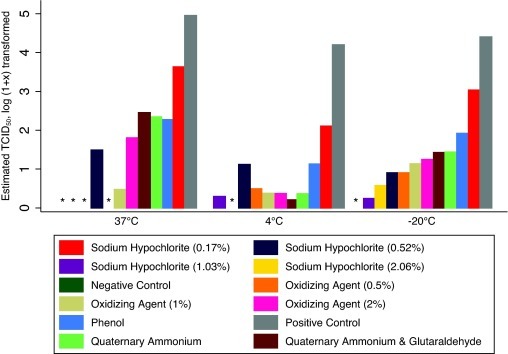
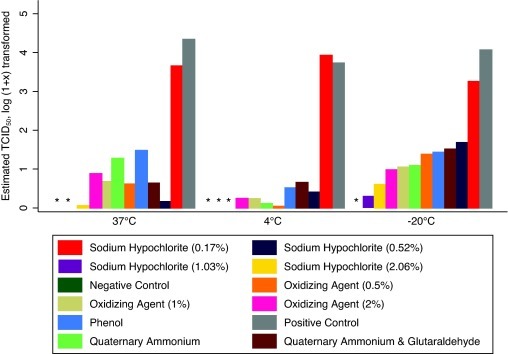
Routine detection of porcine epidemic diarrhea virus (PEDV) is currently limited to RT-PCR but this test cannot distinguish between viable and inactivated virus. We evaluated the capability of disinfectants to both inactivate PEDV and sufficiently damage viral RNA beyond RT-PCR detection. Five classes of disinfectants (phenol, quaternary ammonium compound, sodium hypochlorite, oxidizing agent, and quaternary ammonium/glutaraldehyde combination) were evaluated in vitro at varying concentrations, both in the presence and absence of swine feces, and at three different temperatures. No infectious PEDV was recovered after treatment with evaluated disinfectants. Additionally, all tested disinfectants except for 0.17% sodium hypochlorite dramatically reduced qRT-PCR values. However, no disinfectants eliminated RT-PCR detection of PEDV across all replicates; although, 0.52%, 1.03% and 2.06% solutions of sodium hypochlorite and 0.5% oxidizing agent did intermittently produce RT-PCR negatives. To simulate field conditions in a second aim, PEDV was applied to pitted aluminum coupons, which were then treated with either 2.06% sodium hypochlorite or 0.5% oxidizing agent. Post-treatment surface swabs of the coupons tested RT-PCR positive but were not infectious to cultured cells or naïve pigs. Ultimately, viable PEDV was not detected following application of each of the tested disinfectants, however in most cases RT-PCR detection of viral RNA remained. RT-PCR detection of PEDV is likely even after disinfection with many commercially available disinfectants.
Keywords: Biosecurity; Bleach; Infection control; Porcine epidemic diarrhea virus; Reverse transcriptase polymerase chain reaction; Sodium hypochlorite; Swine; Virus inactivation.
Copyright © 2015 Elsevier B.V. All rights reserved.
Figures
References
-
- Babb J.R., Bradley C.R., Ayliffe G.A.J. Sporicidal activity of glutaraldehydes and hypochlorites and other factors influencing their selection for the treatment of medical equipment. J. Hosp. Infect. 1980;1:63–75. - PubMed
-
- Charrel R.N., de Chesse R., Decaudin A., De Micco P., de Lamballerie X. Evaluation of disinfectant efficacy against hepatitis C virus using a RT-PCR-based method. J. Hosp. Infect. 2001;49:129–134. - PubMed
-
- Chen Q., Li G., Stasko J., Thomas J.T., Stensland W.R., Pillatzki A.E., Gauger P.C., Schwartz K.J., Madson D., Yoon K.J., Stevenson G.W., Burrough E.R., Harmon K.M., Main R.G., Zhang J. Isolation and characterization of porcine epidemic diarrhea viruses associated with the 2013 disease outbreak in US swine. J. Clin. Microbiol. 2013 - PMC - PubMed
-
- Cima G. Fighting a deadly pig disease. J. Am. Vet. Med. Assoc. 2013;243:467–470. - PubMed
-
- Cima G. Viral disease affects U.S. pigs: porcine epidemic diarrhea found in at least 11 states. J. Am. Vet. Med. Assoc. 2013;243:30–31. - PubMed
Publication types
MeSH terms
Substances
LinkOut - more resources
Full Text Sources
Other Literature Sources
Medical
