


Protein lipoxidation: Detection strategies and challenges
- PMID: 26072467
- PMCID: PMC4477048
- DOI: 10.1016/j.redox.2015.05.003
Protein lipoxidation: Detection strategies and challenges
Abstract
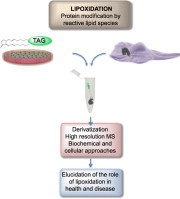
Enzymatic and non-enzymatic lipid metabolism can give rise to reactive species that may covalently modify cellular or plasma proteins through a process known as lipoxidation. Under basal conditions, protein lipoxidation can contribute to normal cell homeostasis and participate in signaling or adaptive mechanisms, as exemplified by lipoxidation of Ras proteins or of the cytoskeletal protein vimentin, both of which behave as sensors of electrophilic species. Nevertheless, increased lipoxidation under pathological conditions may lead to deleterious effects on protein structure or aggregation. This can result in impaired degradation and accumulation of abnormally folded proteins contributing to pathophysiology, as may occur in neurodegenerative diseases. Identification of the protein targets of lipoxidation and its functional consequences under pathophysiological situations can unveil the modification patterns associated with the various outcomes, as well as preventive strategies or potential therapeutic targets. Given the wide structural variability of lipid moieties involved in lipoxidation, highly sensitive and specific methods for its detection are required. Derivatization of reactive carbonyl species is instrumental in the detection of adducts retaining carbonyl groups. In addition, use of tagged derivatives of electrophilic lipids enables enrichment of lipoxidized proteins or peptides. Ultimate confirmation of lipoxidation requires high resolution mass spectrometry approaches to unequivocally identify the adduct and the targeted residue. Moreover, rigorous validation of the targets identified and assessment of the functional consequences of these modifications are essential. Here we present an update on methods to approach the complex field of lipoxidation along with validation strategies and functional assays illustrated with well-studied lipoxidation targets.
Keywords: Cyclopentenone prostaglandins; Electrophilic lipids; Mass spectrometry; Reactive carbonyl species; Target validation; Vimentin cysteine lipoxidation.
Copyright © 2015. Published by Elsevier B.V.
Figures
References
-
- Vasil’ev Y.V., Tzeng S.C., Huang L., Maier C.S. Protein modifications by electrophilic lipoxidation products: adduct formation, chemical strategies and tandem mass spectrometry for their detection and identification. Mass Spectrometry Reviews. 2014;33(3):157–182. doi: 10.1002/mas.21389. 24818247 - DOI - PMC - PubMed
Publication types
MeSH terms
Substances
LinkOut - more resources
Full Text Sources
Other Literature Sources
