


Natural killer cell dysfunction in hepatocellular carcinoma and NK cell-based immunotherapy
- PMID: 26073325
- PMCID: PMC4648180
- DOI: 10.1038/aps.2015.41
Natural killer cell dysfunction in hepatocellular carcinoma and NK cell-based immunotherapy
Abstract
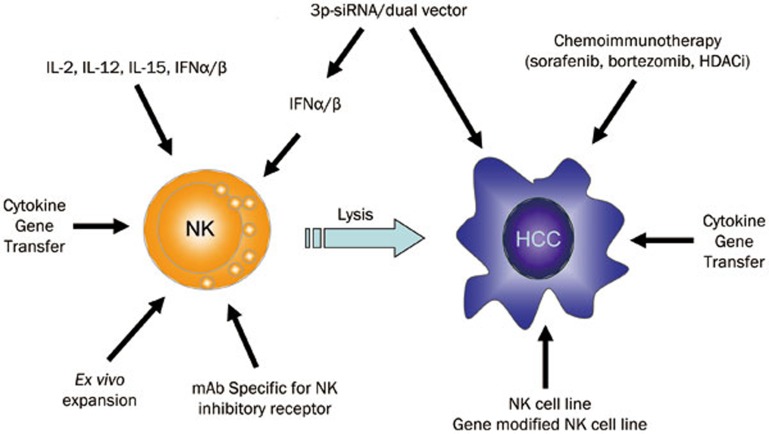
The mechanisms linking hepatitis B virus (HBV) and hepatitis C virus (HCV) infection to hepatocellular carcinoma (HCC) remain largely unknown. Natural killer (NK) cells account for 25%-50% of the total number of liver lymphocytes, suggesting that NK cells play an important role in liver immunity. The number of NK cells in the blood and tumor tissues of HCC patients is positively correlated with their survival and prognosis. Furthermore, a group of NK cell-associated genes in HCC tissues is positively associated with the prolonged survival. These facts suggest that NK cells and HCC progression are strongly associated. In this review, we describe the abnormal NK cells and their functional impairment in patients with chronic HBV and HCV infection, which contribute to the progression of HCC. Then, we summarize the association of NK cells with HCC based on the abnormalities in the numbers and phenotypes of blood and liver NK cells in HCC patients. In particular, the exhaustion of NK cells that represents lower cytotoxicity and impaired cytokine production may serve as a predictor for the occurrence of HCC. Finally, we present the current achievements in NK cell immunotherapy conducted in mouse models of liver cancer and in clinical trials, highlighting how chemoimmunotherapy, NK cell transfer, gene therapy, cytokine therapy and mAb therapy improve NK cell function in HCC treatment. It is conceivable that NK cell-based anti-HCC therapeutic strategies alone or in combination with other therapies will be great promise for HCC treatment.
Figures
References
-
- El-Serag HB. Hepatocellular carcinoma. N Engl J Med 2011; 365: 1118–27. - PubMed
-
- El-Serag HB, Rudolph KL. Hepatocellular carcinoma: epidemiology and molecular carcinogenesis. Gastroenterology 2007; 132: 2557–76. - PubMed
-
- Ferenci P, Fried M, Labrecque D, Bruix J, Sherman M, Omata M, et al. Hepatocellular carcinoma (HCC): a global perspective. J Clin Gastroenterol 2010; 44: 239–45. - PubMed
-
- Gao B, Jeong WI, Tian Z. Liver: an organ with predominant innate immunity. Hepatology 2008; 47: 729–36. - PubMed
Publication types
MeSH terms
LinkOut - more resources
Full Text Sources
Other Literature Sources
Medical
