


The Epidemiology of Sarcopenia
- PMID: 26073423
- PMCID: PMC4629409
- DOI: 10.1016/j.jocd.2015.04.012
The Epidemiology of Sarcopenia
Abstract
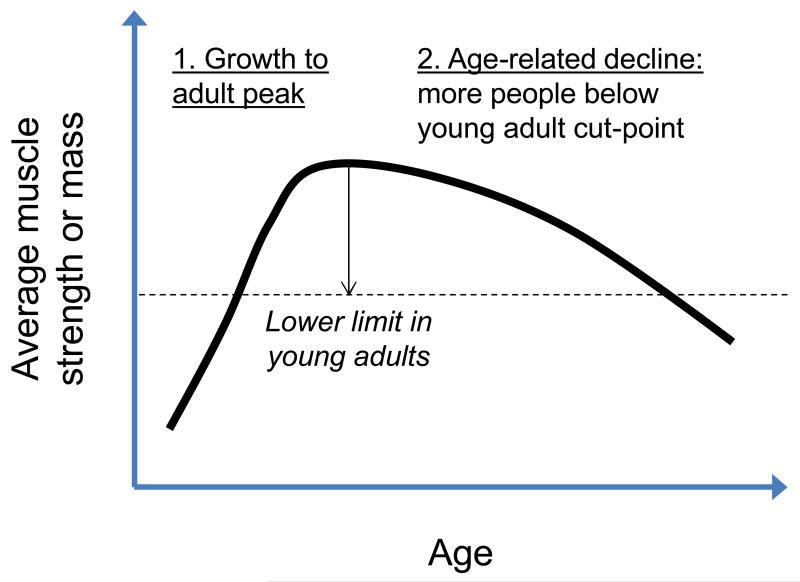
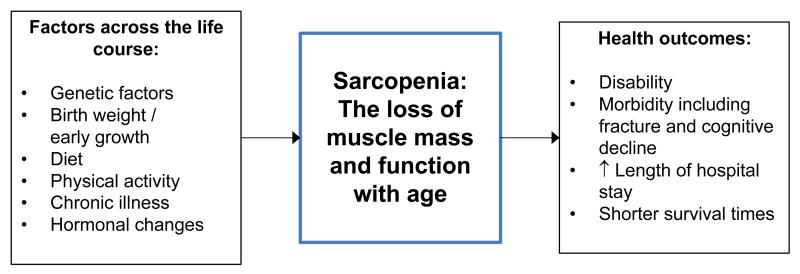
The aim of this review is to describe the epidemiology of sarcopenia, specifically prevalence, health outcomes, and factors across the life course that have been linked to its development. Sarcopenia definitions involve a range of measures (muscle mass, strength, and physical performance), which tend to decline with age, and hence sarcopenia becomes increasingly prevalent with age. Less is known about prevalence in older people in hospital and care homes, although it is likely to be higher than in community settings. The range of measures used, and the cutpoints suggested for each, presents a challenge for comparing prevalence estimates between studies. The importance of sarcopenia is highlighted by the range of adverse health outcomes that strength and physical performance (and to a lesser extent, muscle mass) have been linked to. This is shown most strikingly by the finding of increased all-cause mortality rates among those with weaker grip strength and slower gait speed. A life course approach broadens the window for our understanding of the etiology of sarcopenia and hence the potential intervention. An example is physical activity, with increased levels across midadulthood appearing to increase muscle mass and strength in early old age. Epidemiologic studies will continue to make an important contribution to our understanding of sarcopenia and possible avenues for intervention and prevention.
Keywords: Epidemiology; Muscle strength; Physical performance; Sarcopenia.
Copyright © 2015 The International Society for Clinical Densitometry. Published by Elsevier Inc. All rights reserved.
Figures
References
Publication types
MeSH terms
Grants and funding
LinkOut - more resources
Full Text Sources
Other Literature Sources
