


FUNCTIONAL MOVEMENT SCREEN NORMATIVE VALUES AND VALIDITY IN HIGH SCHOOL ATHLETES: CAN THE FMS™ BE USED AS A PREDICTOR OF INJURY?
- PMID: 26075145
- PMCID: PMC4458917
FUNCTIONAL MOVEMENT SCREEN NORMATIVE VALUES AND VALIDITY IN HIGH SCHOOL ATHLETES: CAN THE FMS™ BE USED AS A PREDICTOR OF INJURY?
Abstract
Background: Limited information exists regarding injury risk factors for high school athletes. The Functional Movement Screen (FMS™) has been used to identify functional movement impairments and asymmetries, making it a potential predictor of injury.
Hypothesis/purpose: To determine if the FMS™ is a valid predictor of injury in high school athletes and to identify a potential new FMS™ cutoff score for this population.
Study design: Prospective Cohort.
Methods: 167 high school athletes among several sports were scored using the FMS™ and were monitored for injury during a single season. Likelihood ratios were calculated to determine how much a subject's total FMS™ score influenced the post-test probability of becoming injured.
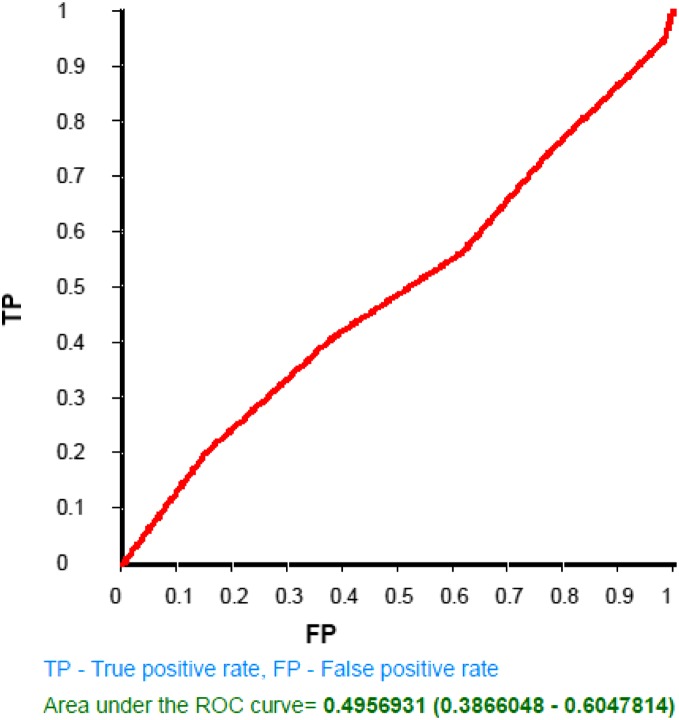
Results: Of the 167 participants, 39 sustained a musculoskeletal injury. Of all component scores, the in-line lunge scores were significantly higher for injured players. For shoulder mobility, scores were significantly lower for injured players. No statistically significant associations were found between total FMS™ scores and injury status.
Conclusion: The FMS™ may be useful for recognizing deficiency in certain movements, however this data suggests that the FMS™ should not be used for overall prediction of injury in high school athletes throughout the course of a season. Normative data from a large sample size is now available in the high school athlete demographic.
Level of evidence: 3.
Keywords: Functional Movement Screen (FMS™); high school athlete; injury risk factors; sports injury.
Figures
References
-
- Comstock RD Collins CL Corlette JD Fletcher EN. National High School Sports‐Related Injury Surveillance Study ‐ 2011‐12 school year. Columbus, OH: Nationwide Children's Hospital; 2012. Available at http://www.nationwidechildrens.org/cirp-rio-study-reports/2011-12HighSch.... Accessed February 27, 2013.
-
- Turbeville SD Cowan LD Owen WL Asal NR Anderson MA. Risk factors for injury in high school football players. Am J Sports Med. 2003; 31(6):974‐980. - PubMed
-
- Knowles SB Marshall SW Bowling MJ, et al. Risk factors for injury among high school football players. Epidemiology. 2009; 20(2):302‐310. - PubMed
-
- Tyler TF McHugh MP Mirabella MR Mullaney MJ Nicholas SJ. Risk factors for noncontact ankle sprains in high school football players: The role of previous ankle sprains and body mass index. Am J Sports Med. 2006; 34(3);471‐475. - PubMed
LinkOut - more resources
Full Text Sources
Research Materials
Miscellaneous