


Cyanobacteria and Cyanotoxins Occurrence and Removal from Five High-Risk Conventional Treatment Drinking Water Plants
- PMID: 26075379
- PMCID: PMC4488698
- DOI: 10.3390/toxins7062198
Cyanobacteria and Cyanotoxins Occurrence and Removal from Five High-Risk Conventional Treatment Drinking Water Plants
Abstract
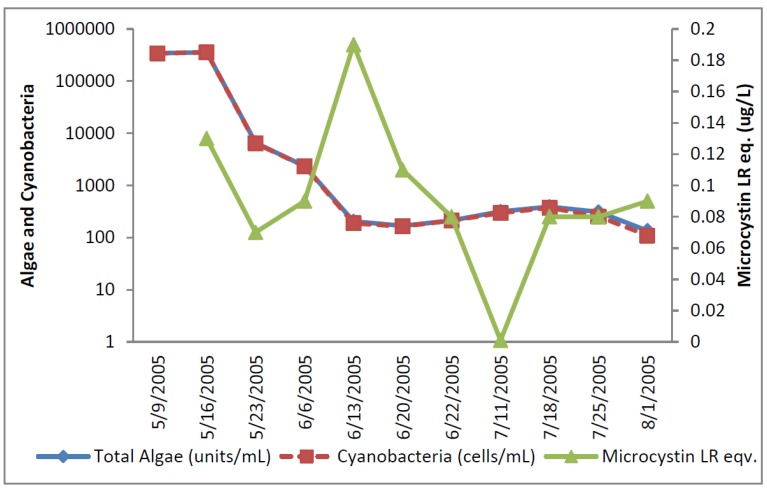
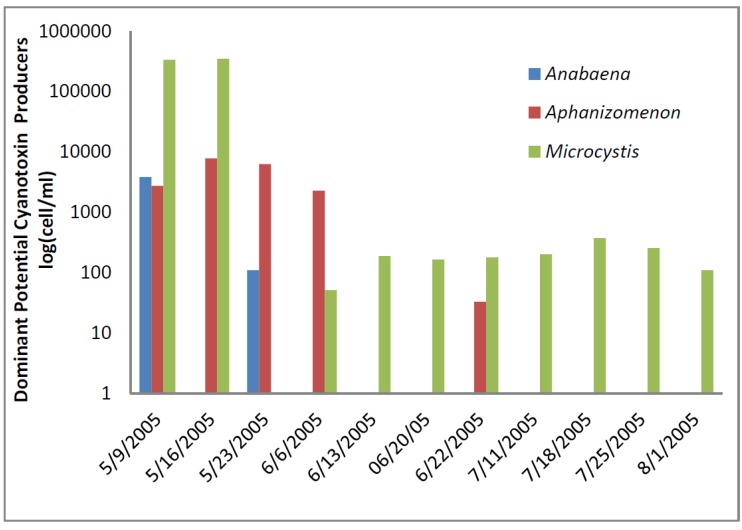
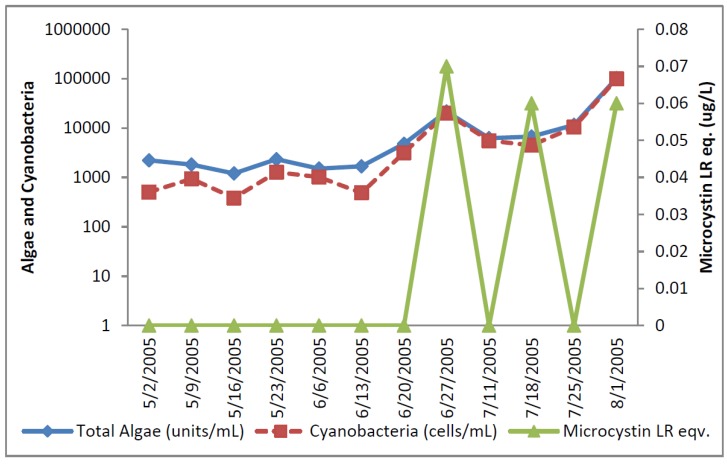
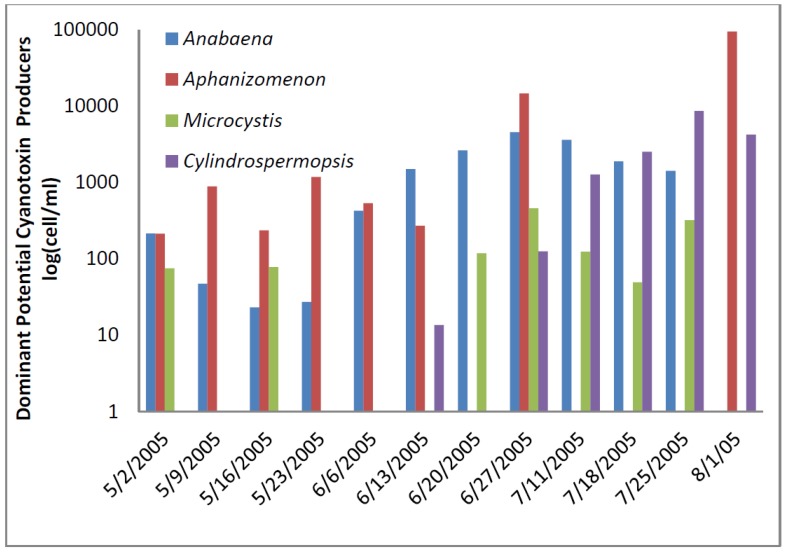
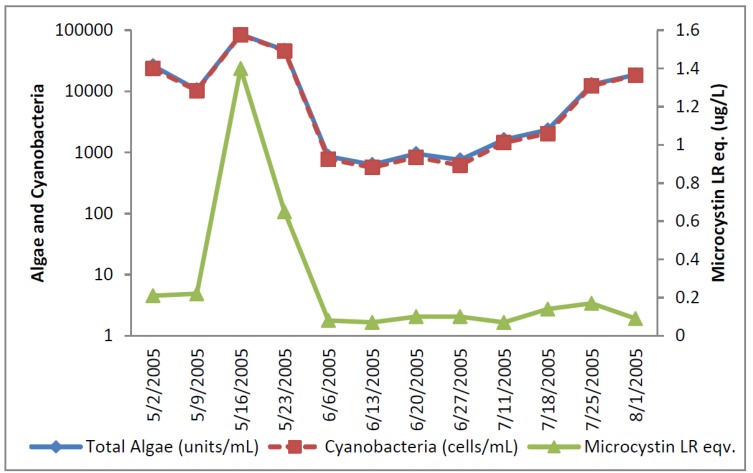
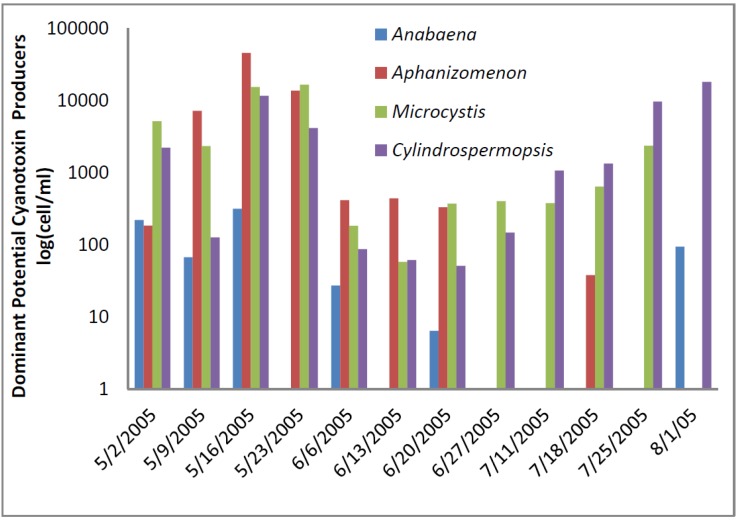
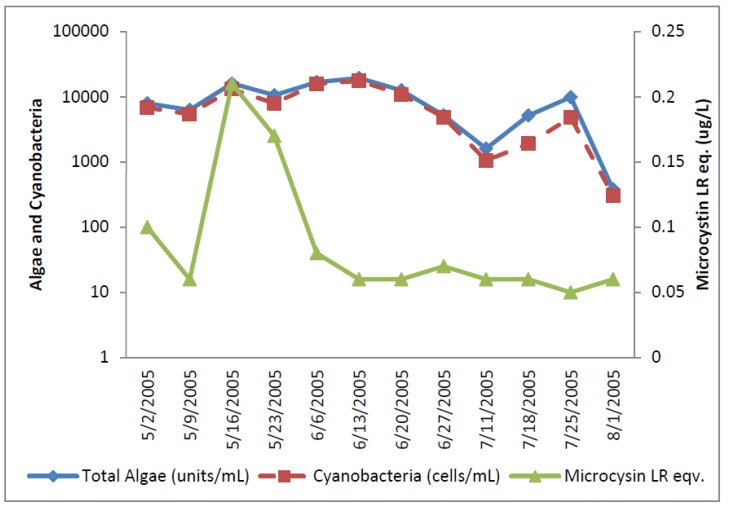
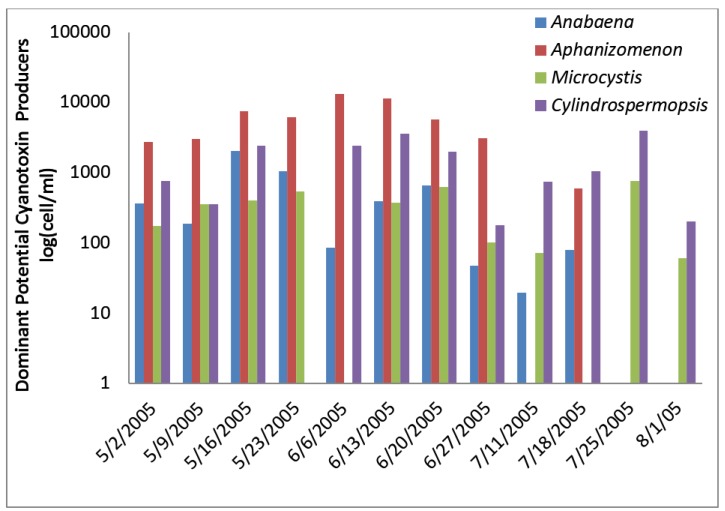
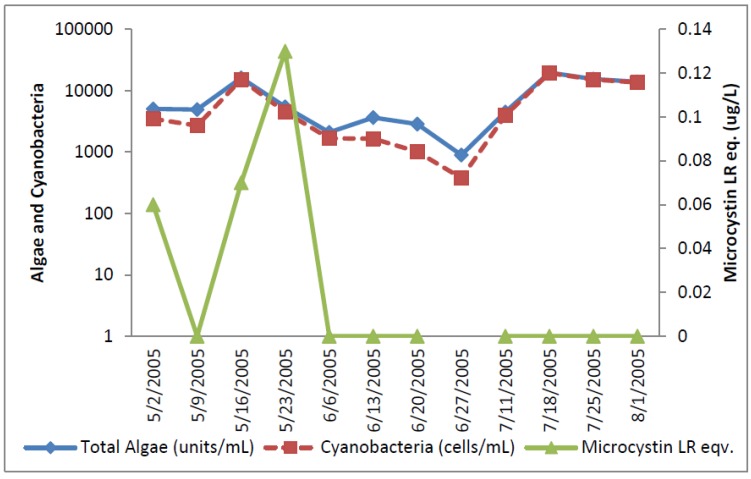
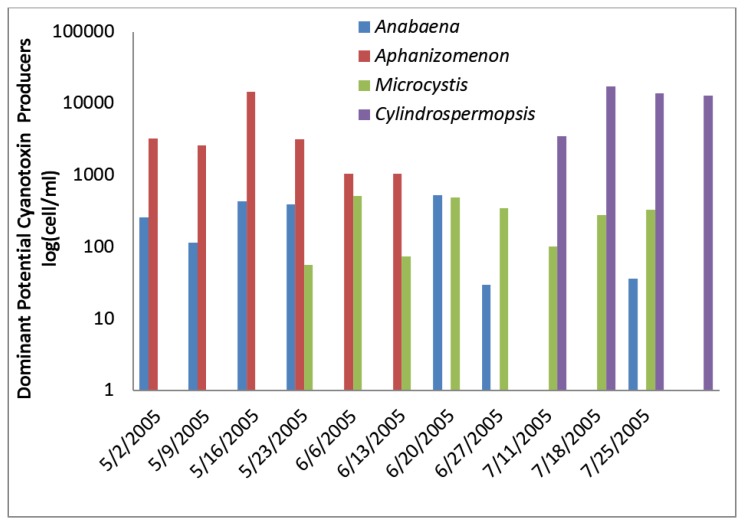
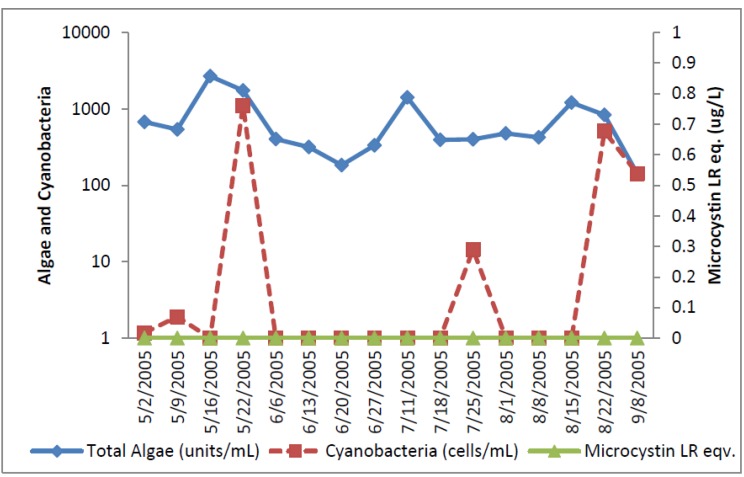
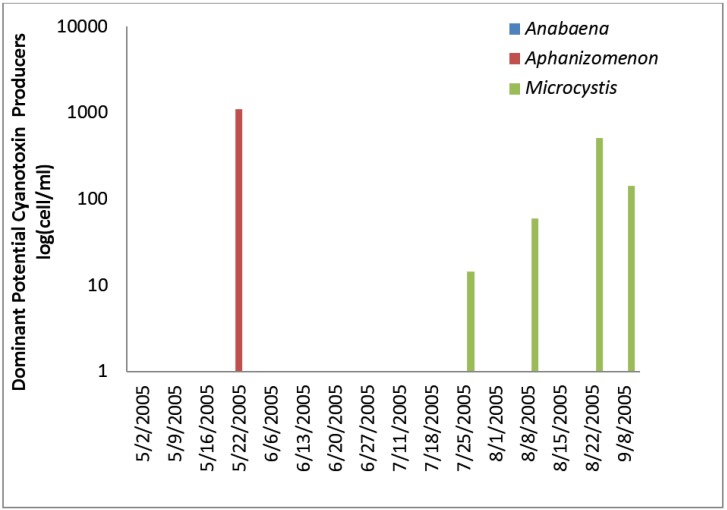
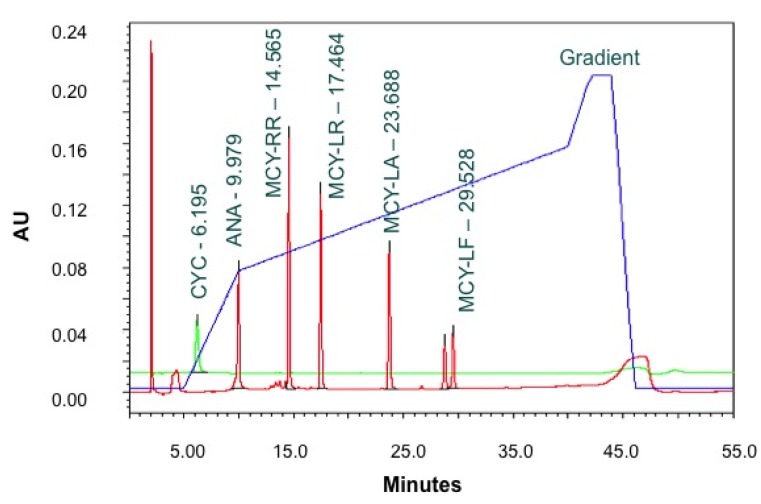
An environmental protection agency EPA expert workshop prioritized three cyanotoxins, microcystins, anatoxin-a, and cylindrospermopsin (MAC), as being important in freshwaters of the United States. This study evaluated the prevalence of potentially toxin producing cyanobacteria cell numbers relative to the presence and quantity of the MAC toxins in the context of this framework. Total and potential toxin producing cyanobacteria cell counts were conducted on weekly raw and finished water samples from utilities located in five US states. An Enzyme-Linked Immunosorbant Assay (ELISA) was used to screen the raw and finished water samples for microcystins. High-pressure liquid chromatography with a photodiode array detector (HPLC/PDA) verified microcystin concentrations and quantified anatoxin-a and cylindrospermopsin concentrations. Four of the five utilities experienced cyanobacterial blooms in their raw water. Raw water samples from three utilities showed detectable levels of microcystins and a fourth utility had detectable levels of both microcystin and cylindrospermopsin. No utilities had detectable concentrations of anatoxin-a. These conventional plants effectively removed the cyanobacterial cells and all finished water samples showed MAC levels below the detection limit by ELISA and HPLC/PDA.
Keywords: anatoxin-a; conventional drinking water treatment; cyanobacteria; cylindrospermopsin; microcystin.
Figures
References
-
- Knappe D.R.U., Belk R.C., Briley D.S., Gandy S.R., Rastogi N., Rike A.H., Glasgow H., Hannon E., Frazier W.D., Kohl P., et al. Algae Detection and Removal Strategies for Drinking Water Treatment Plants. AWWA Research Foundation; Denver, CO, USA: 2004.
-
- Davis T.W., Berry D.L., Boyer G.L., Golber C.J. The effects of temperature and nutrients on the growth and dynamics of toxic and non-toxic strains of Microcystis during cyanobacteria blooms. Harmful Algae. 2009;8:715–725. doi: 10.1016/j.hal.2009.02.004. - DOI
-
- Chorus I., Bartram J. Toxic Cyanobacteria in Water: A Guide to Their Public Health Consequences, Monitoring and Management. EF&N Spon; Los Angeles, CA, USA: 1999.
Publication types
MeSH terms
Substances
LinkOut - more resources
Full Text Sources
Other Literature Sources
Medical
Research Materials
