


Markers of Oxidative Stress and Neuroprogression in Depression Disorder
- PMID: 26078821
- PMCID: PMC4453280
- DOI: 10.1155/2015/898393
Markers of Oxidative Stress and Neuroprogression in Depression Disorder
Abstract
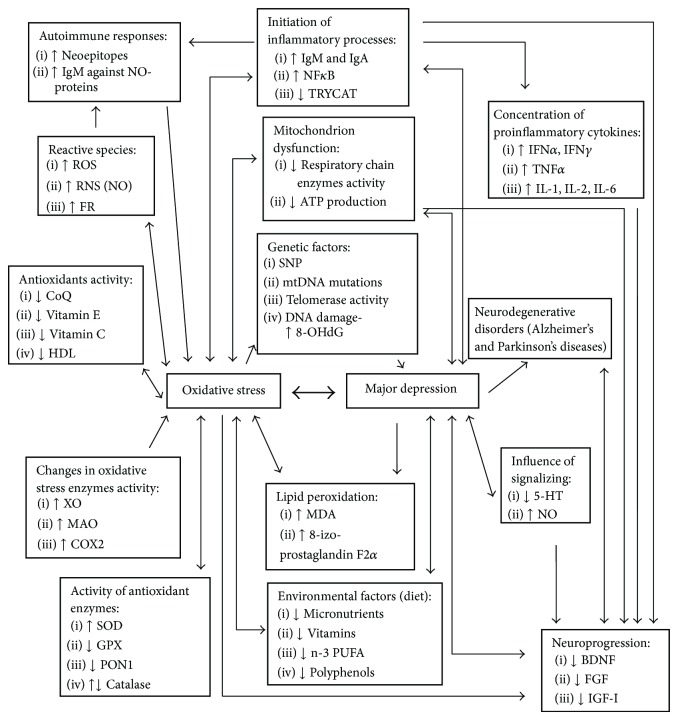
Major depression is multifactorial disorder with high prevalence and alarming prognostic in the nearest 15 years. Several mechanisms of depression are known. Neurotransmitters imbalance and imbalance between neuroprogressive and neuroprotective factors are observed in major depression. Depression is accompanied by inflammatory responses of the organism and consequent elevation of proinflammatory cytokines and increased lipid peroxidation are described in literature. Neuropsychiatric disorders including major depression are also associated with telomerase shortening, oxidative changes in nucleotides, and polymorphisms in several genes connected to metabolism of reactive oxygen species. Mitochondrion dysfunction is directly associated with increasing levels of oxidative stress. Oxidative stress plays significant role in pathophysiology of major depression via actions of free radicals, nonradical molecules, and reactive oxygen and nitrogen species. Products of oxidative stress represent important parameters for measuring and predicting of depression status as well as for determining effectiveness of administrated antidepressants. Positive effect of micronutrients, vitamins, and antioxidants in depression treatment is also reviewed.
Figures
References
-
- Caballero-Martínez F., León-Vázquez F., Payá-Pardo A., Díaz-Holgado A. Use of health care resources and loss of productivity in patients with depressive disorders seen in Primary Care: INTERDEP Study. Actas Españolas de Psiquiatría. 2014;42(6):281–291. - PubMed
-
- Leonard B., Maes M. Mechanistic explanations how cell-mediated immune activation, inflammation and oxidative and nitrosative stress pathways and their sequels and concomitants play a role in the pathophysiology of unipolar depression. Neuroscience and Biobehavioral Reviews. 2012;36(2):764–785. doi: 10.1016/j.neubiorev.2011.12.005. - DOI - PubMed
Publication types
MeSH terms
Substances
LinkOut - more resources
Full Text Sources
Other Literature Sources
