


RNA expression of genes involved in cytarabine metabolism and transport predicts cytarabine response in acute myeloid leukemia
- PMID: 26083014
- PMCID: PMC7115907
- DOI: 10.2217/pgs.15.44
RNA expression of genes involved in cytarabine metabolism and transport predicts cytarabine response in acute myeloid leukemia
Abstract
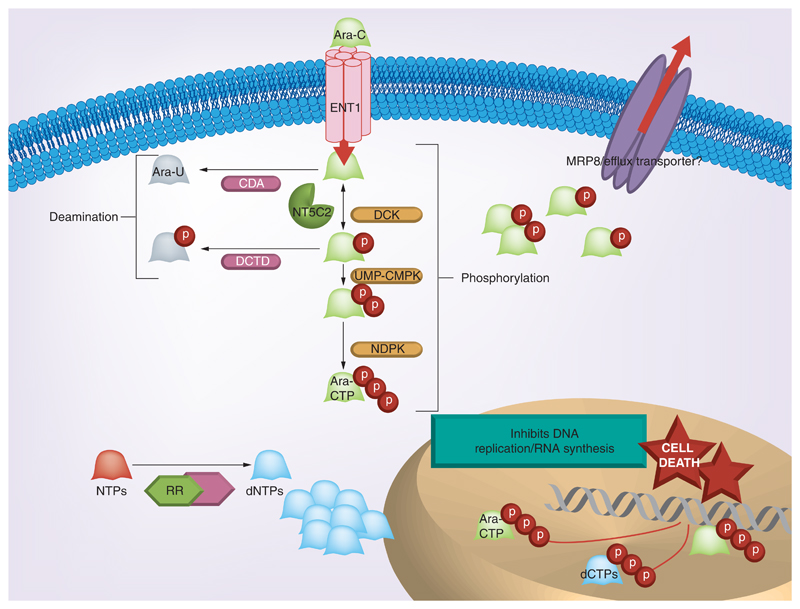
Background: Variation in terms of outcome and toxic side effects of treatment exists among acute myeloid leukemia (AML) patients on chemotherapy with cytarabine (Ara-C) and daunorubicin (Dnr). Candidate Ara-C metabolizing gene expression in primary AML cells is proposed to account for this variation.
Methods: Ex vivo Ara-C sensitivity was determined in primary AML samples using MTT assay. mRNA expression of candidate Ara-C metabolizing genes were evaluated by RQPCR analysis. Global gene expression profiling was carried out for identifying differentially expressed genes between exvivo Ara-C sensitive and resistant samples.
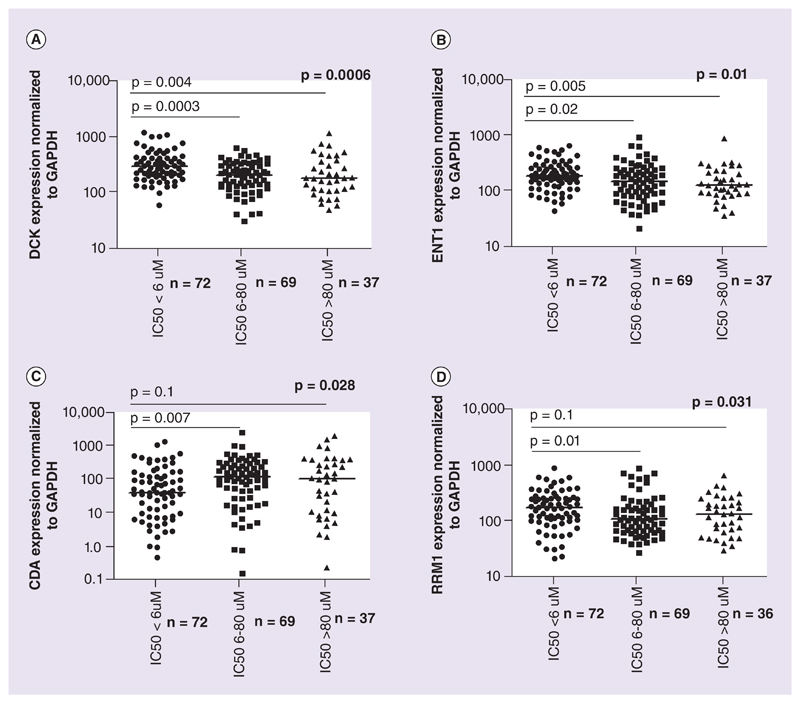
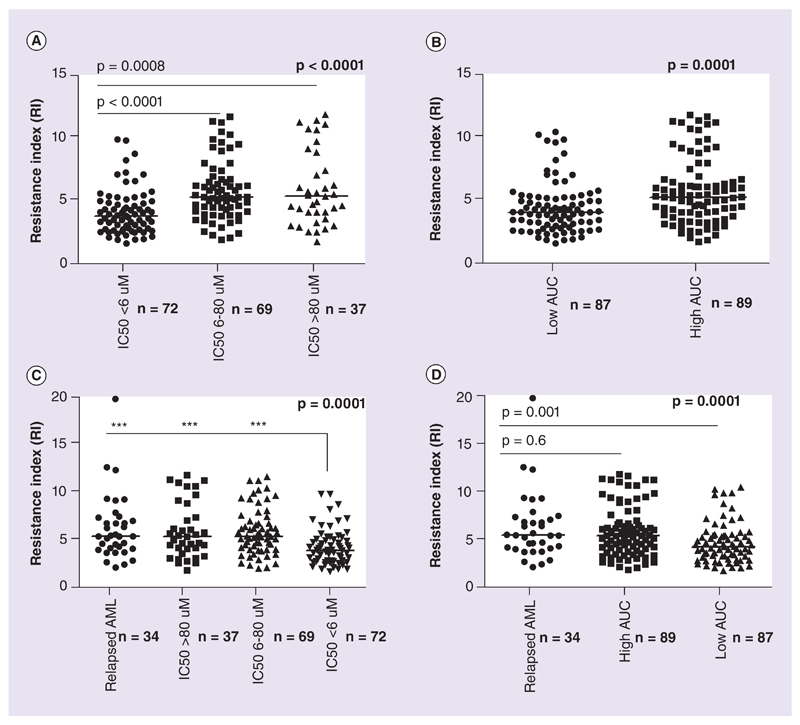
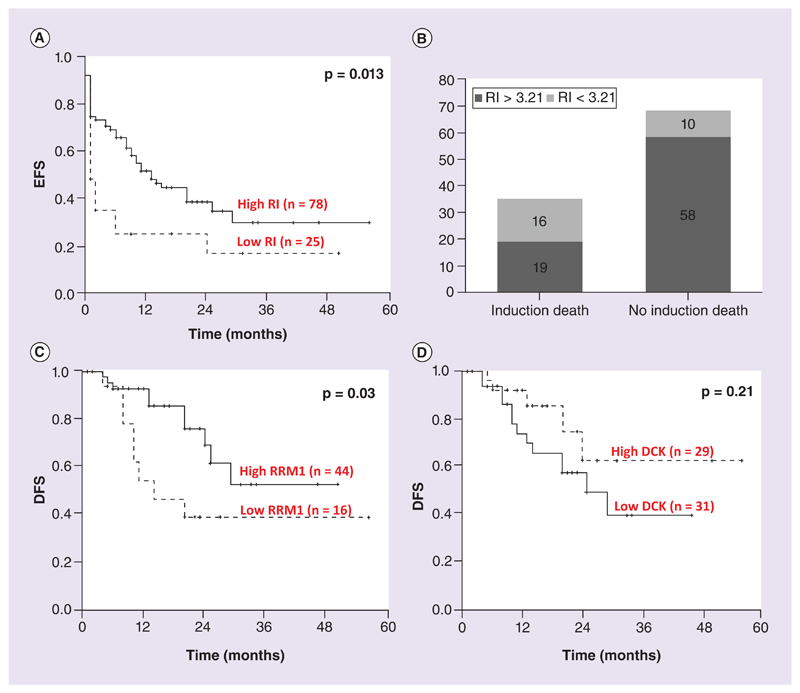
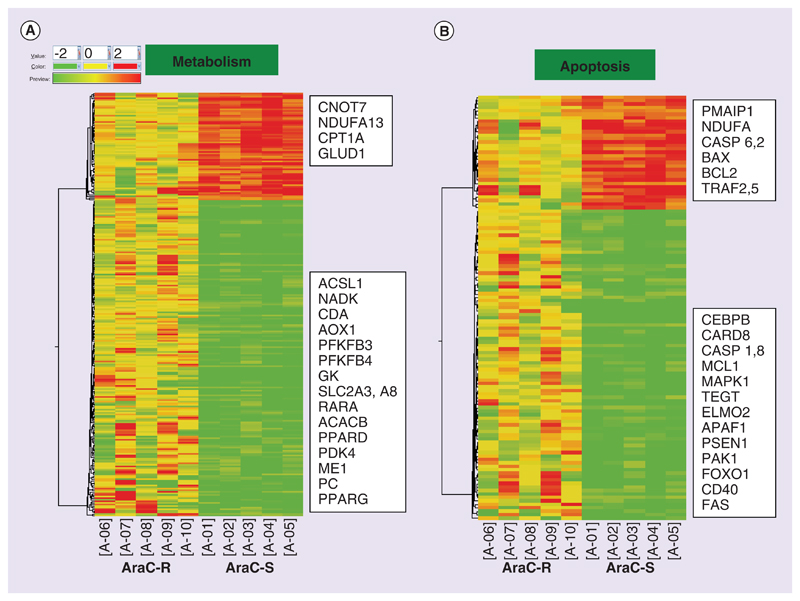
Results: Wide interindividual variations in ex vivo Ara-C cytotoxicity were observed among samples from patients with AML and were stratified into sensitive, intermediately sensitive and resistant, based on IC50 values obtained by MTT assay. RNA expression of deoxycytidine kinase (DCK), human equilibrative nucleoside transporter-1 (ENT1) and ribonucleotide reductase M1 (RRM1) were significantly higher and cytidine deaminase (CDA) was significantly lower in ex vivo Ara-C sensitive samples. Higher DCK and RRM1 expression in AML patient's blast correlated with better DFS. Ara-C resistance index (RI), a mathematically derived quotient was proposed based on candidate gene expression pattern. Ara-C ex vivo sensitive samples were found to have significantly lower RI compared with resistant as well as samples from patients presenting with relapse. Patients with low RI supposedly highly sensitive to Ara-C were found to have higher incidence of induction death (p = 0.002; RR: 4.35 [95% CI: 1.69-11.22]). Global gene expression profiling undertaken to find out additional contributors of Ara-C resistance identified many apoptosis as well as metabolic pathway genes to be differentially expressed between Ara-C resistant and sensitive samples.
Conclusion: This study highlights the importance of evaluating expression of candidate Ara-C metabolizing genes in predicting ex vivo drug response as well as treatment outcome. RI could be a predictor of ex vivo Ara-C response irrespective of cytogenetic and molecular risk groups and a potential biomarker for AML treatment outcome and toxicity. Original submitted 22 December 2014; Revision submitted 9 April 2015.
Keywords: acute myeloid leukemia; cytarabine; drug resistance.
Figures
References
-
- Radich JP. Molecular classification of acute myeloid leukemia: are we there yet? J Clin Oncol. 2008;26(28):4539–4541. - PubMed
-
- O’Donnell MR, Abboud CN, Altman J, et al. Acute myeloid leukemia. J Natl Compr Canc Netw. 2012;10(8):984–1021. - PubMed
-
- Rustum YM, Preisler HD. Correlation between leukemic cell retention of 1-beta-D-arabinofuranosylcytosine 5’-triphosphate and response to therapy. Cancer Res. 1979;39(1):42–49. - PubMed
-
- Kufe D, Spriggs D, Egan EM, Munroe D. Relationships among Ara-CTP pools, formation of (Ara-C)DNA, and cytotoxicity of human leukemic cells. Blood. 1984;64(1):54–58. - PubMed
-
- Galmarini CM, Thomas X, Calvo F, et al. Potential mechanisms of resistance to cytarabine in AML patients. Leuk Res. 2002;26(7):621–629. - PubMed
Publication types
MeSH terms
Substances
Associated data
- Actions
Grants and funding
LinkOut - more resources
Full Text Sources
Other Literature Sources
Medical
Molecular Biology Databases
Research Materials
Miscellaneous
