


Monitoring HIV Drug Resistance Early Warning Indicators in Cameroon: A Study Following the Revised World Health Organization Recommendations
- PMID: 26083364
- PMCID: PMC4471113
- DOI: 10.1371/journal.pone.0129210
Monitoring HIV Drug Resistance Early Warning Indicators in Cameroon: A Study Following the Revised World Health Organization Recommendations
Abstract
Background: The majority (>95%) of new HIV infection occurs in resource-limited settings, and Cameroon is still experiencing a generalized epidemic with ~122,638 patients receiving antiretroviral therapy (ART). A detrimental outcome in scaling-up ART is the emergence HIV drug resistance (HIVDR), suggesting the need for pragmatic approaches in sustaining a successful ART performance.
Methods: A survey was conducted in 15 ART sites of the Centre and Littoral regions of Cameroon in 2013 (10 urban versus 05 rural settings; 8 at tertiary/secondary versus 7 at primary healthcare levels), evaluating HIVDR-early warning indicators (EWIs) as-per the 2012 revised World Health Organization's guidelines: EWI1 (on-time pill pick-up), EWI2 (retention in care), EWI3 (no pharmacy stock-outs), EWI4 (dispensing practices), EWI5 (virological suppression). Poor performance was interpreted as potential HIVDR.
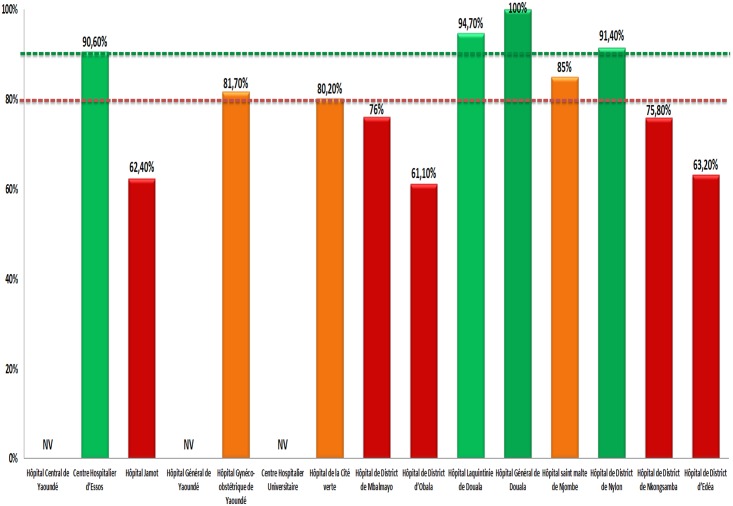
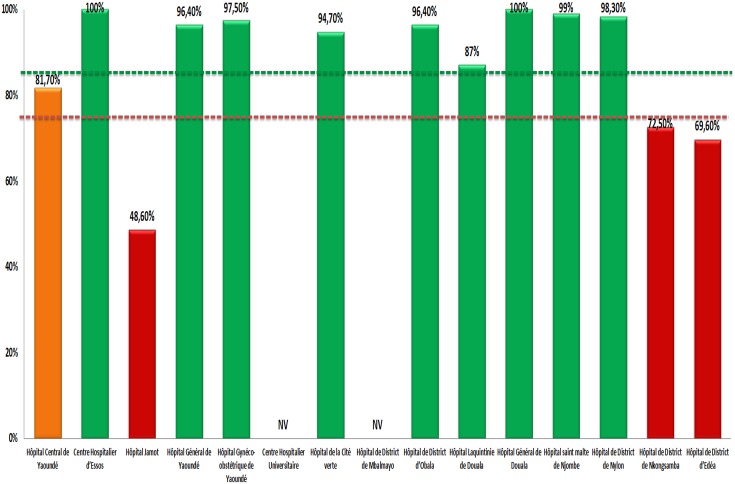
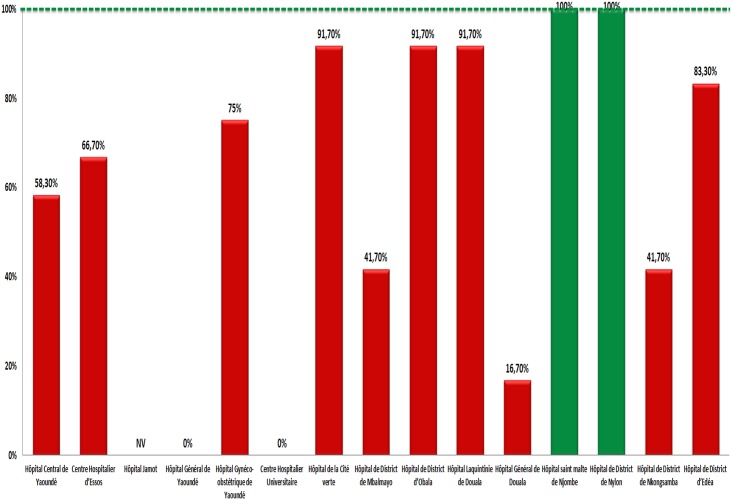
Results: Only 33.3% (4/12) of sites reached the desirable performance for "on-time pill pick-up" (57.1% urban versus 0% rural; p<0.0001) besides 25% (3/12) with fair performance. 69.2% (9/13) reached the desirable performance for "retention in care" (77.8% urban versus 50% rural; p=0.01) beside 7.7% (1/13) with fair performance. Only 14.4% (2/13) reached the desirable performance of "no pharmacy stock-outs" (11.1% urban versus 25% rural; p=0.02). All 15 sites reached the desirable performance of 0% "dispensing mono- or dual-therapy". Data were unavailable to evaluate "virological suppression" due to limited access to viral load testing (min-max: <1%-15%). Potential HIVDR was higher in rural (57.9%) compared to urban (27.8%) settings, p=0.02; and at primary (57.9%) compared to secondary/tertiary (33.3%) healthcare levels, p=0.09.
Conclusions: Delayed pill pick-up and pharmacy stock-outs are major factors favoring HIVDR emergence, with higher risks in rural settings and at primary healthcare. Retention in care appears acceptable in general while ART dispensing practices are standard. There is need to support patient-adherence to pharmacy appointments while reinforcing the national drug supply system.
Conflict of interest statement
Figures
References
-
- UNAIDS. Global Report: UNAIDS report on the global AIDS epidemic 2013. Geneva: 2014. Available: http://www.unaids.org/en/media/unaids/contentassets/documents/epidemiolo....
-
- UNAIDS. Political declaration on HIV and AIDS: intensifying our efforts to eliminate HIV and AIDS. Geneva: 2011. http://www.unaids.org/en/aboutunaids/unitednationsdeclarationsandgoals/2.... Accessed 20 October 2012.
-
- World Health Organization. HIV Drug Resistance Report. ISBN 978 92 4 150393 8. Geneva: 2012. http://www.who.int/hiv/pub/drugresistance/report2012/en/index.html; accessed on 15 September 2012.
-
- World Health Organization. Consolidated Guidelines on HIV Prevention, Diagnosis, Treatment and Care for Key Populations. Geneva: 2014. Available: http://www.who.int/ - PubMed
-
- World Health Organization. Antiretroviral therapy for HIV infection in adults and adolescents: recommendations for a public health approach-revision. Geneva: 2010. Available: http://whqlibdoc.who.int/publications/2012/6789241599774_eng.pdf. - PubMed
Publication types
MeSH terms
Substances
Grants and funding
LinkOut - more resources
Full Text Sources
Other Literature Sources
Medical
