. 2015 Jun 17;10(6):e0130022.
doi: 10.1371/journal.pone.0130022. eCollection 2015.

Rapid, Sensitive, and Accurate Evaluation of Drug Resistant Mutant (NS5A-Y93H) Strain Frequency in Genotype 1b HCV by Invader Assay

Affiliations

Rapid, Sensitive, and Accurate Evaluation of Drug Resistant Mutant (NS5A-Y93H) Strain Frequency in Genotype 1b HCV by Invader Assay

Satoshi Yoshimi et al. PLoS One. .

Abstract

Daclatasvir and asunaprevir dual oral therapy is expected to achieve high sustained virological response (SVR) rates in patients with HCV genotype 1b infection. However, presence of the NS5A-Y93H substitution at baseline has been shown to be an independent predictor of treatment failure for this regimen. By using the Invader assay, we developed a system to rapidly and accurately detect the presence of mutant strains and evaluate the proportion of patients harboring a pre-treatment Y93H mutation. This assay system, consisting of nested PCR followed by Invader reaction with well-designed primers and probes, attained a high overall assay success rate of 98.9% among a total of 702 Japanese HCV genotype 1b patients. Even in serum samples with low HCV titers, more than half of the samples could be successfully assayed. Our assay system showed a better lower detection limit of Y93H proportion than using direct sequencing, and Y93H frequencies obtained by this method correlated well with those of deep-sequencing analysis (r = 0.85, P <0.001). The proportion of the patients with the mutant strain estimated by this assay was 23.6% (164/694). Interestingly, patients with the Y93H mutant strain showed significantly lower ALT levels (p=8.8 x 10⁻⁴), higher serum HCV RNA levels (p=4.3 x 10⁻⁷), and lower HCC risk (p=6.9 x 10⁻³) than those with the wild type strain. Because the method is both sensitive and rapid, the NS5A-Y93H mutant strain detection system established in this study may provide important pre-treatment information valuable not only for treatment decisions but also for prediction of disease progression in HCV genotype 1b patients.


Conflict of interest statement

Competing Interests: The authors have declared that no competing interests exist.

Figures

Fig 1
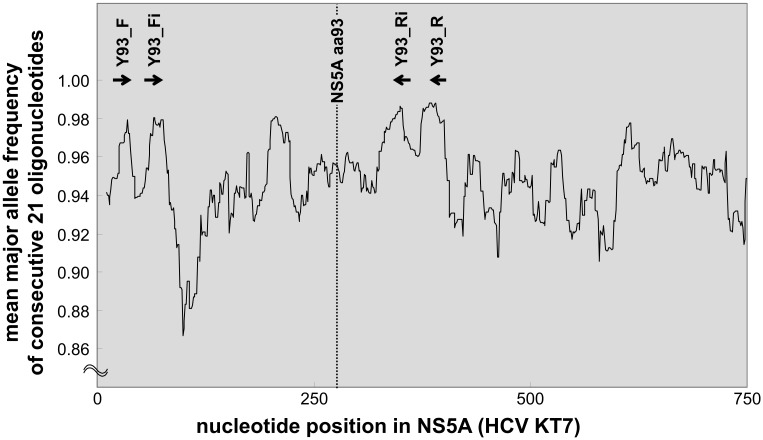
Fig 1. Major base frequencies of consecutive 21 nucleotides in the NS5A region.
Using 240 HCV-1b NS5A sequence data from a publicly-available HCV database, mean major base frequency of any 21 bp nucleotide sequences located at every positions are plotted. A higher major base frequency was assumed to represent lower variability. Finally, two degenerate primer sets for nested PCR were designed at positions shown with bold arrows, which contained alternative bases at several polymorphic sites to increase PCR success rate.
Fig 2
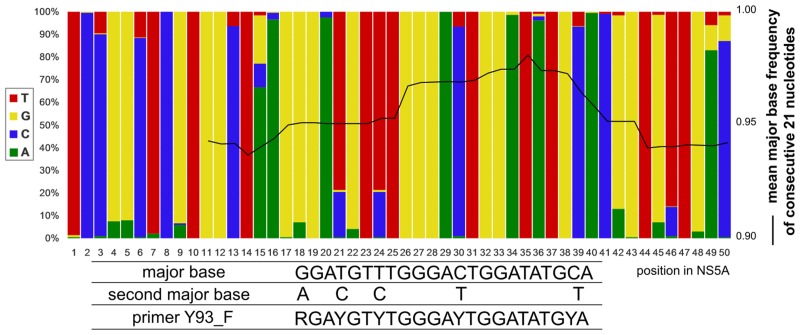
Fig 2. An example of designing process of degenerate primers and probes.
The stacked bar represents the proportion of each base at a given nucleotide position in the NS5A region of HCV-KT9 calculated from 240 NS5A sequences of HCV genotype 1b. The solid black line represents mean major base frequency of consecutive 21 nucleotides. The Y93_F primer was placed where overall mean major base frequency can be approximately maximized, and thereafter alternative bases were included at several positions to avoid mismatch with minor base substitutions. A trade-off relationship between specificity and coverage should be considered. Basically, the same holds for the design for Invader probe set, except that there is less positional flexibility from the nature of the principle itself.
Fig 3
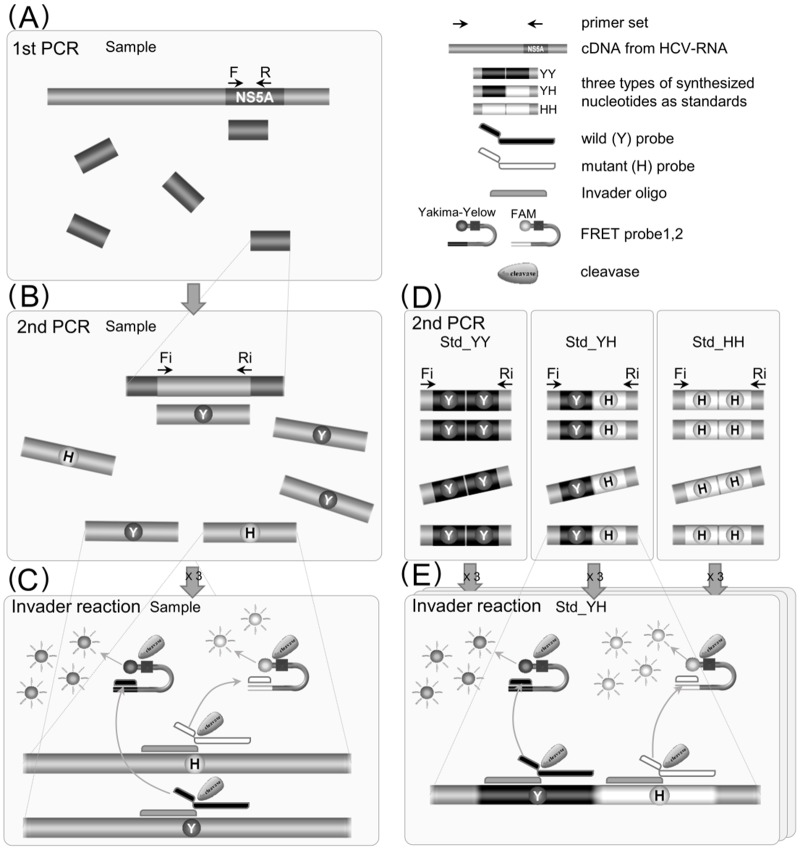
Fig 3. Schematic flow diagram representing a method of nested-PCR followed by Invader assay.
(A) The initial PCR was performed to amplify a fragment of 386 bp length containing a part of the NS5A region from cDNA reverse-transcribed from HCV-RNA which was extracted from the serum of a patient. (B) An aliquot of the inital PCR product was used for the second PCR to amplify a 308 bp fragment. The second PCR product was diluted with water and subjected to the Invader assay. (C) Invader oligonucleotide and allele-specific probes anneal with target to form one base overlap. When the base is complementary to the opposing base in the allele-specific probe, cleavase recognizes the structure and releases 5’ flap. The released flap anneals to a FRET probe. The second cleavage reaction releases fluorophore resulting in the generation of a fluorescent signal. The Invader assay was done in triplicate. (D) Three types of standard nucleotide (Std-YY, Std-YH, and Std-HH) were prepared, which includes binary target sequences, corresponding to wild (Y) or mutant (H) variants, and annealing sites with the internal primers at each end. Tenfold serial dilusions of each standard were subjected to the second PCR. (E) The Invader assay for each standard was also performed in triplicate.
Fig 4
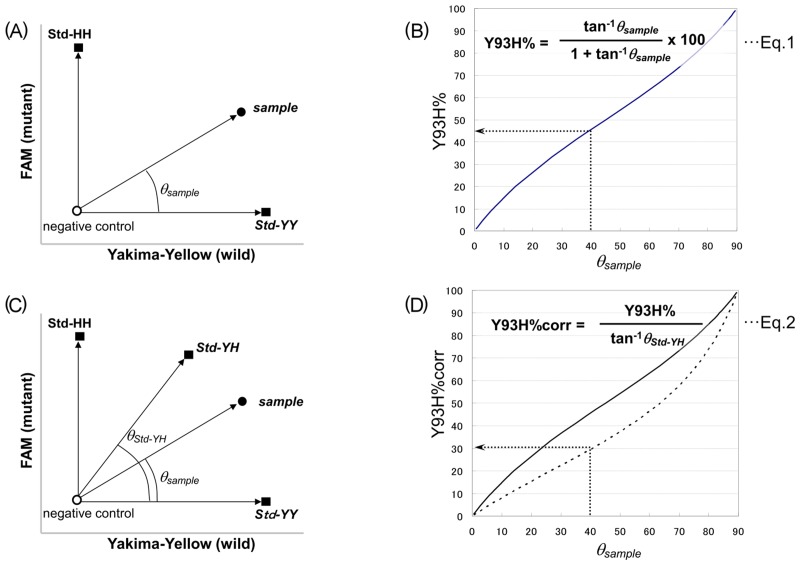
Fig 4. Schematic principle for the estimation of Y93H proportion by Invader assay.
(A) Observed fluorescence intensities of samples and standards were plotted on a two-dimensional graph, where the X-axis was Yakima-Yellow intensity and the Y-axis was FAM intensity, corresponding to Y93 wild and Y93H mutant strains, respectively. By using crossing angle θ sample, the Y93H mutant proportion of a sample can be calculated with Equation 1. (B) The resulting curve of θ sample vs Y93H% is nearly linear. (C) Although the PCR product from the Std-YH theoretically contains equal amounts of Y93 wild type and Y93H mutant type target sequences, the plot of the Std-YH did not always head in the intermediate direction between Std-YY and Std-HH. (D) Therefore, by using a crossing angle θ Std-YH, The corrected Y93H mutant proportion Y93H%corr can be calculated from Y93H% with Equation 2. Estimation was carried out using data at an appropriate time point before the emergence of non-specific fluorescence.
Fig 5
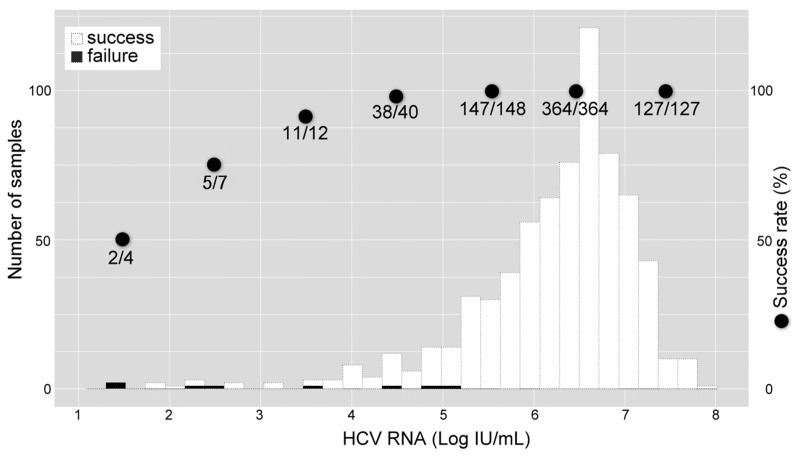
Fig 5. Histogram of HCV RNA levels according to the detectability of Y93H by the Invader assay.
White and black bars represent successful and unsuccessful detection cases, respectively. Closed circles represent the success rate for each log level of viremia from 1 through 7.
Fig 6
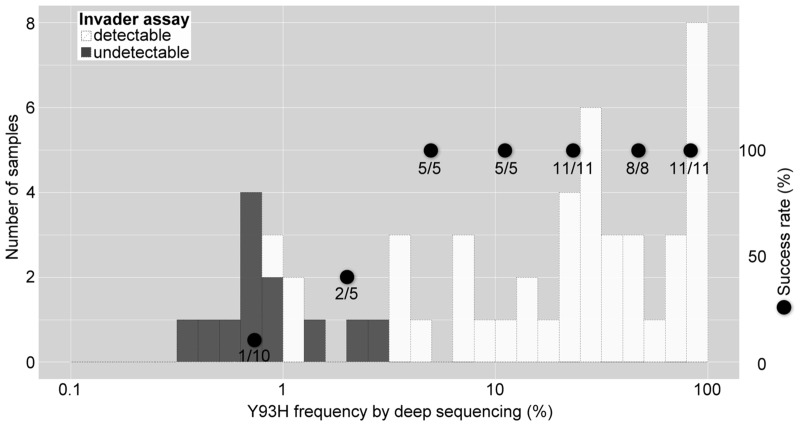
Fig 6. Histogram of Y93H frequency by deep sequencing according to detectability by the Invader assay.
Deep-sequencing was performed using 55 sera of HCV 1b patients with various Y93H frequencies by the Invader assay. White and black bars represent successful detection cases and detection failure cases, respectively. Closed circles represent the success rate.
Fig 7
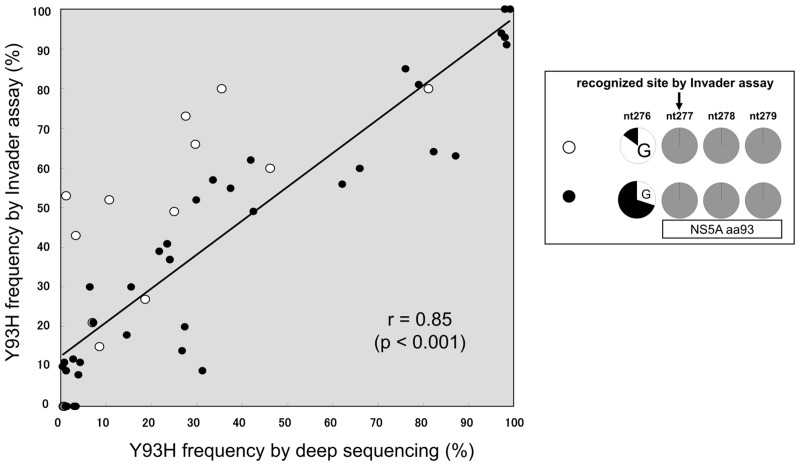
Fig 7. Correlation between deep-sequencing and Invader assay on the measurement of Y93H frequency.
Positive correlation was observed for the Y93H strain frequencies between deep-sequencing and the Invader assay of 55 HCV 1b patients (Spearman correlation r = 0.85, p < 0.001). In samples in which G allele at the preceding nucleotide position before NS5A amino acid 93 was predominant (> 85%) measured by NGS (open circle), there was a tendency to overestimate the Y93H proportion by the Invader assay.

References

    1. Shepard CW, Finelli L, Alter MJ Global epidemiology of hepatitis C virus infection. Lancet Infect Dis 2005; 5: 558–567. - PubMed
    1. Chevaliez S, Pawlotsky JM Hepatitis C virus: virology, diagnosis and management of antiviral therapy. World J Gastroenterol 2007; 13: 2461–2466. - PMC - PubMed
    1. Sarrazin C, Zeuzem S Resistance to direct antiviral agents in patients with hepatitis C virus infection. Gastroenterology 2010; 138: 447–462. 10.1053/j.gastro.2009.11.055 - DOI - PubMed
    1. Karino Y, Toyota J, Ikeda K, Suzuki F, Chayama K, Kawakami Y, et al. Characterization of virologic escape in hepatitis C virus genotype 1b patients treated with the direct-acting antivirals daclatasvir and asunaprevir. J Hepatol 2013; 58: 646–654. 10.1016/j.jhep.2012.11.012 - DOI - PubMed
    1. Kumada H, Suzuki Y, Ikeda K, Toyota J, Karino Y, Chayama K, et al. Daclatasvir plus asunaprevir for chronic HCV genotype 1b infection. Hepatology 2014; 59: 2083–2091. 10.1002/hep.27113 - DOI - PMC - PubMed

Publication types

LinkOut - more resources