


The Association between Sleep Problems and Psychotic Symptoms in the General Population: A Global Perspective
- PMID: 26085291
- PMCID: PMC4667394
- DOI: 10.5665/sleep.5232
The Association between Sleep Problems and Psychotic Symptoms in the General Population: A Global Perspective
Abstract
Study objectives: To assess the prevalence of sleep problems and their association with psychotic symptoms using a global database.
Design: Community-based cross-sectional study.
Setting: Data were analyzed from the World Health Organization's World Health Survey (WHS), a population-based survey conducted in 70 countries between 2002 and 2004.
Patients or participants: 261,547 individuals aged ≥ 18 years from 56 countries.
Interventions: N/A.
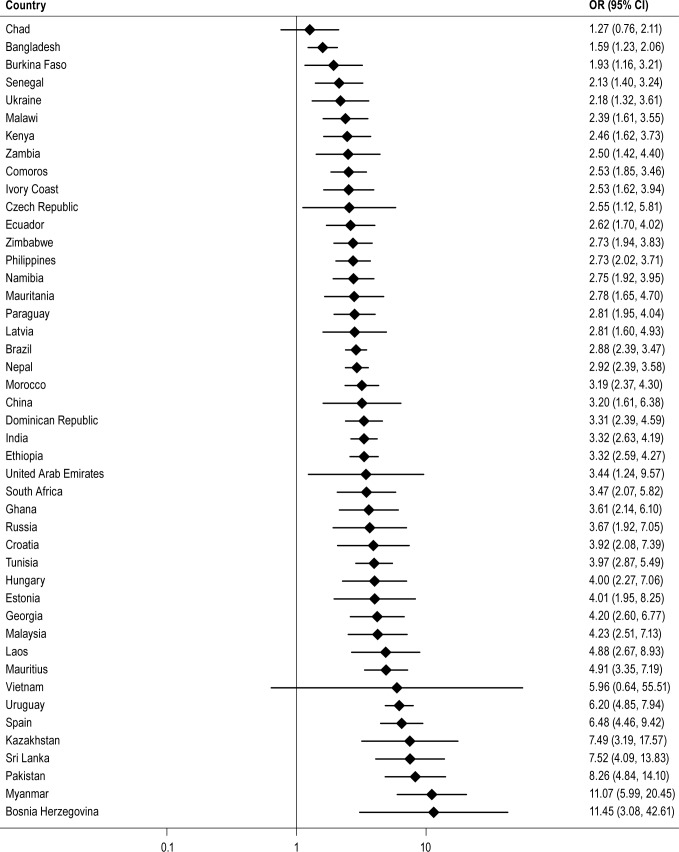
Measurements and results: The presence of psychotic symptoms in the past 12 months was established using 4 questions pertaining to positive symptoms from the psychosis screening module of the Composite International Diagnostic Interview. Sleep problems referred to severe or extreme sleep problems in the past 30 days. Multivariable logistic regression was used to estimate the associations. The overall prevalence of sleep problems was 7.6% and ranged from 1.6% (China) to 18.6% (Morocco). Sleep problems were associated with significantly higher odds for at least one psychotic symptom in the vast majority of countries. In the pooled sample, after adjusting for demographic factors, alcohol consumption, smoking, and chronic medical conditions, having sleep problems resulted in an odds ratio (OR) for at least one psychotic symptom of 2.41 (95% confidence interval [CI] 2.18-2.65). This OR was 1.59 (1.40-1.81) when further adjusted for anxiety and depression.
Conclusions: A strong association between sleep problems and psychotic symptoms was observed globally. These results have clinical implications and serve as a basis for future studies to elucidate the causal association between psychotic symptoms and sleep problems.
Keywords: low- and middle-income countries; multi-country; population-based; prevalence; psychotic experience; sleep disturbance.
© 2015 Associated Professional Sleep Societies, LLC.
Figures

Comment in
-
Is Sleep Health a Potential Pathway to Global Mental Health?Sleep. 2015 Dec 1;38(12):1837-8. doi: 10.5665/sleep.5216. Sleep. 2015. PMID: 26564133 Free PMC article. No abstract available.
References
-
- Perala J, Suvisaari J, Saarni SI, et al. Lifetime prevalence of psychotic and bipolar I disorders in a general population. Arch Gen Psychiatry. 2007;64:19–28. - PubMed
-
- Freeman D, McManus S, Brugha T, Meltzer H, Jenkins R, Bebbington P. Concomitants of paranoia in the general population. Psychol Med. 2011;41:923–36. - PubMed
Publication types
MeSH terms
LinkOut - more resources
Full Text Sources
Other Literature Sources
Medical
Miscellaneous
