


Prevalence of diabetic retinopathy in individuals with type 2 diabetes who had recorded diabetic retinopathy from retinal photographs in Catalonia (Spain)
- PMID: 26089211
- PMCID: PMC4680151
- DOI: 10.1136/bjophthalmol-2015-306683
Prevalence of diabetic retinopathy in individuals with type 2 diabetes who had recorded diabetic retinopathy from retinal photographs in Catalonia (Spain)
Abstract
Background/aims: Retinal photography with a non-mydriatic camera is the method currently employed for diabetic retinography (DR) screening. We designed this study in order to evaluate the prevalence and severity of DR, and associated risk factors, in patients with type 2 diabetes (T2DM) screened in Catalan Primary Health Care.
Methods: Retrospective, cross-sectional, population based study performed in Catalonia (Spain) with patients with T2DM, aged between 30 years and 90 years (on 31 December 2012) screened with retinal photography and whose DR category was recorded in their medical records. DR was classified as: no apparent retinopathy (no DR), mild non-proliferative DR (mild NPDR), moderate NPDR, severe NPDR, proliferative DR (PDR) and diabetic macular oedema (DMO). Non-vision threatening DR (non-VTDR) included mild and moderate NPDR; VTDR included severe NPDR, PDR and DMO. Clinical data were obtained retrospectively from the SIDIAP database (System for Research and Development in Primary Care).
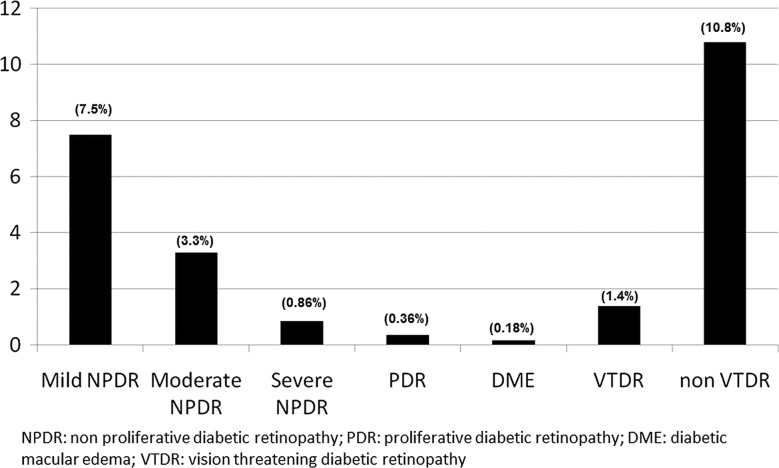
Results: 108 723 patients with T2DM had been screened with retinal photography. The prevalence of any kind of DR was 12.3% (95% CI 12.1% to 12.5%). Non-VTDR and VTDR were present in 10.8% (mild 7.5% and moderate NPDR 3.3%) and 1.4% (severe NPDR 0.86%, PDR 0.36% and DMO 0.18%) of the study patients, respectively.
Conclusions: The prevalence of any type of DR in patients with T2DM screened with retinal photography was lower when compared with earlier studies.
Keywords: Epidemiology; Retina; Telemedicine.
Published by the BMJ Publishing Group Limited. For permission to use (where not already granted under a licence) please go to http://www.bmj.com/company/products-services/rights-and-licensing/
Figures
References
Publication types
MeSH terms
Substances
LinkOut - more resources
Full Text Sources
Other Literature Sources
Medical
