


Use of the epidermal growth factor receptor inhibitors gefitinib, erlotinib, afatinib, dacomitinib, and icotinib in the treatment of non-small-cell lung cancer: a systematic review
- PMID: 26089730
- PMCID: PMC4462541
- DOI: 10.3747/co.22.2566
Use of the epidermal growth factor receptor inhibitors gefitinib, erlotinib, afatinib, dacomitinib, and icotinib in the treatment of non-small-cell lung cancer: a systematic review
Abstract
Introduction: This systematic review addresses the use of epidermal growth factor receptor (egfr) inhibitors in three populations of advanced non-small-cell lung cancer (nsclc) patients-unselected, selected, and molecularly selected-in three treatment settings: first line, second line, and maintenance.
Methods: Ninety-six randomized controlled trials found using the medline and embase databases form the basis of this review.
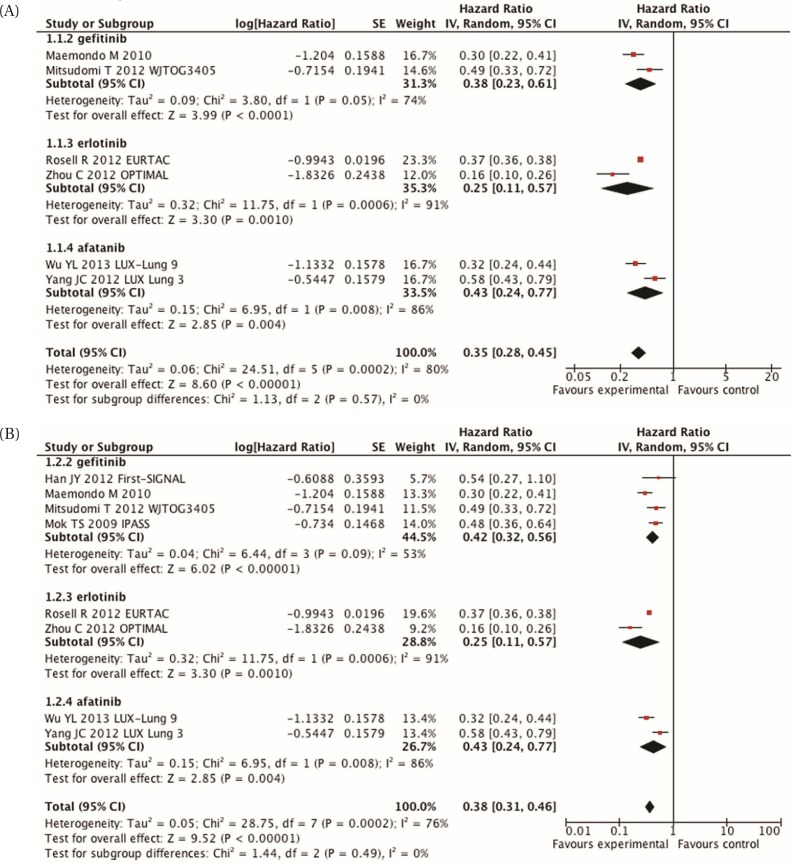
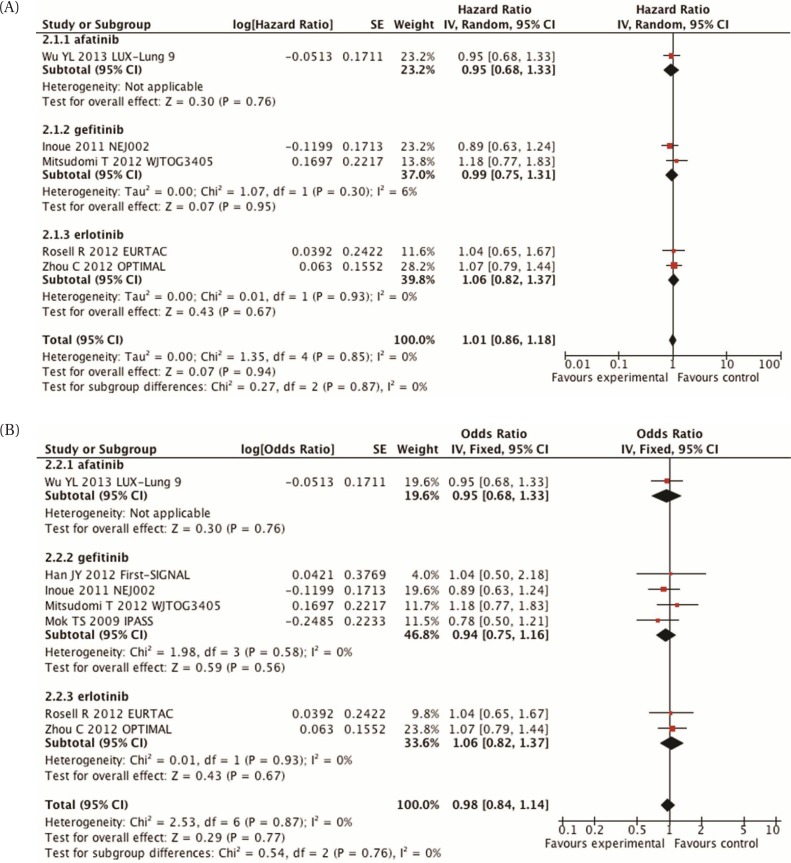
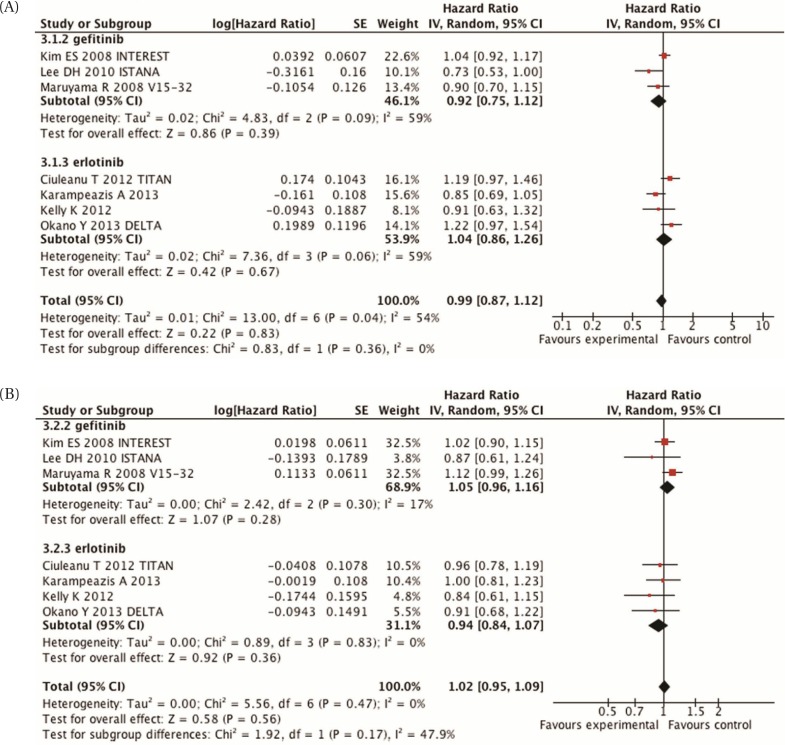
Results: In the first-line setting, data about the efficacy of egfr tyrosine kinase inhibitors (tkis) compared with platinum-based chemotherapy are inconsistent. Results from studies that selected patients based on clinical characteristics are also mixed. There is high-quality evidence that an egfrtki is preferred over a platinum doublet as initial therapy for patients with an activating mutation of the EGFR gene. The egfrtkis are associated with a higher likelihood of response, longer progression-free survival, and improved quality of life. Multiple trials of second-line therapy have compared an egfrtki with chemotherapy. Meta-analysis of those data demonstrates similar progression-free and overall survival. There is consequently no preferred sequence for second-line egfrtki or second-line chemotherapy. The egfrtkis have also been evaluated as switch-maintenance therapy. No molecular marker could identify patients in whom a survival benefit was not observed; however, the magnitude of the benefit was modest.
Conclusions: Determination of EGFR mutation status is essential to making appropriate treatment decisions in patients with nsclc. Patients who are EGFR mutation-positive should be treated with an egfrtki as first-line therapy. An egfrtki is still appropriate therapy in patients who are EGFR wild-type, but the selected agent should be administered as second- or third-line therapy.
Keywords: Non-small-small cell lung cancer; egfr inhibitors; mutation status; systematic review.
Figures
References
-
- Fossella FV, DeVore R, Kerr RN, et al. Randomized phase iii trial of docetaxel versus vinorelbine or ifosfamide in patients with advanced non-small-cell lung cancer previously treated with platinum-containing chemotherapy regimens. The tax 320 Non-Small Cell Lung Cancer Study Group. J Clin Oncol. 2000;18:2354–62. [Erratum in: J Clin Oncol 2004;22:209] - PubMed
-
- Shepherd FA, Dancey J, Ramlau R, et al. Prospective randomized trial of docetaxel versus best supportive care in patients with non-small-cell lung cancer previously treated with platinum-based chemotherapy. J Clin Oncol. 2000;18:2095–103. - PubMed
Publication types
LinkOut - more resources
Full Text Sources
Other Literature Sources
Research Materials
Miscellaneous
