


How the Intricate Interaction among Toll-Like Receptors, Microbiota, and Intestinal Immunity Can Influence Gastrointestinal Pathology
- PMID: 26090491
- PMCID: PMC4452102
- DOI: 10.1155/2015/489821
How the Intricate Interaction among Toll-Like Receptors, Microbiota, and Intestinal Immunity Can Influence Gastrointestinal Pathology
Abstract
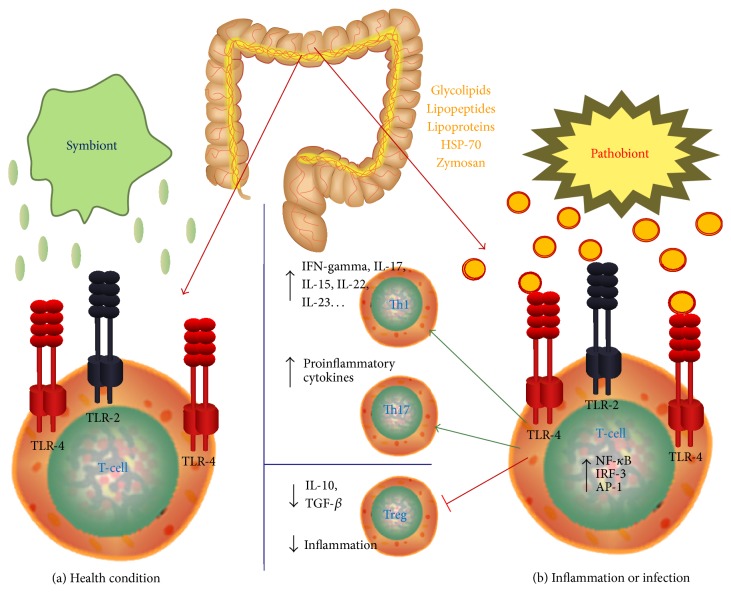
The gut is able to maintain tolerance to microbial and food antigens. The intestine minimizes the number of harmful bacteria by shaping the microbiota through a symbiotic relationship. In healthy human intestine, a constant homeostasis is maintained by the perfect regulation of microbial load and the immune response generated against it. Failure of this balance may result in various pathological conditions. Innate immune sensors, such as Toll-like receptors (TLRs), may be considered an interface among intestinal epithelial barrier, microbiota, and immune system. TLRs pathway, activated by pathogens, is involved in the pathogenesis of several infectious and inflammatory diseases. The alteration of the homeostasis between physiologic and pathogenic bacteria of intestinal flora causes a condition called dysbiosis. The breakdown of homeostasis by dysbiosis may increase susceptibility to inflammatory bowel diseases. It is evident that environment, genetics, and host immunity form a highly interactive regulatory triad that controls TLR function. Imbalanced relationships within this triad may promote aberrant TLR signaling, critically contributing to acute and chronic intestinal inflammatory processes, such as in IBD, colitis, and colorectal cancer. The study of interactions between different components of the immune systems and intestinal microbiota will open new horizons in the knowledge of gut inflammation.
Figures
References
-
- Johansson M. E. V., Holmén Larsson J. M., Hansson G. C. The two mucus layers of colon are organized by the MUC2 mucin, whereas the outer layer is a legislator of host-microbial interactions. Proceedings of the National Academy of Sciences of the United States of America. 2011;108(1):4659–4665. doi: 10.1073/pnas.1006451107. - DOI - PMC - PubMed
Publication types
MeSH terms
Substances
LinkOut - more resources
Full Text Sources
Other Literature Sources
Medical
