Patient characteristics and outcomes by GN subtype in ESRD
- PMID: 26092830
- PMCID: PMC4491300
- DOI: 10.2215/CJN.11261114
Patient characteristics and outcomes by GN subtype in ESRD
Abstract
Background and objectives: Outcomes-based research rarely focuses on patients with ESRD caused by GN. The hypotheses were that the GN subtype would clinically discriminate patient groups and independently associate with survival after ESRD therapy initiation.
Design, setting, participants, & measurements: Data were extracted from the US Renal Data System for adult patients with incident (1996-2011) ESRD attributed to six GN subtypes: FSGS, IgA nephropathy (IgAN), membranous nephropathy, membranoproliferative glomeruonephritis, lupus nephritis (LN), and vasculitis. ESRD attributed to diabetes and autosomal dominant polycystic kidney disease served as non-GN comparators. Unadjusted and adjusted mortality hazard ratios (aHRs) with 95% confidence intervals (95% CIs) were estimated using Cox regression (reference, IgAN). Models sequentially adjusted for sociodemographic (model 2), comorbidity/laboratory (model 3), and ESRD treatment modality (model 4) variables.
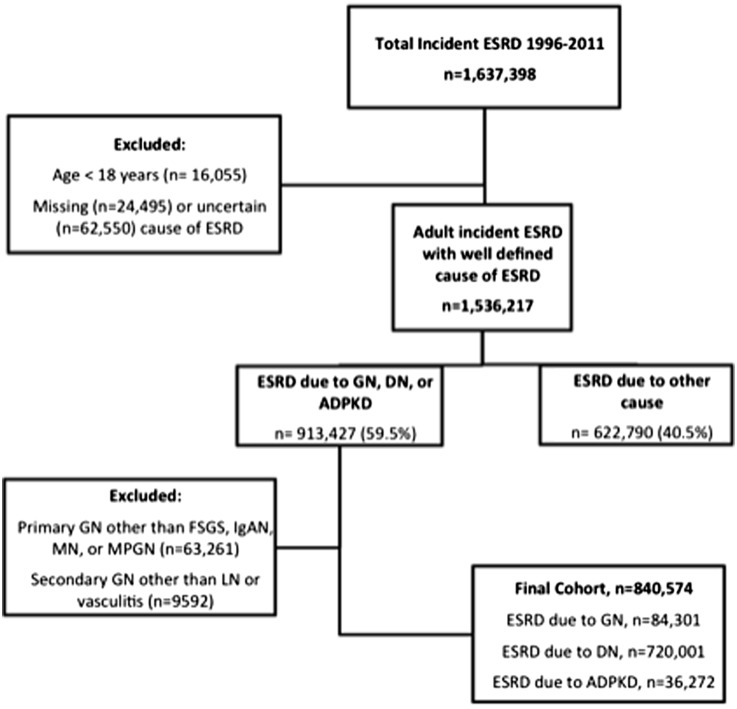
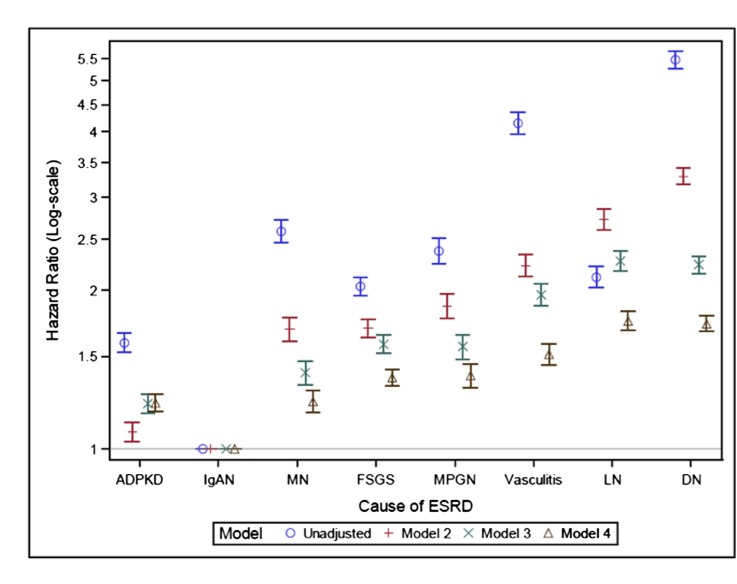
Results: Among 84,301 patients with ESRD attributed to GN, the median age ranged from 39 (LN) to 66 (vasculitis) years, male sex ranged from 18% (LN) to 68% (IgAN), and black race ranged from 7% (IgAN) to 49% (LN). Patients with IgAN had the fewest comorbidities and lowest use of hemodialysis (70.1%). After a median follow-up of 2.5 (interquartile range, 1.0-4.9) years, crude mortality was lowest in IgAN (3.7 deaths/100 person years). Compared to IgAN, adjusted mortality was highest in LN (model 4 aHR=1.75; 95% CI, 1.68 to 1.83) and in diabetes (aHR=1.73; 95% CI, 1.67 to 1.79), and was also higher in all other GN subtypes (membranous nephropathy: aHR=1.23; 95% CI, 1.17 to 1.29; FSGS: aHR=1.37; 95% CI, 1.32 to 1.42; membranoproliferative GN: aHR=1.38; 95% CI, 1.31 to 1.45; vasculitis: aHR=1.51; 95% CI, 1.45 to 1.58) and in autosomal dominant polycystic kidney disease (aHR=1.22; 95% CI, 1.18 to 1.27).
Conclusions: This study exposes substantial heterogeneity across GN subtypes at ESRD therapy initiation and identifies independent associations between GN subtype and post-ESRD mortality. These survival discrepancies warrant further study, and the utility of current research practice to group GN subtypes together when evaluating ESRD outcomes should be questioned.
Keywords: IgA nephropathy; United States Renal Data System; end-stage renal disease; epidemiology and outcomes; glomerulonephritis.
Copyright © 2015 by the American Society of Nephrology.
Figures

Comment in
-
ESRD outcomes and GN subtypes.Clin J Am Soc Nephrol. 2015 Jul 7;10(7):1117-8. doi: 10.2215/CJN.05390515. Epub 2015 Jun 19. Clin J Am Soc Nephrol. 2015. PMID: 26092826 Free PMC article. No abstract available.
References
-
- USRD System : USRDS 2013 Annual Data Report: Atlas of Chronic Kidney Disease and End-Stage Renal Disease in the United States, Bethesda, MD, National Institutes of Health, National Institute of Diabetes and Digestive and Kidney Diseases, 2013
-
- Knoop T, Vikse BE, Svarstad E, Leh S, Reisæter AV, Bjørneklett R: Mortality in patients with IgA nephropathy. Am J Kidney Dis 62: 883–890, 2013 - PubMed
-
- Mok CC, Kwok RC, Yip PS: Effect of renal disease on the standardized mortality ratio and life expectancy of patients with systemic lupus erythematosus. Arthritis Rheum 65: 2154–2160, 2013 - PubMed
-
- Yap DY, Tang CS, Ma MK, Lam MF, Chan TM: Survival analysis and causes of mortality in patients with lupus nephritis. Nephrol Dial Transplant 27: 3248–3254, 2012 - PubMed
Publication types
MeSH terms
Grants and funding
LinkOut - more resources
Full Text Sources
Medical
Miscellaneous