


Ancient Venom Systems: A Review on Cnidaria Toxins
- PMID: 26094698
- PMCID: PMC4488701
- DOI: 10.3390/toxins7062251
Ancient Venom Systems: A Review on Cnidaria Toxins
Abstract
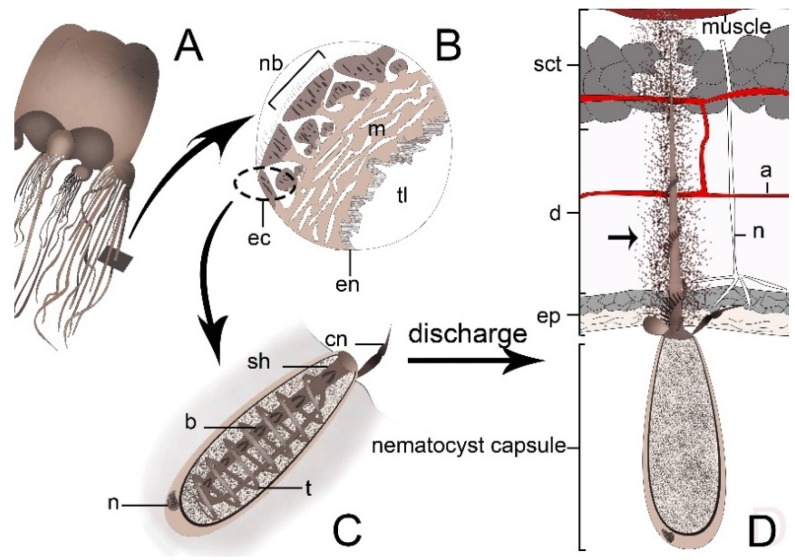
Cnidarians are the oldest extant lineage of venomous animals. Despite their simple anatomy, they are capable of subduing or repelling prey and predator species that are far more complex and recently evolved. Utilizing specialized penetrating nematocysts, cnidarians inject the nematocyst content or "venom" that initiates toxic and immunological reactions in the envenomated organism. These venoms contain enzymes, potent pore forming toxins, and neurotoxins. Enzymes include lipolytic and proteolytic proteins that catabolize prey tissues. Cnidarian pore forming toxins self-assemble to form robust membrane pores that can cause cell death via osmotic lysis. Neurotoxins exhibit rapid ion channel specific activities. In addition, certain cnidarian venoms contain or induce the release of host vasodilatory biogenic amines such as serotonin, histamine, bunodosine and caissarone accelerating the pathogenic effects of other venom enzymes and porins. The cnidarian attacking/defending mechanism is fast and efficient, and massive envenomation of humans may result in death, in some cases within a few minutes to an hour after sting. The complexity of venom components represents a unique therapeutic challenge and probably reflects the ancient evolutionary history of the cnidarian venom system. Thus, they are invaluable as a therapeutic target for sting treatment or as lead compounds for drug design.
Keywords: cnidarians; enzymes; human envenomation; neurotoxins; pore forming toxins; vasodilatory biogenic amines; venom.
Figures
References
Publication types
MeSH terms
Substances
Grants and funding
LinkOut - more resources
Full Text Sources
Other Literature Sources
Research Materials
