. 2015 Jun 22;10(6):e0128958.
doi: 10.1371/journal.pone.0128958. eCollection 2015.

Facilitators and Barriers to Safe Medication Administration to Hospital Inpatients: A Mixed Methods Study of Nurses' Medication Administration Processes and Systems (the MAPS Study)

Affiliations

Facilitators and Barriers to Safe Medication Administration to Hospital Inpatients: A Mixed Methods Study of Nurses' Medication Administration Processes and Systems (the MAPS Study)

Monsey McLeod et al. PLoS One. .

Abstract

Context: Research has documented the problem of medication administration errors and their causes. However, little is known about how nurses administer medications safely or how existing systems facilitate or hinder medication administration; this represents a missed opportunity for implementation of practical, effective, and low-cost strategies to increase safety.

Aim: To identify system factors that facilitate and/or hinder successful medication administration focused on three inter-related areas: nurse practices and workarounds, workflow, and interruptions and distractions.

Methods: We used a mixed-methods ethnographic approach involving observational fieldwork, field notes, participant narratives, photographs, and spaghetti diagrams to identify system factors that facilitate and/or hinder successful medication administration in three inpatient wards, each from a different English NHS trust. We supplemented this with quantitative data on interruptions and distractions among other established medication safety measures.

Findings: Overall, 43 nurses on 56 drug rounds were observed. We identified a median of 5.5 interruptions and 9.6 distractions per hour. We identified three interlinked themes that facilitated successful medication administration in some situations but which also acted as barriers in others: (1) system configurations and features, (2) behaviour types among nurses, and (3) patient interactions. Some system configurations and features acted as a physical constraint for parts of the drug round, however some system effects were partly dependent on nurses' inherent behaviour; we grouped these behaviours into 'task focused', and 'patient-interaction focused'. The former contributed to a more streamlined workflow with fewer interruptions while the latter seemed to empower patients to act as a defence barrier against medication errors by being: (1) an active resource of information, (2) a passive information resource, and/or (3) a 'double-checker'.

Conclusions: We have identified practical examples of system effects on work optimisation and nurse behaviours that potentially increase medication safety, and conceptualized ways in which patient involvement can increase medication safety in hospitals.


Conflict of interest statement

Competing Interests: The authors have declared that no competing interests exist.

Figures

Fig 1
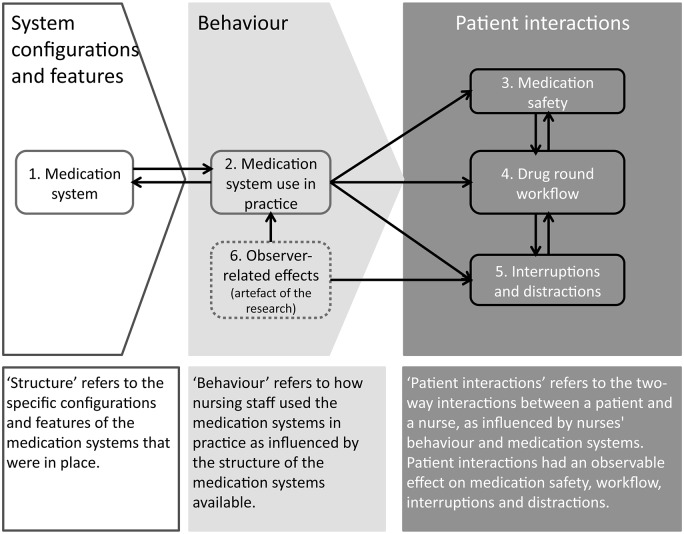
Fig 1. Conceptual overview of thematic factors that influence medication administration errors, workflow, interruptions and distractions associated with the hospital medication administration process.
There are three over-arching interlinked themes: structure, behaviour, and patient interactions that encompass the six main areas (numbered). Arrows indicate the direction of influence between areas. Dotted lines indicate the presence of the observer as an artefact of the research directly on nursing staff behaviour, and on interruptions and distractions.
Fig 2
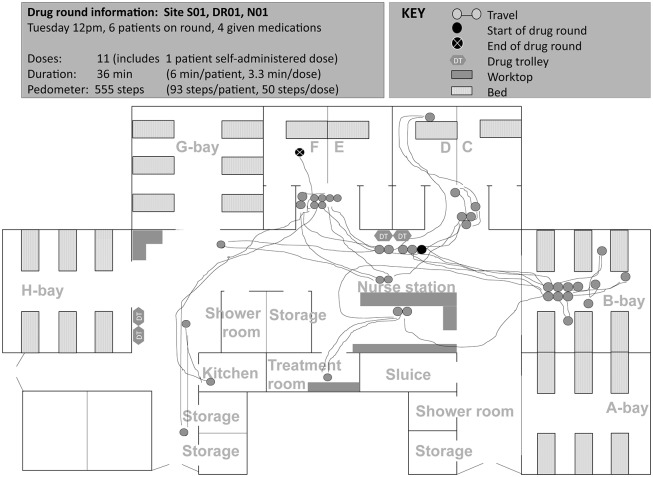
Fig 2. Spaghetti diagram showing non-linear travel by one nurse (qualified 2 years, 1 year experience on study ward) during a noon drug round at site A (map of ward not drawn to scale).
Nurse started the drug round by wheeling the drug trolley from opposite the nurse station to side room D. Nurse went to another drug trolley located near G bay (3 times): once each to find medication, a tablet cutter and a plastic medication cup. Nurse also walked and attended to a patient other than the patient she was preparing medications for during the drug round (2 times), to the nurse station to look for a paper drug chart (2), to the kitchen to retrieve nutritional supplement (1), and to help another nurse to exit the ward (1). S01, site code; DR001, drug round code; N01, nurse code. Letters refer to ward bay areas.
Fig 3
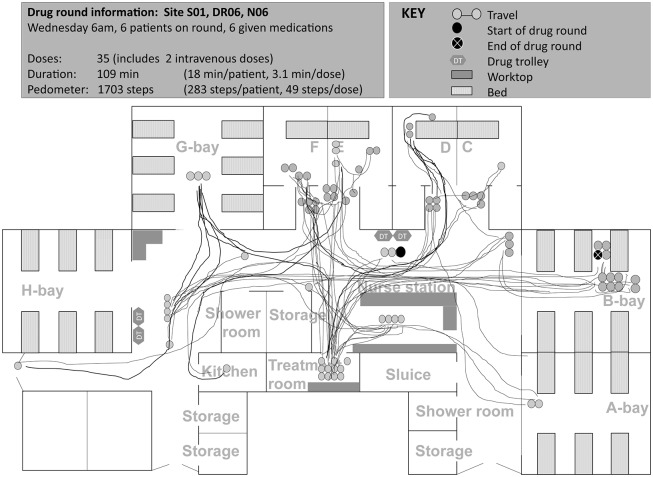
Fig 3. Spaghetti diagram showing non-linear travel by one nurse (bank staff) during a morning drug round at site A (map of ward not drawn to scale).
Nurse started the drug round by wheeling the drug trolley from opposite the nurse station to side room D. Nurse went to the treatment room 11 times during the drug round: to look for medicines in the stock cupboard (2 times),to prepare medications for intravenous administration (5), to look for the drug chart (1) and to access the medicines fridge (3). During the drug round, the nurse also travelled to locations other than between the drug trolley and patients’ bedside: another drug trolley to look for medicines (4 times), nurse station to look for drug chart (1), nurse station to look for keys (2), kitchen to retrieve nutritional supplement (1), to another nurse to provide handover of patients (2), and to the ward next door to look for medicine (1). S01, site code; DR006, drug round code; N06, nurse code. Letters refer to ward bay areas.
Fig 4
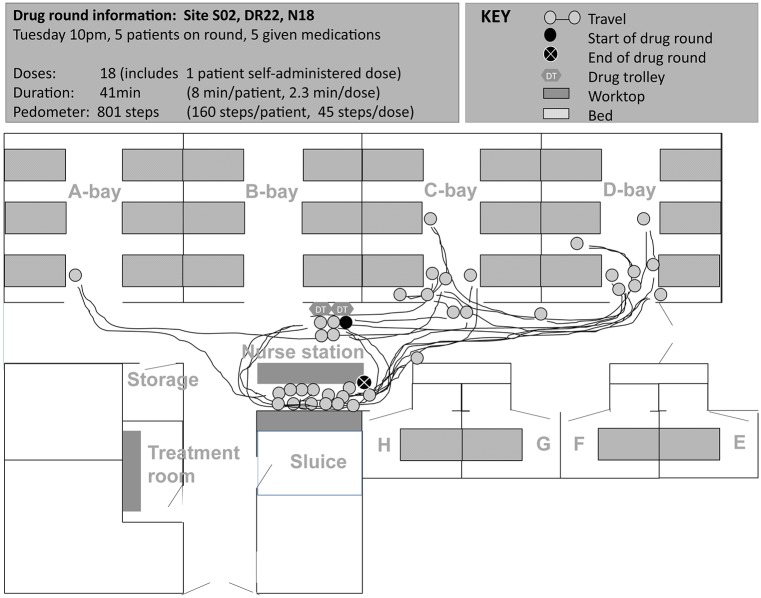
Fig 4. Spaghetti diagram showing non-linear travel by one nurse during night-time drug round at site B (map of ward not drawn to scale).
Nurse started the drug round by logging on to the tablet computer next to the drug trolleys at 21:05, placed tablet computer on drug trolley and wheeled it to each patient starting in C-bay. Nurse went to the nurse base station area 13 times during the drug round: to look for master key to patient’s bedside medication locker (2 times), to look for medicines in stock cupboard (4), to access desktop computer to view and/or sign patient medication orders (5), to take a telephone call (1), and to prepare from the controlled drugs cupboard (2). Nurse ended the drug round at the nurse base station double checking on the electronic prescribing and medication administration system that all the relevant doses had been signed. S02, site code; DR022, drug round code; N18, nurse code. Letters refer to ward bay areas.
Fig 5
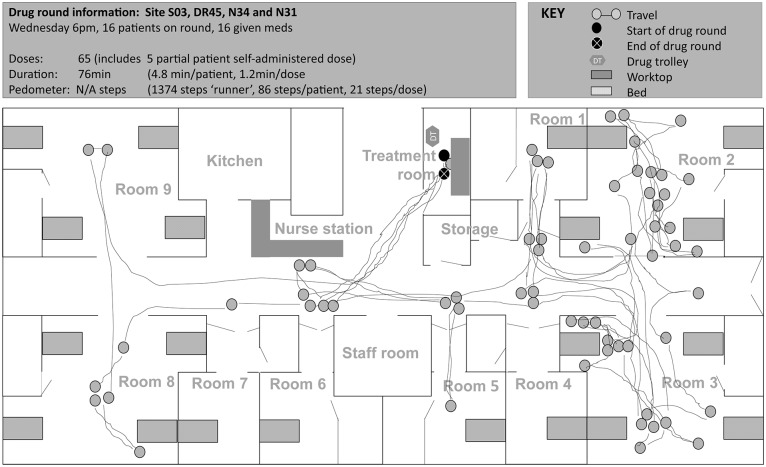
Fig 5. Spaghetti diagram showing changes in travel pattern of one nurse during a ‘two-nurse’ evening drug round at site C (map of ward not drawn to scale).
At site C, two nurses typically worked together on the drug round to administer medications to all patients; one nurse ‘caller’ and one nurse ‘runner’. The diagram shows the path of travel by the nurse ‘caller’ who initially stayed with the drug trolley: she used the laptop attached to the drug trolley to access the patient’s electronic medication administration record, called out doses to the ‘runner’ to retrieve medications from the bedside medication locker and prepared some doses from the drug trolley. After preparing medicines for the patient in room 6, the nurse caller went ‘ahead’ while the nurse runner remained to administer the doses; this process was repeated whenever a patient required assistance to take the medicines and led to a ‘single-nurse’ drug round for parts of the remaining round. During the drug round, the nurse caller went to the nurse base station twice (to retrieve a patient‘s folder to check oxygen saturation and to retrieve another patient’s folder for paper warfarin medication order) and treatment room once (to retrieve medication from the fridge). S03, site code; DR045, drug round code; N34 and N31, nurse codes.
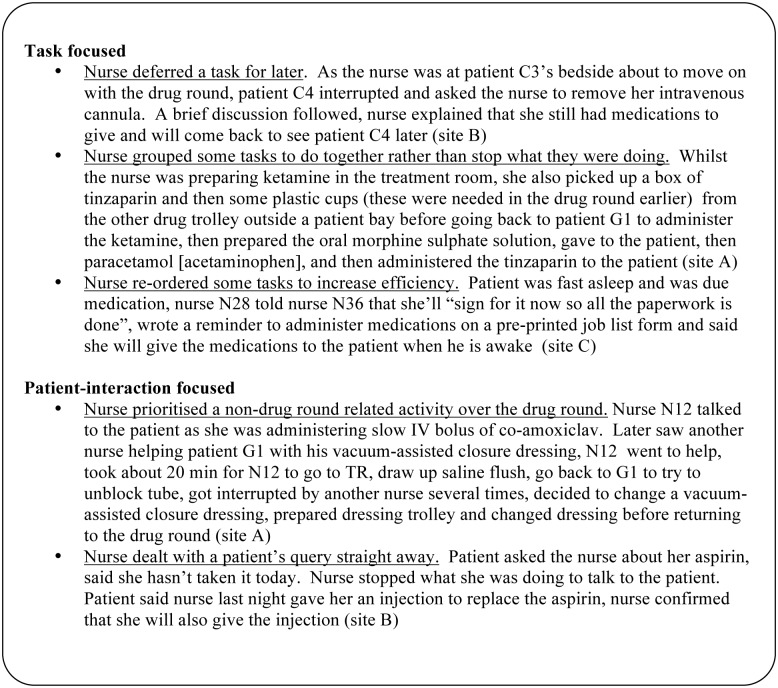
Fig 6
Fig 6. Examples of inherent behavioural tendencies and associated influences on how systems were utilized, and how medication administration related problems, interruptions, distractions, and workflow were managed.
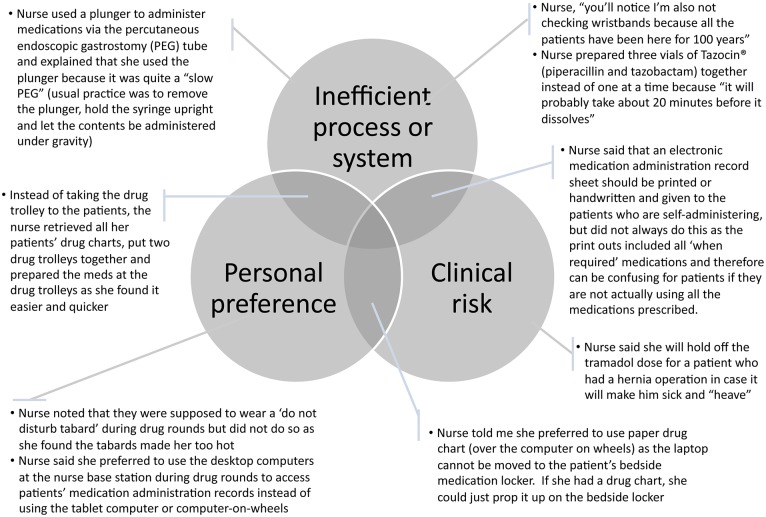
Fig 7
Fig 7. Three main overlapping reasons for intentional ‘alternative’ practices identified from nurses’ feedback.
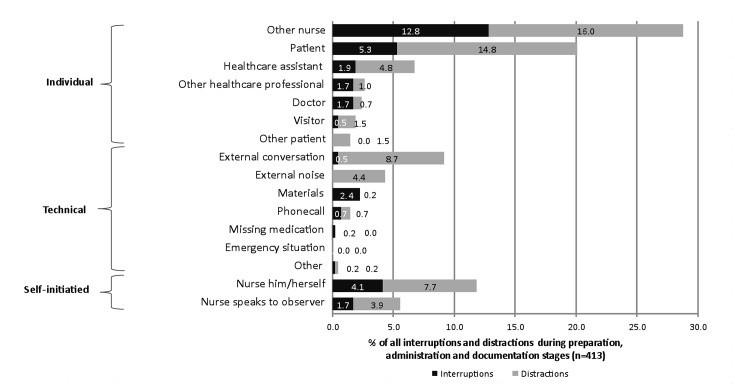
Fig 8
Fig 8. Sources of interruptions and distractions during drug rounds percentage of a total of 413 interruptions and distractions observed at the preparation, administration, and documentation stages of drug rounds).
Median 5.5 interruptions per drug round hour, range 0 to 24; median 9.6 distractions per drug round hour, range 0 to 30; median 15.5 interruptions and distractions combined per drug round hour.

References

    1. Keers RN, Williams SD, Cooke J, Ashcroft DM. Prevalence and nature of medication administration errors in health care settings: a systematic review of direct observational evidence. Ann Pharmacother. 2013;47(2):237–56. 10.1345/aph.1R147 - DOI - PubMed
    1. McLeod MC, Barber N, Franklin B. Methodological variations and their effects on reported medication administration error rates. BMJ Qual Saf. 2013;22(4):278–289. 10.1136/bmjqs-2012-001330 - DOI - PubMed
    1. McLeod M. Medication administration processes and systems—exploring the effects of systems-based variation on the safety of medication administration in the UK National Health Service [PhD thesis]. London: University College London, The School of Pharmacy; 2013.
    1. Keers RN, Williams SD, Cooke J, Ashcroft DM. Causes of Medication Administration Errors in Hospitals: a Systematic Review of Quantitative and Qualitative Evidence. Drug Saf. 2013;36(11):1045–67. 10.1007/s40264-013-0090-2 - DOI - PMC - PubMed
    1. Kohn L, Corrigan J, Donaldson M. To err is human: Building a safer health system. Washington, DC: National Academy Press; 1999. - PubMed

Publication types

MeSH terms