Paraneoplastic Neurological Syndromes and Glutamic Acid Decarboxylase Antibodies
- PMID: 26099072
- PMCID: PMC4838033
- DOI: 10.1001/jamaneurol.2015.0749
Paraneoplastic Neurological Syndromes and Glutamic Acid Decarboxylase Antibodies
Abstract
Importance: Little is known of glutamic acid decarboxylase antibodies (GAD-abs) in the paraneoplastic context. Clinical recognition of such cases will lead to prompt tumor diagnosis and appropriate treatment.
Objective: To report the clinical and immunological features of patients with paraneoplastic neurological syndromes (PNS) and GAD-abs.
Design, setting, and participants: Retrospective case series study and immunological investigations conducted in February 2014 in a center for autoimmune neurological disorders. Fifteen cases with GAD65-abs evaluated between 1995 and 2013 who fulfilled criteria of definite or possible PNS without concomitant onconeural antibodies were included in this study.
Main outcomes and measures: Analysis of the clinical records of 15 patients and review of 19 previously reported cases. Indirect immunofluorescence with rat hippocampal neuronal cultures and cell-based assays with known neuronal cell-surface antigens were used. One hundred six patients with GAD65-abs and no cancer served as control individuals.
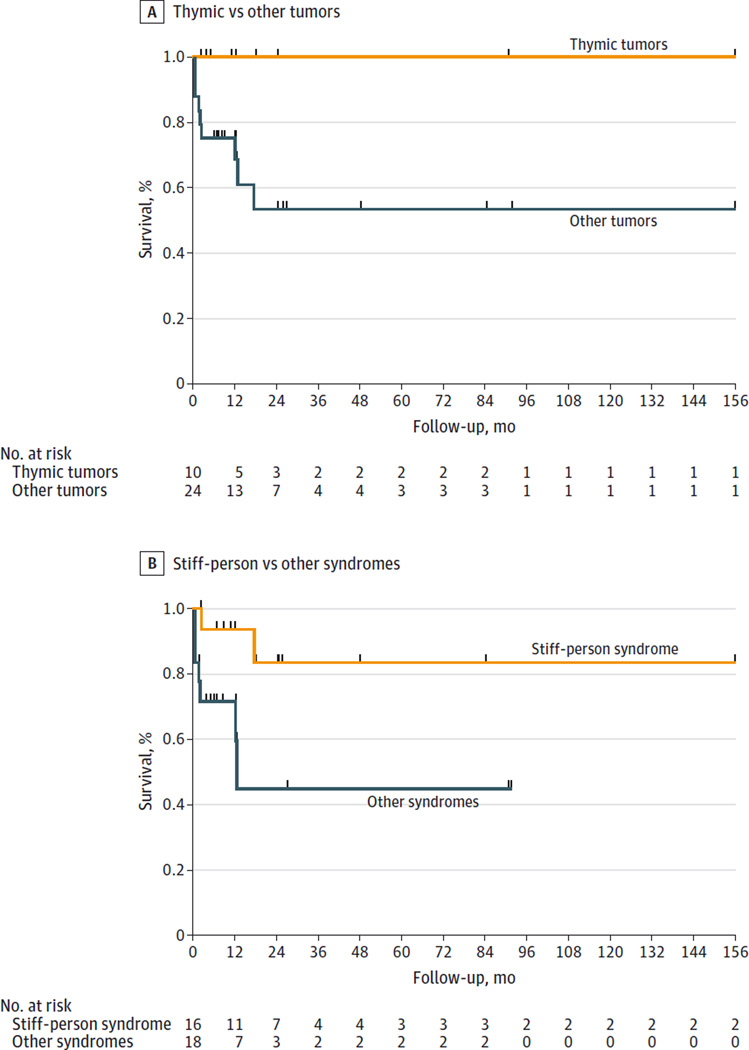
Results: Eight of the 15 patients with cancer presented as classic paraneoplastic syndromes (5 limbic encephalitis, 1 paraneoplastic encephalomyelitis, 1 paraneoplastic cerebellar degeneration, and 1 opsoclonus-myoclonus syndrome). When compared with the 106 non-PNS cases, those with PNS were older (median age, 60 years vs 48 years; P = .03), more frequently male (60% vs 13%; P < .001), and had more often coexisting neuronal cell-surface antibodies, mainly against γ-aminobutyric acid receptors (53% vs 11%; P < .001). The tumors more frequently involved were lung (n = 6) and thymic neoplasms (n = 4). The risk for an underlying tumor was higher if the presentation was a classic PNS, if it was different from stiff-person syndrome or cerebellar ataxia (odds ratio, 10.5; 95% CI, 3.2-34.5), or if the patient had coexisting neuronal cell-surface antibodies (odds ratio, 6.8; 95% CI, 1.1-40.5). Compared with the current series, the 19 previously reported cases had more frequent stiff-person syndrome (74% vs 13%; P = .001) and better responses to treatment (79% vs 27%; P = .005). Predictors of improvement in the 34 patients (current and previously reported) included presentation with stiff-person syndrome and the presence of a thymic tumor.
Conclusions and relevance: Patients with GAD-abs must be screened for an underlying cancer if they have clinical presentations different from those typically associated with this autoimmunity or develop classic PNS. The risk for cancer increases with age, male sex, and the presence of coexisting neuronal cell-surface antibodies.
Conflict of interest statement
Figures
Comment in
-
Association of Paraneoplastic Neurological Disorders With Glutamic Acid Decarboxylase Antibodies.JAMA Neurol. 2015 Aug;72(8):861-2. doi: 10.1001/jamaneurol.2015.1068. JAMA Neurol. 2015. PMID: 26098962 No abstract available.
References
-
- Malter MP, Helmstaedter C, Urbach H, Vincent A, Bien CG. Antibodies to glutamic acid decarboxylase define a form of limbic encephalitis. Ann Neurol. 2010;67(4):470–478. - PubMed
-
- Saiz A, Blanco Y, Sabater L, et al. Spectrum of neurological syndromes associated with glutamic acid decarboxylase antibodies: diagnostic clues for this association. Brain. 2008;131(pt 10):2553–2563. - PubMed
-
- Hernández-Echebarría L, Saiz A, Arés A, et al. Paraneoplastic encephalomyelitis associated with pancreatic tumor and anti-GAD antibodies. Neurology. 2006;66(3):450–451. - PubMed
-
- Bataller L, Valero C, Díaz R, et al. Cerebellar ataxia associated with neuroendocrine thymic carcinoma and GAD antibodies. J Neurol Neurosurg Psychiatry. 2009;80(6):696–697. - PubMed
Publication types
MeSH terms
Substances
Grants and funding
LinkOut - more resources
Full Text Sources
Other Literature Sources