


A biodegradable ocular implant for long-term suppression of intraocular pressure
- PMID: 26100093
- PMCID: PMC4551556
- DOI: 10.1007/s13346-015-0240-4
A biodegradable ocular implant for long-term suppression of intraocular pressure
Abstract
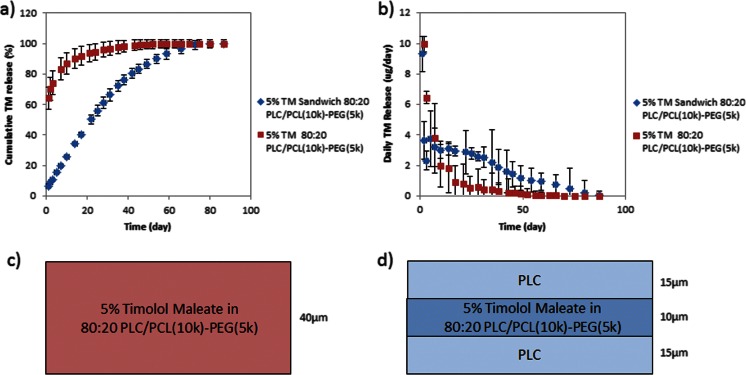
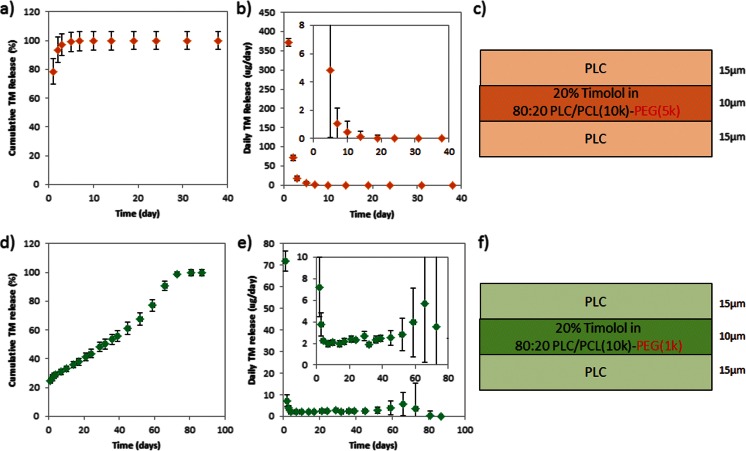
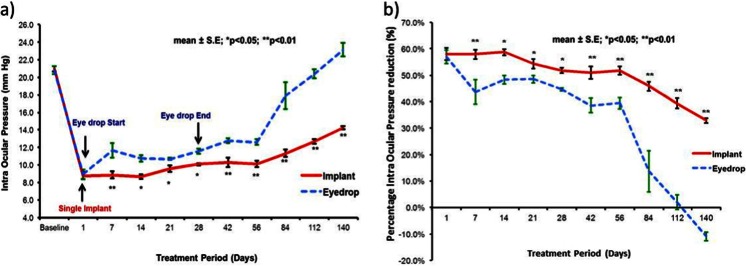
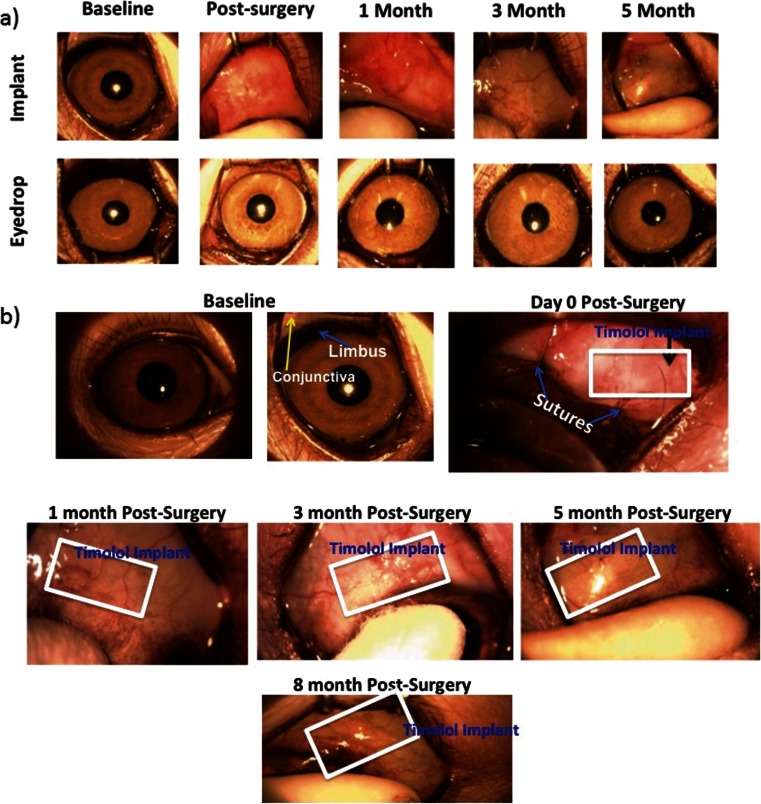
Timolol maleate (TM) has been used for many years for the reduction of intraocular pressure (IOP) in glaucoma patients. However, the topical mode of administration (eyedrops) is far from optimal because of the issues of low bioavailability, high drug wastage, and lack of patient compliance. Suboptimal control of the IOP leads to disease progression and eventually to blindness. Ideally, TM is delivered to the patient so that its action is both localized and sustained for 3 months or more. In this work, we developed a subconjunctival TM microfilm for sustained, long-term delivery of TM to the eyes, using the biodegradable elastomer poly(lactide-co-caprolactone) (PLC). The copolymer is biocompatible and has flexibility and mechanical characteristics suitable for a patient-acceptable implant. Controlling the release of TM for 3 months is challenging, and this work describes how, by using a combination of multilayering and blending with poly(ethylene glycol) (PEG) copolymers, we were able to develop a TM-incorporated biodegradable film that can deliver TM at a therapeutic dose for 90 days in vitro. The data was further confirmed in a diseased primate model, with sustained IOP-lowering effects for 5 months with a single implant, with acceptable biocompatibility and partial degradation.
Figures
References
-
- Organization WHO. Glaucoma is second leading cause of blindness globally. 2004. http://www.who.int/bulletin/volumes/82/11/feature1104/en/. 2014. - PMC - PubMed
-
- Saccà SC, Cartiglia C, Izzotti A. Chapter 4—Glaucoma: an overview. In: Preedy VR, editor. Handbook of nutrition, diet and the eye. San Diego: Academic; 2014. pp. 29–40.
-
- Leske MC, Heijl A, Hyman L, Bengtsson B. Early manifest glaucoma trial: design and baseline data. Ophthalmology. 1999;106(11):2144–53. - PubMed
-
- Plummer CE, MacKay EO, Gelatt KN. Comparison of the effects of topical administration of a fixed combination of dorzolamide-timolol to monotherapy with timolol or dorzolamide on IOP, pupil size, and heart rate in glaucomatous dogs. Vet Ophthalmol. 2006;9(4):245–9. - PubMed
Publication types
MeSH terms
Substances
LinkOut - more resources
Full Text Sources
Other Literature Sources
Medical
