


Mammalian touch catches up
- PMID: 26100741
- PMCID: PMC4577443
- DOI: 10.1016/j.conb.2015.05.003
Mammalian touch catches up
Abstract
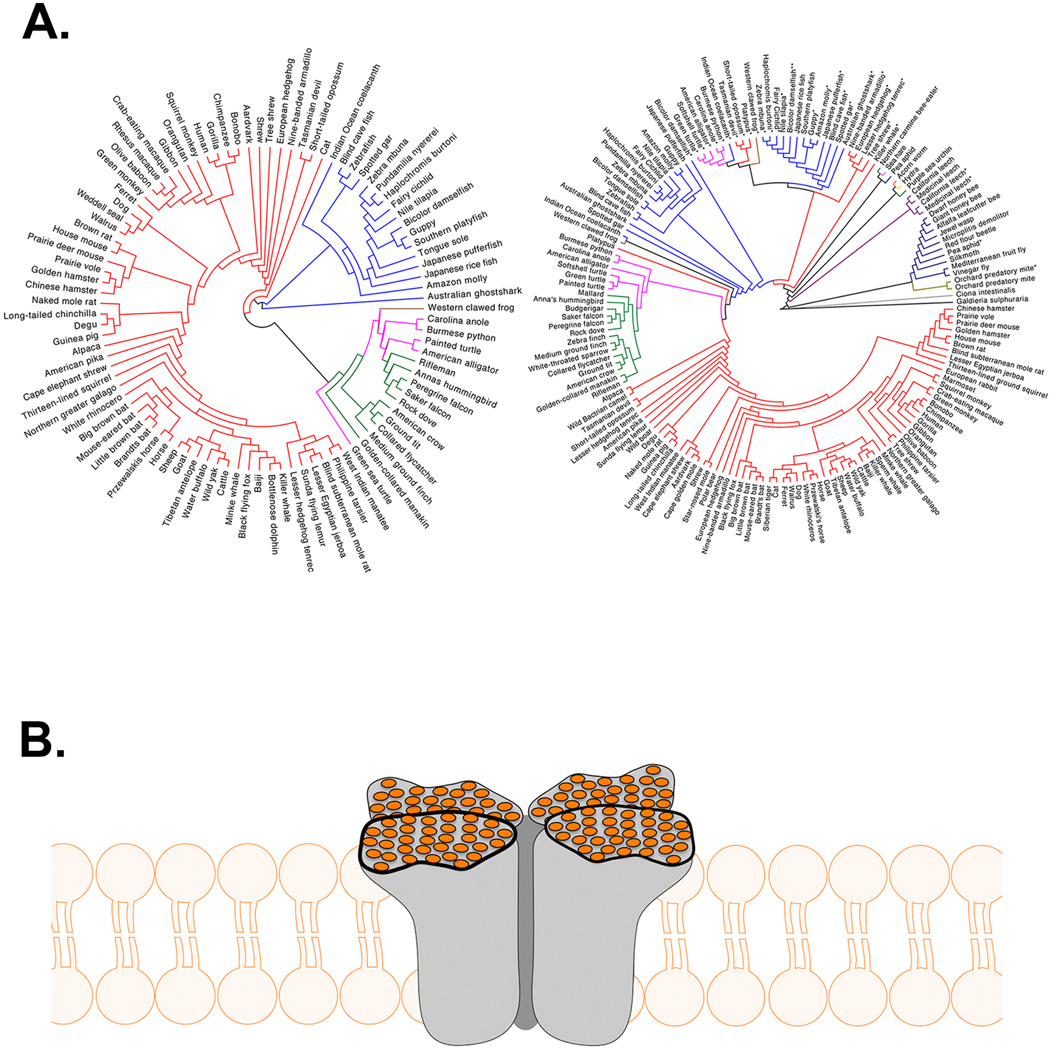
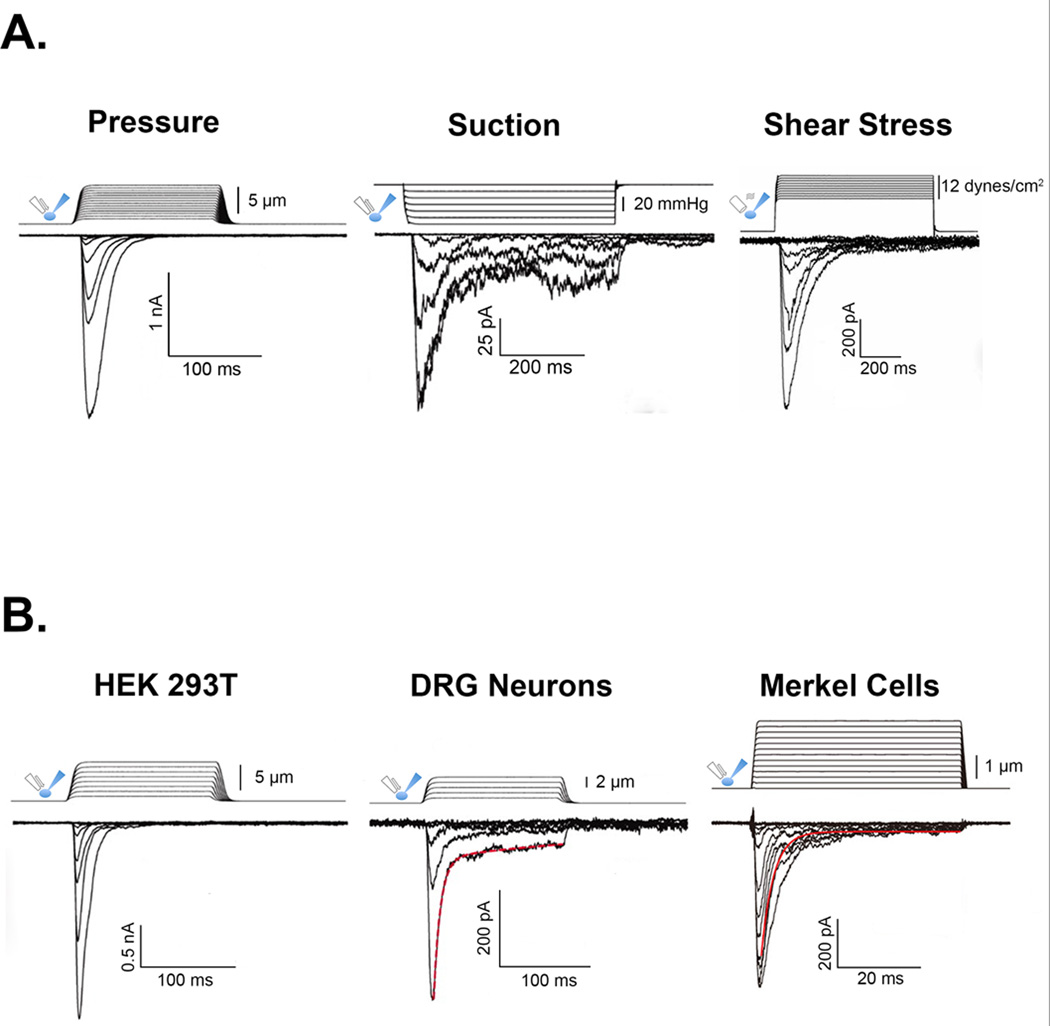
An assortment of touch receptors innervate the skin and encode different tactile features of the environment. Compared with invertebrate touch and other sensory systems, our understanding of the molecular and cellular underpinnings of mammalian touch lags behind. Two recent breakthroughs have accelerated progress. First, an arsenal of cell-type-specific molecular markers allowed the functional and anatomical properties of sensory neurons to be matched, thereby unraveling a cellular code for touch. Such markers have also revealed key roles of non-neuronal cell types, such as Merkel cells and keratinocytes, in touch reception. Second, the discovery of Piezo genes as a new family of mechanically activated channels has fueled the discovery of molecular mechanisms that mediate and mechanotransduction in mammalian touch receptors.
Copyright © 2015 Elsevier Ltd. All rights reserved.
Figures
References
-
- Massie P. Touching, thinking, being: the sense of touch in Aristotle's De anima and its implications. Minerva - an internet journal of philosophy. 2013;17:74–101.
-
- Viano C. Aristotle and the starting point of moral development: The notion of natural virtue. In: Stern-Gillet S, Corrigan K, editors. Reading ancient texts volume II: Aristotle and Neoplatonism; Essays in Honor of Denis O’Brien. Koninslijki Brill NV; 2008. p. 280. vol II.]
-
- Johnson KO. The roles and functions of cutaneous mechanoreceptors. Curr Opin Neurobiol. 2001;11:455–461. - PubMed
Publication types
MeSH terms
Grants and funding
LinkOut - more resources
Full Text Sources
Other Literature Sources
