


Evolutionary trends and functional anatomy of the human expanded autophagy network
- PMID: 26103419
- PMCID: PMC4590607
- DOI: 10.1080/15548627.2015.1059558
Evolutionary trends and functional anatomy of the human expanded autophagy network
Abstract
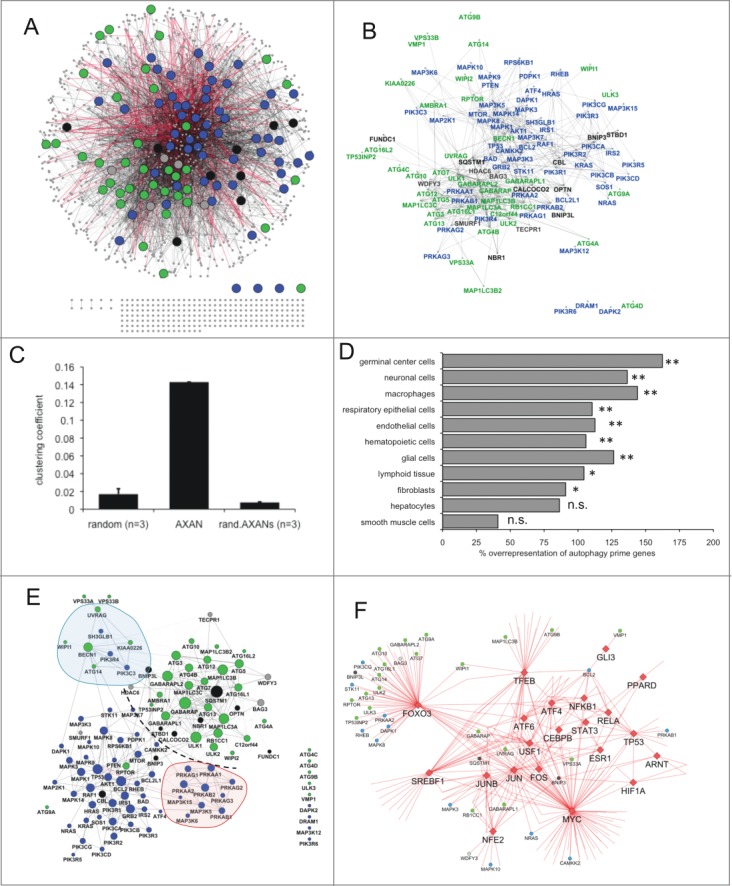
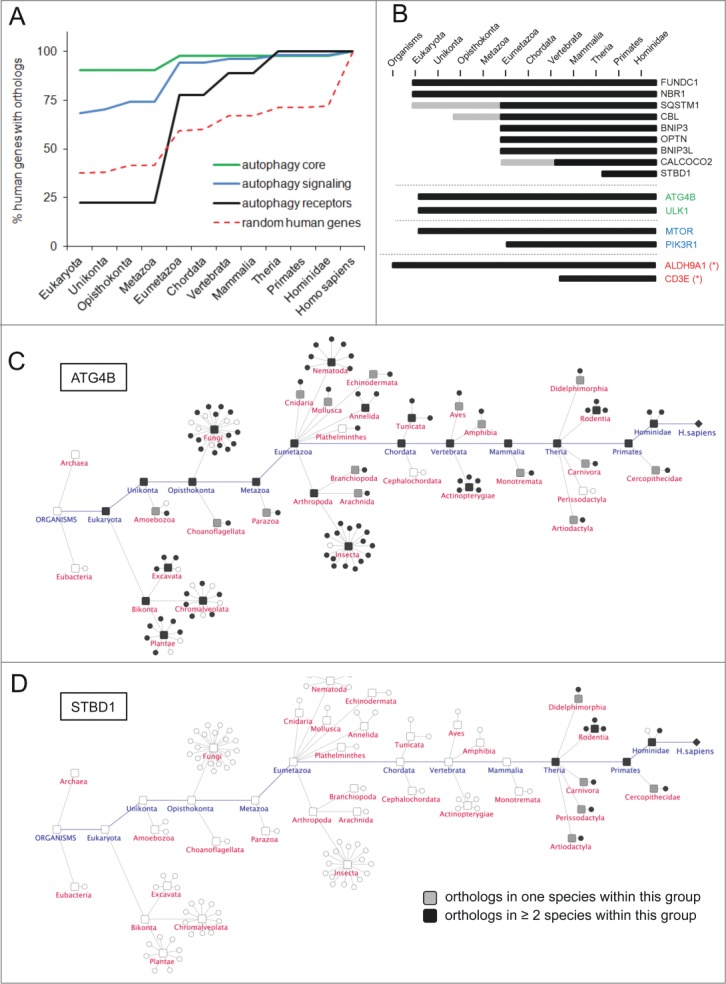
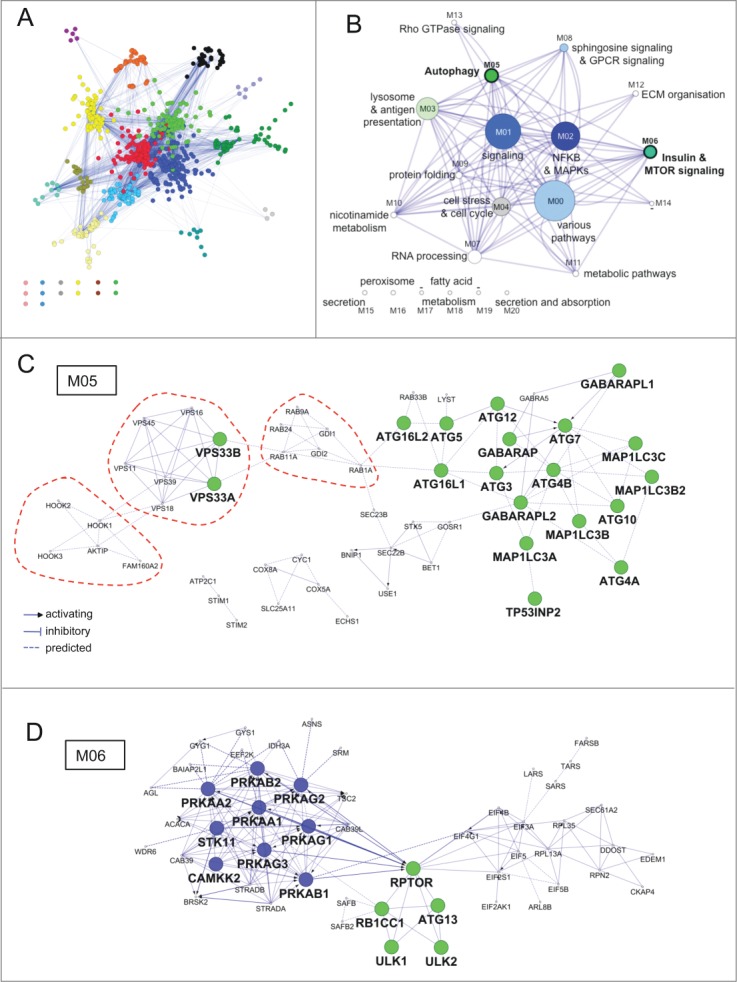
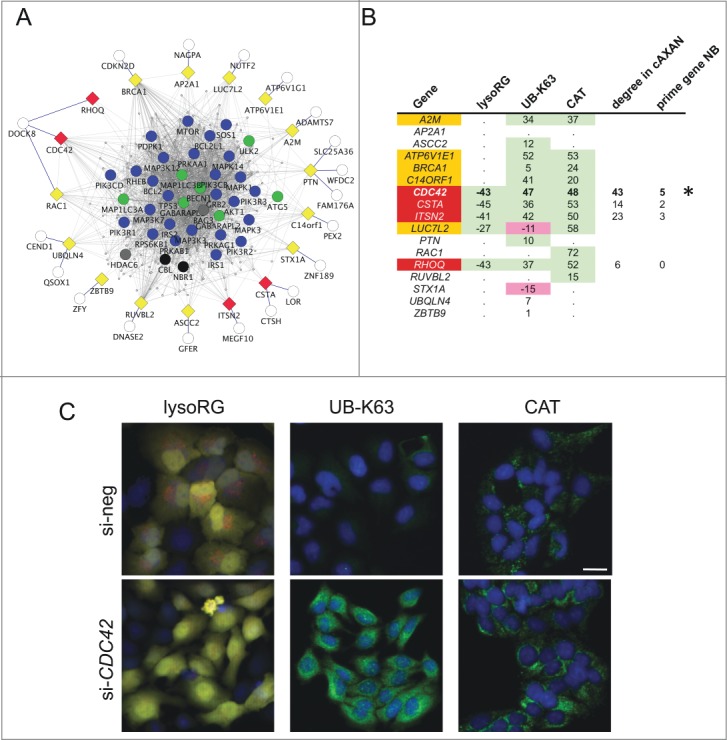
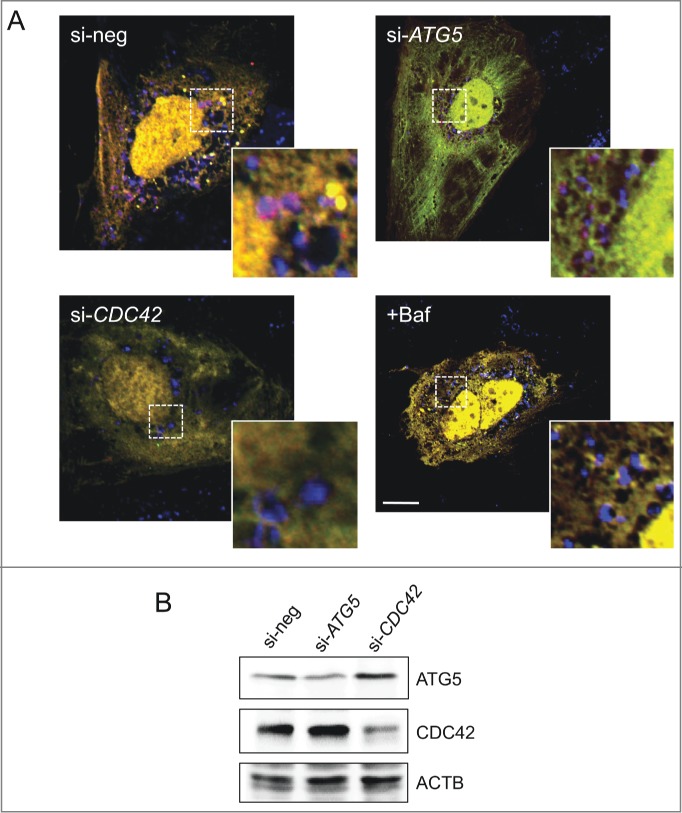
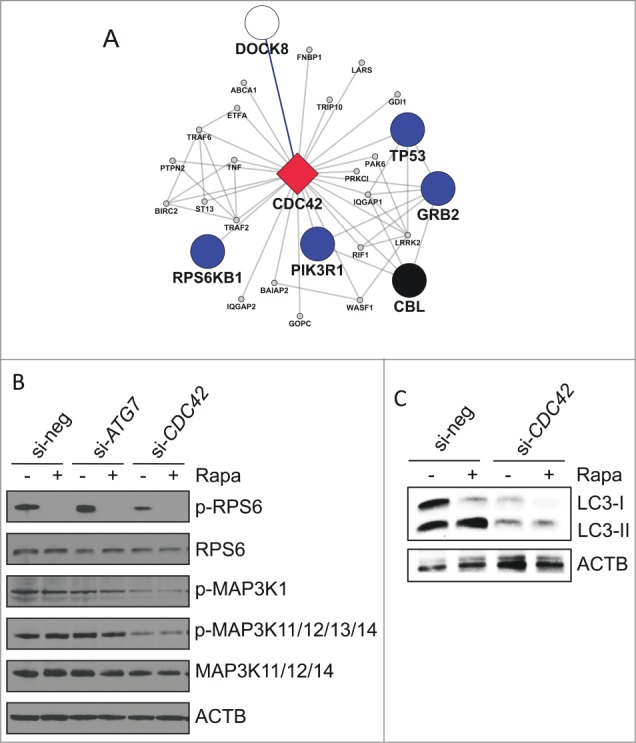
All eukaryotic cells utilize autophagy for protein and organelle turnover, thus assuring subcellular quality control, homeostasis, and survival. In order to address recent advances in identification of human autophagy associated genes, and to describe autophagy on a system-wide level, we established an autophagy-centered gene interaction network by merging various primary data sets and by retrieving respective interaction data. The resulting network ('AXAN') was analyzed with respect to subnetworks, e.g. the prime gene subnetwork (including the core machinery, signaling pathways and autophagy receptors) and the transcription subnetwork. To describe aspects of evolution within this network, we assessed the presence of protein orthologs across 99 eukaryotic model organisms. We visualized evolutionary trends for prime gene categories and evolutionary tracks for selected AXAN genes. This analysis confirms the eukaryotic origin of autophagy core genes while it points to a diverse evolutionary history of autophagy receptors. Next, we used module identification to describe the functional anatomy of the network at the level of pathway modules. In addition to obvious pathways (e.g., lysosomal degradation, insulin signaling) our data unveil the existence of context-related modules such as Rho GTPase signaling. Last, we used a tripartite, image-based RNAi - screen to test candidate genes predicted to play a role in regulation of autophagy. We verified the Rho GTPase, CDC42, as a novel regulator of autophagy-related signaling. This study emphasizes the applicability of system-wide approaches to gain novel insights into a complex biological process and to describe the human autophagy pathway at a hitherto unprecedented level of detail.
Keywords: CDC42; Cytoscape; autophagy; evolution; network biology; systems biology.
Figures
References
-
- Guan JL, Simon AK, Prescott M, Menendez JA, Liu F, Wang F, Wang C, Wolvetang E, Vazquez-Martin A, Zhang J. Autophagy in stem cells. Autophagy 2013; 9:830-49; PMID:23486312; http://dx.doi.org/ 10.4161/auto.24132 - DOI - PMC - PubMed
-
- Kroemer G, Marino G, Levine B. Autophagy and the integrated stress response. Mol Cell 2010; 40:280-93; PMID:20965422; http://dx.doi.org/ 10.1016/j.molcel.2010.09.023 - DOI - PMC - PubMed
-
- Levine B, Mizushima N, Virgin HW. Autophagy in immunity and inflammation. Nature 2011; 469:323-35; PMID:21248839; http://dx.doi.org/ 10.1038/nature09782 - DOI - PMC - PubMed
-
- Kaza N, Kohli L, Roth KA. Autophagy in brain tumors: a new target for therapeutic intervention. Brain Pathol 2012; 22:89-98; PMID:22150924; http://dx.doi.org/ 10.1111/j.1750-3639.2011.00544.x - DOI - PMC - PubMed
-
- Palumbo S, Comincini S. Autophagy and ionizing radiation in tumors: the “survive or not survive” dilemma. J Cell Physiol 2013; 228:1-8; PMID:22585676; http://dx.doi.org/ 10.1002/jcp.24118 - DOI - PubMed
Publication types
MeSH terms
Substances
Grants and funding
LinkOut - more resources
Full Text Sources
Other Literature Sources
Miscellaneous
