. 2015 Jun 23;10(6):e0130337.
doi: 10.1371/journal.pone.0130337. eCollection 2015.

Long-Term Exposure to Ambient Air Pollution and Metabolic Syndrome in Adults

Affiliations

Long-Term Exposure to Ambient Air Pollution and Metabolic Syndrome in Adults

Ikenna C Eze et al. PLoS One. .

Abstract

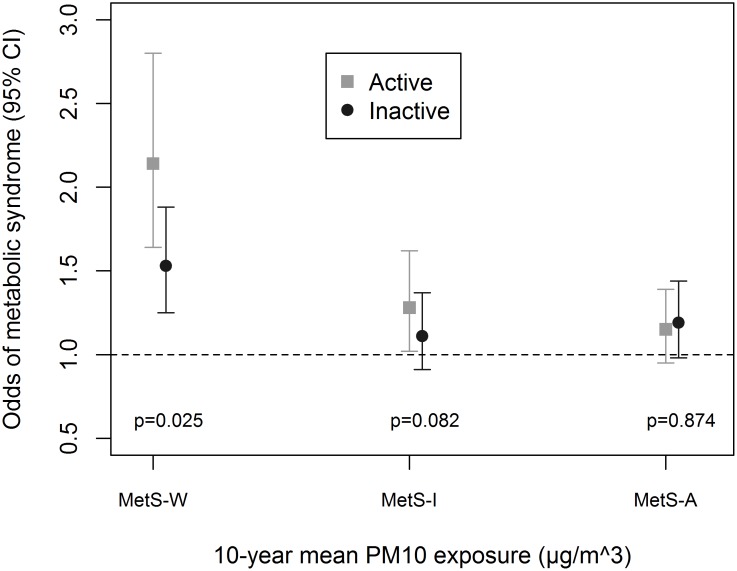
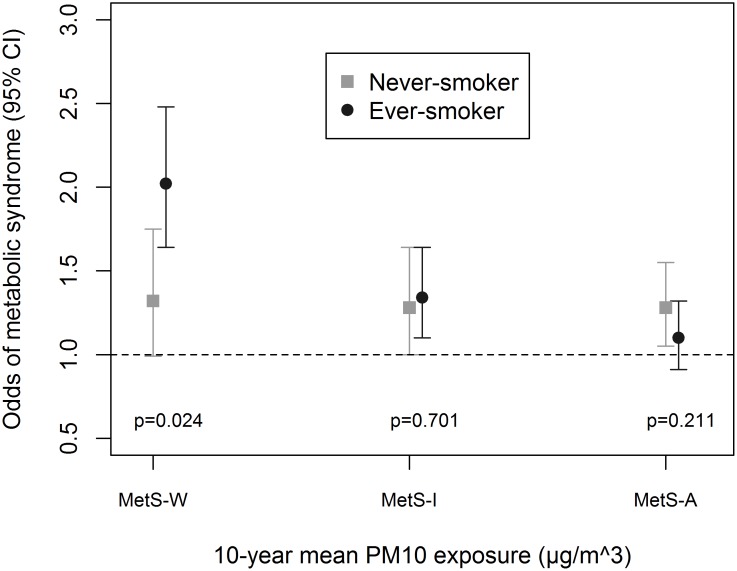
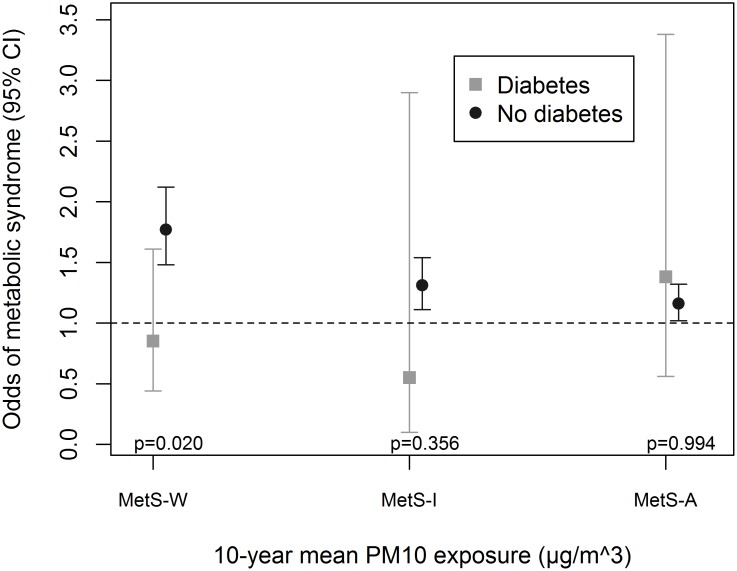
Air pollutants (AP) play a role in subclinical inflammation, and are associated with cardiovascular morbidity and mortality. Metabolic syndrome (MetS) is inflammatory and precedes cardiovascular morbidity and type 2 diabetes. Thus, a positive association between AP and MetS may be hypothesized. We explored this association, (taking into account, pathway-specific MetS definitions), and its potential modifiers in Swiss adults. We studied 3769 participants of the Swiss Cohort Study on Air Pollution and Lung and Heart Diseases in Adults, reporting at least four-hour fasting time before venepuncture. AP exposures were 10-year mean residential PM10 (particulate matter <10μm in diameter) and NO2 (nitrogen dioxide). Outcomes included MetS defined by World Health Organization (MetS-W), International Diabetes Federation (MetS-I) and Adult Treatment Panel-III (MetS-A) using four- and eight-hour fasting time limits. We also explored associations with individual components of MetS. We applied mixed logistic regression models to explore these associations. The prevalence of MetS-W, MetS-I and MetS-A were 10%, 22% and 18% respectively. Odds of MetS-W, MetS-I and MetS-A increased by 72% (51-102%), 31% (11-54%) and 18% (4-34%) per 10μg/m3 increase in 10-year mean PM10. We observed weaker associations with NO2. Associations were stronger among physically-active, ever-smokers and non-diabetic participants especially with PM10 (p<0.05). Associations remained robust across various sensitivity analyses including ten imputations of missing observations and exclusion of diabetes cases. The observed associations between AP exposure and MetS were sensitive to MetS definitions. Regarding the MetS components, we observed strongest associations with impaired fasting glycemia, and positive but weaker associations with hypertension and waist-circumference-based obesity. Cardio-metabolic effects of AP may be majorly driven by impairment of glucose homeostasis, and to a less-strong extent, visceral adiposity. Well-designed prospective studies are needed to confirm these findings.


Conflict of interest statement

Competing Interests: The authors have declared that no competing interests exist.

Figures

Fig 1
Fig 1. Effect modification by vigorous physical activity.
MetS-W: Metabolic syndrome according to World Health Organization. MetS-I: Metabolic syndrome according to International Diabetes Federation. MetS-A: Metabolic syndrome according to Adult Treatment Panel-III criteria. Active defined as vigorous physical activity ≥30 minutes per week. Inactive defined as vigorous physical activity <30minutes per week. Fully adjusted models include age, sex, educational attainment, neighbourhood socio-economic index, occupational exposure to vapours, gases, dusts and fumes, smoking status, smoked pack-years, exposure to passive smoke, consumption of fruits and raw vegetables, and body mass index. PM10: particulate matter <10μm in diameter from all sources. All analyses were done with four-hour fasting participants. Participants’ study area was treated as a random effect in all models. Odds ratio values refer to increments of 10μg/m3 in PM10 exposure. Total N = 3684; N(physically-active) = 2115.
Fig 2
Fig 2. Effect modification by smoking status.
MetS-W: Metabolic syndrome according to World Health Organization. MetS-I: Metabolic syndrome according to International Diabetes Federation. MetS-A: Metabolic syndrome according to Adult Treatment Panel-III criteria. Fully adjusted models include age, sex, educational attainment, neighbourhood socio-economic index, occupational exposure to vapours, gases, dusts and fumes, exposure to passive smoke, consumption of fruits and raw vegetables, physical activity and body mass index. PM10: particulate matter <10μm in diameter from all sources. All analyses were done with four-hour fasting participants. Participants’ study area was treated as a random effect in all models. Odds ratio values refer to increments of 10μg/m3 in PM10 exposure. Total N = 3684; N(never-smoker) = 1623.
Fig 3
Fig 3. Effect modification by diabetes status.
MetS-W: Metabolic syndrome according to World Health Organization. MetS-I: Metabolic syndrome according to International Diabetes Federation. MetS-A: Metabolic syndrome according to Adult Treatment Panel-III criteria. Fully adjusted models include age, sex, educational attainment, neighbourhood socio-economic index, occupational exposure to vapours, gases, dusts and fumes, smoking status, smoked pack-years, exposure to passive smoke, consumption of fruits and raw vegetables, physical activity and body mass index. PM10: particulate matter <10μm in diameter from all sources. All analyses were done with four-hour fasting participants. Participants’ study area was treated as a random effect in all models. Odds ratio values refer to increments of 10μg/m3 in PM10 exposure. Total N = 3684; N(diabetes) = 144.
Fig 4
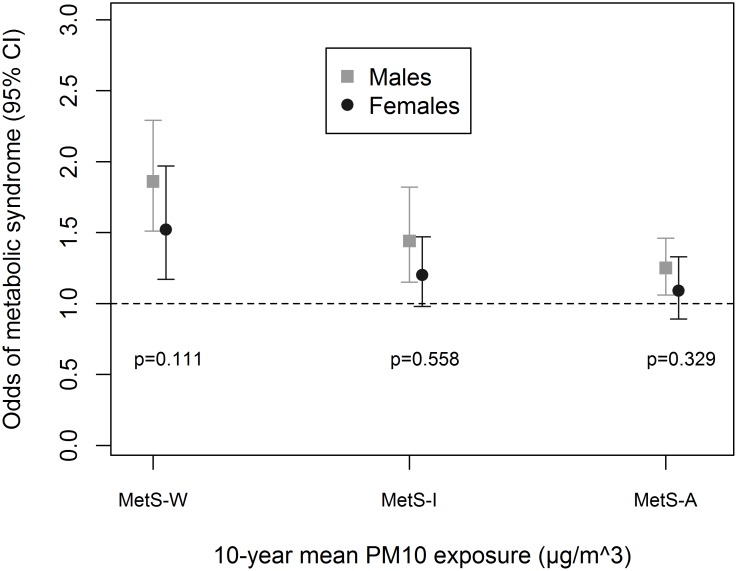
Fig 4. Effect modification by sex.
MetS-W: Metabolic syndrome according to World Health Organization. MetS-I: Metabolic syndrome according to International Diabetes Federation. MetS-A: Metabolic syndrome according to Adult Treatment Panel-III criteria. Fully adjusted models include age, educational attainment, neighbourhood socio-economic index, occupational exposure to vapours, gases, dusts and fumes, smoking status, smoked pack-years, exposure to passive smoke, consumption of fruits and raw vegetables, physical activity and body mass index. PM10: particulate matter <10μm in diameter from all sources. NO2: nitrogen dioxide. All analyses were done with four-hour fasting participants. Participants’ study area was treated as a random effect in all models. Odds ratio values refer to increments of 10μg/m3 in PM10 exposure. Total N = 3684; N(males) = 1746.
Fig 5
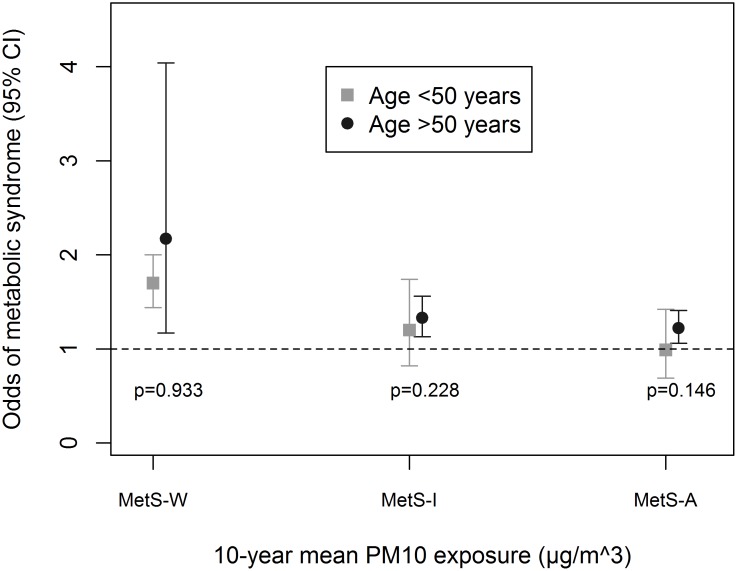
Fig 5. Effect modification by age group.
MetS-W: Metabolic syndrome according to World Health Organization. MetS-I: Metabolic syndrome according to International Diabetes Federation. MetS-A: Metabolic syndrome according to Adult Treatment Panel-III criteria. Fully adjusted models include sex, educational attainment, neighbourhood socio-economic index, occupational exposure to vapours, gases, dusts and fumes, smoking status, smoked pack-years, exposure to passive smoke, consumption of fruits and raw vegetables, physical activity and body mass index. PM10: particulate matter <10μm in diameter from all sources. All analyses were done with four-hour fasting participants. Participants’ study area was treated as a random effect in all models. Odds ratio values refer to increments of 10μg/m3 in PM10 exposure. Total N = 3684; N(age≤50) = 1393.

References

    1. Alberti KG, Zimmet PZ. Definition, diagnosis and classification of diabetes mellitus and its complications. Part 1: diagnosis and classification of diabetes mellitus provisional report of a WHO consultation. Diabet Med. 1998;15(7):539–553. - PubMed
    1. Alberti KG, Zimmet P, Shaw J. The metabolic syndrome—a new worldwide definition. Lancet. 2005;366(9491):1059–1062. - PubMed
    1. Expert Panel on Detection Evaluation, and Treatment of High Blood Cholesterol in Adults. Executive summary of the third report of the National Cholesterol Education Program (NCEP). Expert Panel on Detection, Evaluation, and Treatment of High Blood Cholesterol in Adults (Adult Treatment Panel III). JAMA. 2001;285(19):2486–2497. - PubMed
    1. Grundy SM, Cleeman JI, Daniels SR, Donato KA, Eckel RH, Franklin BA, et al. Diagnosis and management of the metabolic syndrome: an American Heart Association/ National Heart, Lung, and Blood Institute Scientific Statement. Circulation. 2005;112(17):2735–2752. - PubMed
    1. Lim SS, Vos T, Flaxman AD, Danaei G, Shibuya K, Adair-Rohani H, et al. A comparative risk assessment of burden of disease and injury attributable to 67 risk factors and risk factor clusters in 21 regions, 1990–2010: a systematic analysis for the Global Burden of Disease Study 2010. Lancet. 2012;380(9859):2224–2260. 10.1016/S0140-6736(12)61766-8 - DOI - PMC - PubMed

Publication types