


Microbial community development on the surface of Hans and Werenskiold Glaciers (Svalbard, Arctic): a comparison
- PMID: 26104673
- PMCID: PMC4546695
- DOI: 10.1007/s00792-015-0764-z
Microbial community development on the surface of Hans and Werenskiold Glaciers (Svalbard, Arctic): a comparison
Abstract
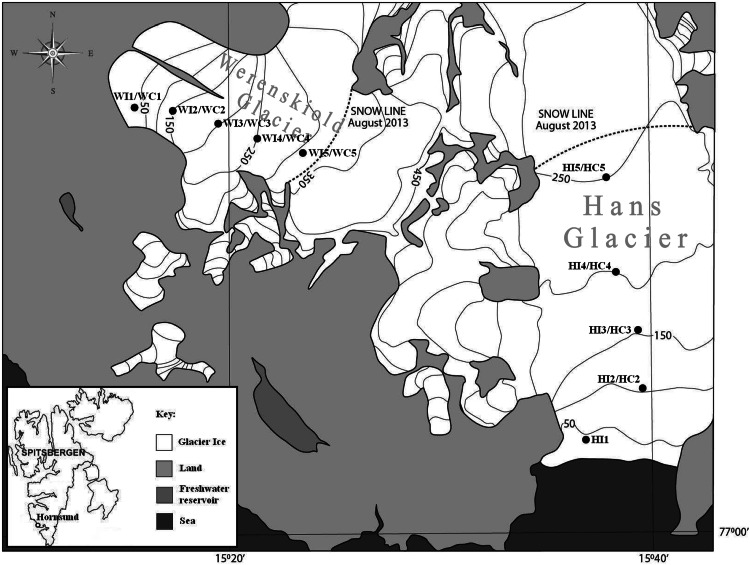
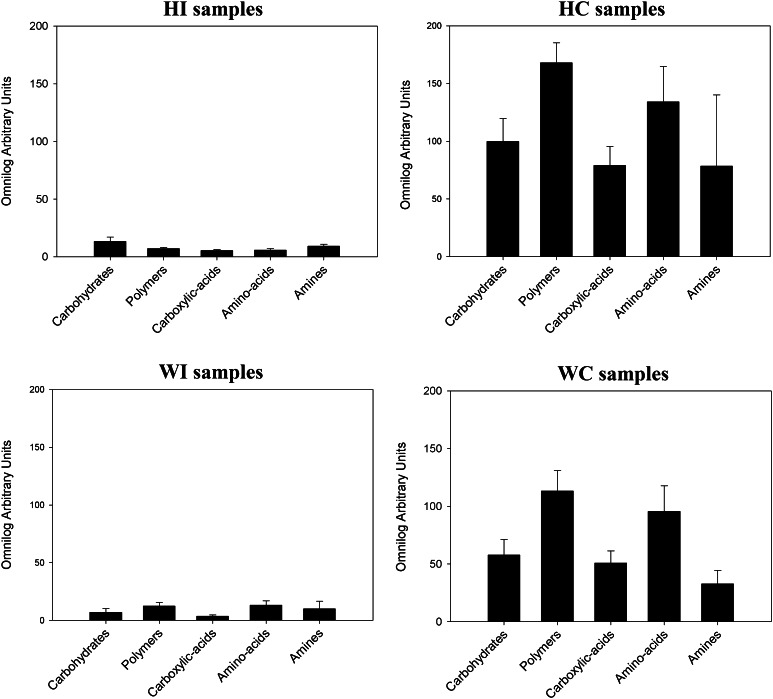
Surface ice and cryoconite holes of two types of polythermal Svalbard Glaciers (Hans Glacier--grounded tidewater glacier and Werenskiold Glacier-land-based valley glacier) were investigated in terms of chemical composition, microbial abundance and diversity. Gathered data served to describe supraglacial habitats and to compare microbe-environment interactions on those different type glaciers. Hans Glacier samples displayed elevated nutrient levels (DOC, nitrogen and seston) compared to Werenskiold Glacier. Adjacent tundra formations, bird nesting sites and marine aerosol were candidates for allochtonic enrichment sources. Microbial numbers were comparable on both glaciers, with surface ice containing cells in the range of 10(4) mL(-1) and cryoconite sediment 10(8) g(-1) dry weight. Denaturating gradient gel electrophoresis band-based clustering revealed differences between glaciers in terms of dominant bacterial taxa structure. Microbial community on Werenskiold Glacier benefited from the snow-released substances. On Hans Glacier, this effect was not as pronounced, affecting mainly the photoautotrophs. Over-fertilization of Hans Glacier surface was proposed as the major factor, desensitizing the microbial community to the snow melt event. Nitrogen emerged as a limiting factor in surface ice habitats, especially to Eukaryotic algae.
Figures


References
-
- Anesio AM, Hodson AJ, Fritz A, Psenner R, Sattler B. High microbial activity on glaciers: importance to the global carbon cycle. Glob Change Biol. 2009;15:955–960. doi: 10.1111/j.1365-2486.2008.01758.x. - DOI
-
- Anesio AM, Sattler B, Foreman C, Telling J, Hodson A, Tranter M, Psenner R. Carbon fluxes through bacterial communities on glacier surfaces. Ann Glaciol. 2010;56:32–40. doi: 10.3189/172756411795932092. - DOI
Publication types
MeSH terms
LinkOut - more resources
Full Text Sources
Other Literature Sources
