


Disruptive environmental chemicals and cellular mechanisms that confer resistance to cell death
- PMID: 26106145
- PMCID: PMC4565614
- DOI: 10.1093/carcin/bgv032
Disruptive environmental chemicals and cellular mechanisms that confer resistance to cell death
Abstract
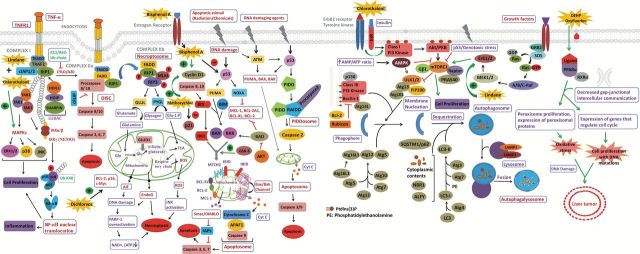
Cell death is a process of dying within biological cells that are ceasing to function. This process is essential in regulating organism development, tissue homeostasis, and to eliminate cells in the body that are irreparably damaged. In general, dysfunction in normal cellular death is tightly linked to cancer progression. Specifically, the up-regulation of pro-survival factors, including oncogenic factors and antiapoptotic signaling pathways, and the down-regulation of pro-apoptotic factors, including tumor suppressive factors, confers resistance to cell death in tumor cells, which supports the emergence of a fully immortalized cellular phenotype. This review considers the potential relevance of ubiquitous environmental chemical exposures that have been shown to disrupt key pathways and mechanisms associated with this sort of dysfunction. Specifically, bisphenol A, chlorothalonil, dibutyl phthalate, dichlorvos, lindane, linuron, methoxychlor and oxyfluorfen are discussed as prototypical chemical disruptors; as their effects relate to resistance to cell death, as constituents within environmental mixtures and as potential contributors to environmental carcinogenesis.
© The Author 2015. Published by Oxford University Press. All rights reserved. For Permissions, please email: journals.permissions@oup.com.
Figures
References
Publication types
MeSH terms
Substances
Grants and funding
LinkOut - more resources
Full Text Sources
Other Literature Sources
Molecular Biology Databases
