


Psychosocial interventions for benzodiazepine harmful use, abuse or dependence
- PMID: 26106751
- PMCID: PMC11023022
- DOI: 10.1002/14651858.CD009652.pub2
Psychosocial interventions for benzodiazepine harmful use, abuse or dependence
Abstract
Background: Benzodiazepines (BZDs) have a sedative and hypnotic effect upon people. Short term use can be beneficial but long term BZD use is common, with several risks in addition to the potential for dependence in both opiate and non-opiate dependent patients.
Objectives: To evaluate the effectiveness of psychosocial interventions for treating BZD harmful use, abuse or dependence compared to pharmacological interventions, no intervention, placebo or a different psychosocial intervention on reducing the use of BZDs in opiate dependent and non-opiate dependent groups.
Search methods: We searched the Cochrane Central Register of Controlled Trials (CENTRAL- the Cochrane Library issue 12, 2014) which includes the Cochrane Drugs and Alcohol Group Specialized Register; PubMed (from 1966 to December 2014); EMBASE (from 1988 to December 2014); CINAHL Cumulative Index to Nursing and AlliedHealth Literature (1982 to September 2013); PsychINFO (1872 to December 2014); ERIC (Education Resources Information Centre, (January 1966 to September 2013); All EBM Reviews (1991 to September 2013, Ovid Interface); AMED (Allied & Alternative Medicine) 1985 to September 2013); ASSIA (Applied Social Sciences Index & Abstracts (1960 to September 2013); LILACS (January 1982 to September 2013);Web of Science (1900 to December 2014);Electronic Grey Literature Databases: Dissertation Abstract; Index to Theses.
Selection criteria: Randomised controlled trials examining the use of a psychosocial intervention to treat BZDs versus pharmacological interventions,no intervention, placebo or a different psychosocial intervention on reducing the use of BZDs in opiate dependent and non-opiate dependent groups.
Data collection and analysis: We used the standard methodological procedures outlined in Cochrane Guidelines.
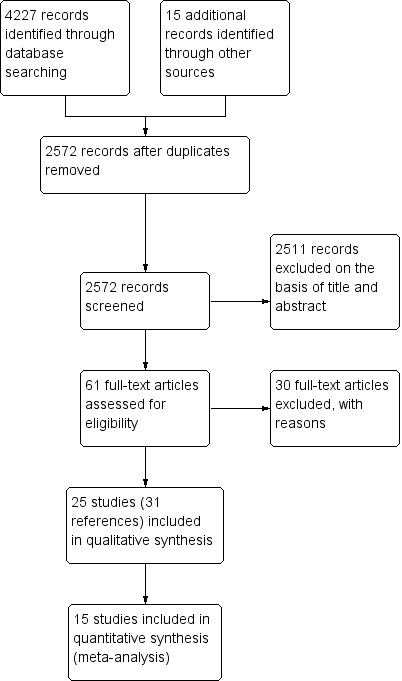
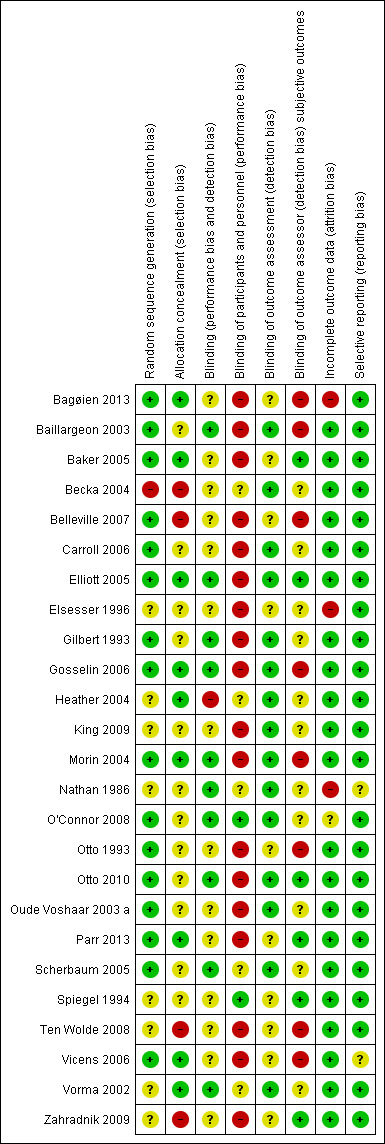
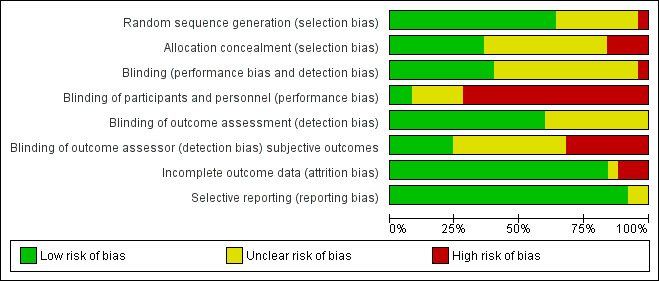
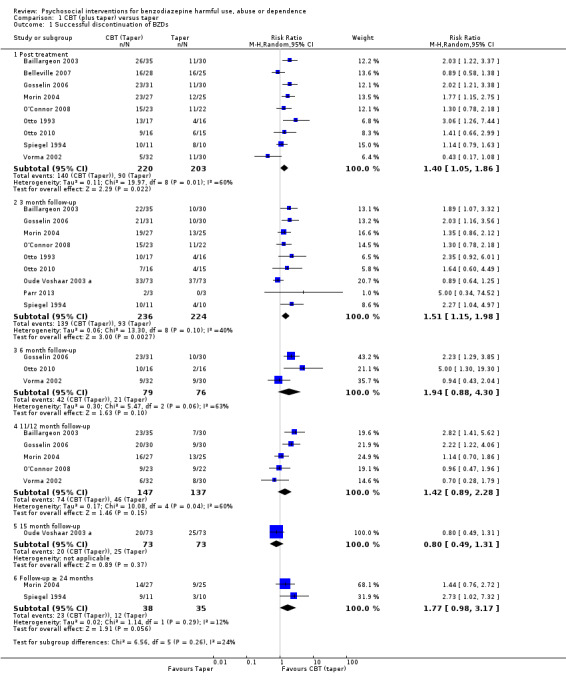
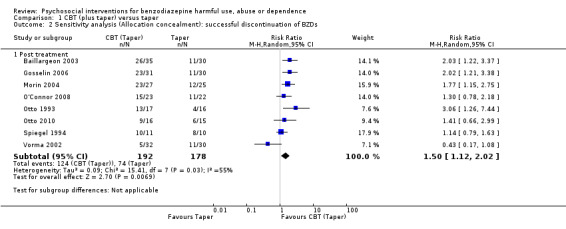
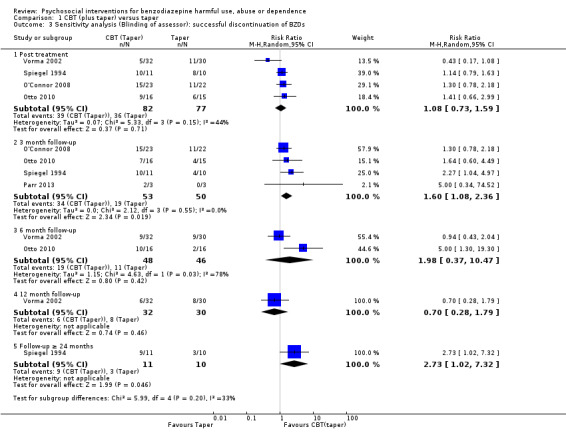
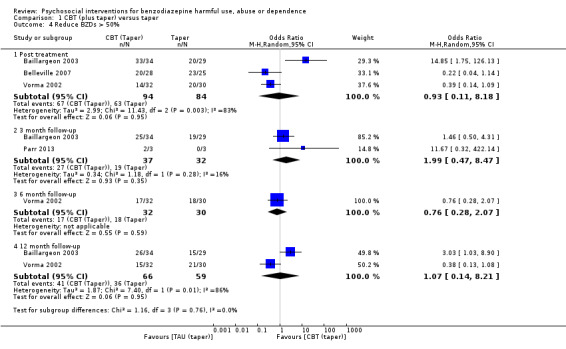
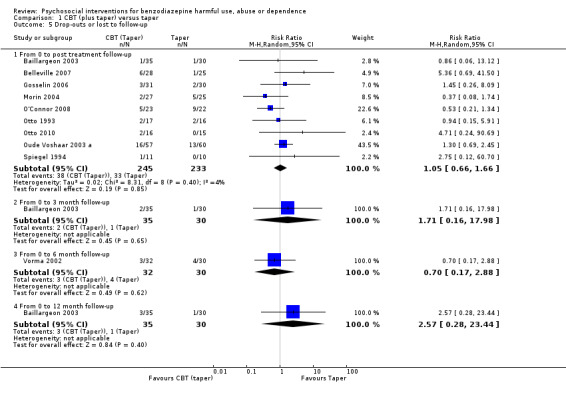
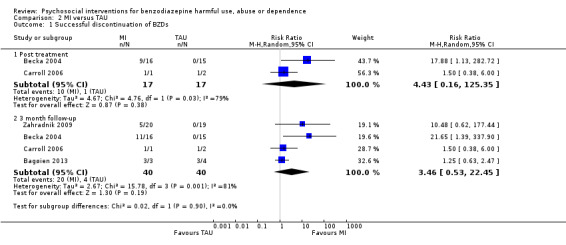
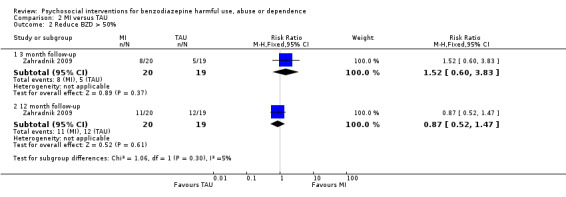
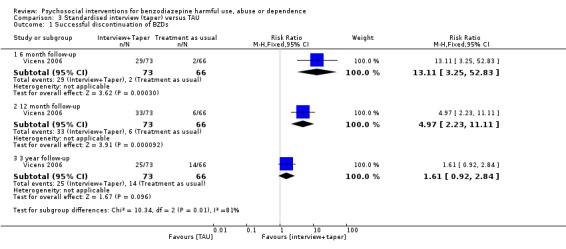
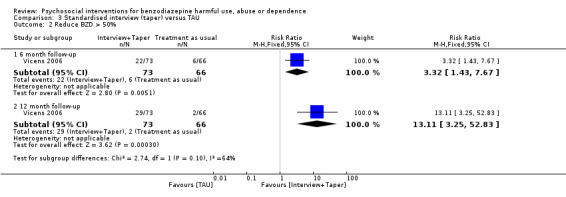
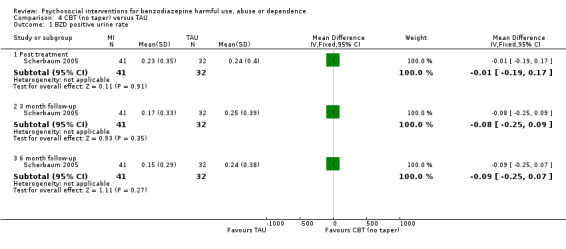
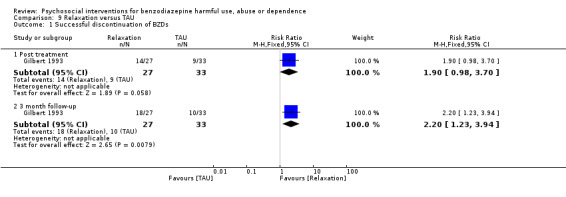
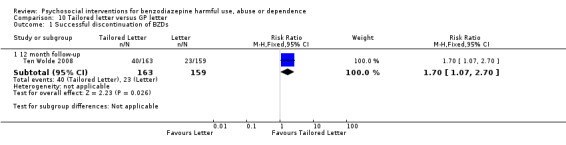
Main results: Twenty-five studies including 1666 people met the inclusion criteria. The studies tested many different psychosocial interventions including cognitive behavioural therapy (CBT) (some studies with taper, other studies with no taper), motivational interviewing (MI),letters to patients advising them to reduce or quit BZD use, relaxation studies, counselling delivered electronically and advice provided by a general practitioner (GP). Based on the data obtained, we performed two meta-analyses in this Cochrane review: one assessing the effectiveness of CBT plus taper versus taper only (575 participants), and one assessing MI versus treatment as usual (TAU) (80 participants).There was moderate quality of evidence that CBT plus taper was more likely to result in successful discontinuation of BZDs within four weeks post treatment compared to taper only (Risk ratio (RR) 1.40, 95% confidence interval (CI) 1.05 to 1.86; nine trials, 423 participants) and moderate quality of evidence at three month follow-up (RR 1.51, 95% CI 1.15 to 1.98) in favour of CBT (taper)for 575 participants. The effects were less certain at 6, 11, 12, 15 and 24 months follow-up. The effect of CBT on reducing BZDs by> 50% was uncertain for all time points examined due to the low quality evidence. There was very low quality evidence for the effect on drop-outs at any of the time intervals; post-treatment (RR 1.05, 95% CI 0.66 to 1.66), three month follow-up (RR 1.71, 95% CI0.16 to 17.98) and six month follow-up (RR 0.70, 95% CI 0.17 to 2.88).Based on the very low quality of evidence available, the effect of MI versus TAU for all the time intervals is unclear; post treatment(RR 4.43, 95% CI 0.16 to 125.35; two trials, 34 participants), at three month follow-up (RR 3.46, 95% CI 0.53 to 22.45; four trials,80 participants), six month follow-up (RR 0.14, 95% CI 0.01 to 1.89) and 12 month follow-up (RR 1.25, 95% CI 0.63 to 2.47).There was very low quality of evidence to determine the effect of MI on reducing BZDs by > 50% at three month follow-up (RR 1.52,95% CI 0.60 to 3.83) and 12 month follow-up (RR 0.87, 95% CI 0.52 to 1.47). The effects on drop-outs from treatment at any of e time intervals between the two groups were uncertain due to the wide CIs; post-treatment (RR 0.50, 95% CI 0.04 to 7.10), three month follow-up (RR 0.46, 95% CI 0.06 to 3.28), six month follow-up (RR 8.75, 95% CI 0.61 to 124.53) and 12 month follow-up(RR 0.42, 95% CI 0.02 to 7.71).The following interventions reduced BZD use - tailored GP letter versus generic GP letter at 12 month follow-up (RR 1.70, 95%CI 1.07 to 2.70; one trial, 322 participants), standardised interview versus TAU at six month follow-up (RR 13.11, 95% CI 3.25 to 52.83; one trial, 139 participants) and 12 month follow-up (RR 4.97, 95% CI 2.23 to 11.11), and relaxation versus TAU at three month follow-up (RR 2.20, 95% CI 1.23 to 3.94).There was insufficient supporting evidence for the remaining interventions.We performed a 'Risk of bias' assessment on all included studies. We assessed the quality of the evidence as high quality for random sequence generation, attrition bias and reporting bias; moderate quality for allocation concealment, performance bias for objective outcomes, and detection bias for objective outcomes; and low quality for performance bias for subjective outcomes and detection bias for subjective outcomes. Few studies had manualised sessions or independent tests of treatment fidelity; most follow-up periods were less than 12 months.Based on decisions made during the implementation of protocol methods to present a manageable summary of the evidence we did not collect data on quality of life, self-harm or adverse events.
Authors' conclusions: CBT plus taper is effective in the short term (three month time period) in reducing BZD use. However, this is not sustained at six months and subsequently. Currently there is insufficient evidence to support the use of MI to reduce BZD use. There is emerging evidence to suggest that a tailored GP letter versus a generic GP letter, a standardised interview versus TAU, and relaxation versus TAU could be effective for BZD reduction. There is currently insufficient evidence for other approaches to reduce BZD use.
Conflict of interest statement
Each review author (CD, BS, JB, MF, EDS) have no interests to declare relating to this work. This study was funded in part by a Cochrane Fellowship from the Health Research Board in Ireland to one of the review authors (CD).
Figures
Update of
References
References to studies included in this review
Bagøien 2013 {published and unpublished data}
Baillargeon 2003 {published data only}
-
- Baillargeon L, Landreville P, Verreault R, Beauchemin J‐P, Grégoire J‐P, Morin CM. Discontinuation of benzodiazepines among older insomniac adults treated with cognitive‐behavioural therapy combined with gradual tapering: a randomized trial. Canadian Medical Association Journal 2003;169(10):1015‐20. - PMC - PubMed
Baker 2005 {published data only}
-
- Baker A, Lee NK, Claire M, Lewin TJ, Grant T, Pohlman S, et al. Brief cognitive behavioural interventions for regular amphetamine users: A step in the right direction. Addiction 2005;100(3):367‐78. - PubMed
Becka 2004 {published data only}
-
- Becka J. Efficacy of cognitive behavioral methods in decreasing drug use by methadone clinic patients compared with standard conditions. Česká a Slovenská Psychiatrie 2004;100(Suppl 1):4‐7.
Belleville 2007 {published data only}
-
- Belleville G, Guay C, Guay B, Morin CM. Hypnotic taper with or without self‐help treatment of insomnia: a randomized clinical trial. Journal of Consulting and Clinical Psychology 2007;75(2):325‐35. - PubMed
Carroll 2006 {published data only}
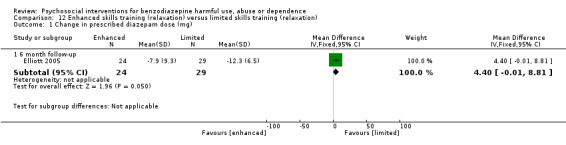
Elliott 2005 {published data only}
-
- Elliott L, Glenday J, Freeman L, Ajeda D, Johnston B, Christie M, et al. Reducing diazepam prescribing for illicit drug users: a randomised control study. Drug and Alcohol Review 2005;24(1):25‐31. - PubMed
Elsesser 1996 {published data only}
-
- Elsesser K, Sartory G, Maurer J. The efficacy of complaints management training in facilitating benzodiazepine withdrawal. Behaviour Research and Therapy 1996;34(2):149‐56. - PubMed
Gilbert 1993 {published data only}
-
- Gilbert A, Owen N, Innes J M, Sansom L. Trial of an intervention to reduce chronic benzodiazepine use among residents of aged‐care accommodation. Australian and New Zealand Journal of Medicine. 1993;23(4):343‐7. - PubMed
Gosselin 2006 {published data only}
-
- Gosselin P, Ladouceur R, Morin CM, Dugas MJ, Baillargeon L. Benzodiazepine discontinuation among adults with GAD: a randomized trial of cognitive‐behavioral therapy. Journal of Consulting and Clinical Psychology 2006;74(5):908‐19. - PubMed
Heather 2004 {published data only}
-
- Heather N, Bowie A, Ashton H, McAvoy B, Spencer I, Brodie J, et al. Randomised controlled trial of two brief interventions against long‐term benzodiazepine use: outcome of intervention. Addiction Research & Theory 2004;12(2):141‐54.
King 2009 {published data only}
-
- King VL, Stoller KB, Kidorf M, Kindbom K, Hursh S, Brady T, et al. Assessing the effectiveness of an Internet‐based videoconferencing platform for delivering intensified substance abuse counseling. Journal of Substance Abuse Treatment 2009;36(3):331‐8. - PubMed
Morin 2004 {published data only}
-
- Morin CM, Bastien C, Guay B, Radouco‐Thomas M, Leblanc J, Vallières A. Randomized clinical trial of supervised tapering and cognitive behavior therapy to facilitate benzodiazepine discontinuation in older adults with chronic insomnia. American Journal of Psychiatry 2004;161(2):332‐42. - PubMed
Nathan 1986 {published data only}
-
- Nathan RG, Robinson D, Cherek DR, Sebastian CS, Hack M, Davison S. Alternative treatments for withdrawing the long‐term benzodiazepine user: a pilot study. International Journal of the Addictions 1986;21(2):195‐211. - PubMed
O'Connor 2008 {published data only}
-
- O'Connor K, Marchand A, Brousseau L, Aardema F, Mainguy N, Landry P, et al. Cognitive‐behavioral, pharmacological and psychosocial predictors of outcome during tapered discontinuation of benzodiazepine. Clinical Psychology & Psychotherapy 2008;15(1):1‐14. - PubMed
Otto 1993 {published data only}
-
- Otto MW, Pollack MH, Sachs GS, Reiter SR, Meltzer‐Brody S, Rosenbaum JF. Discontinuation of benzodiazepine treatment: efficacy of cognitive‐behavioral therapy for patients with panic disorder. American Journal of Psychiatry 1993;150(10):1485‐90. - PubMed
Otto 2010 {published data only}
Oude Voshaar 2003 a {published data only}
-
- Oude Voshaar RC, Gorgels WJ, Mol AJ, Balkom AJ, Lisdonk EH, Breteler MHM, et al. Tapering off long‐term benzodiazepine use with or without group cognitive‐behavioural therapy: Three‐conditioned, randomised controlled trial. British Journal of Psychiatry 2003;182(6):498‐504. - PubMed
Parr 2013 {published and unpublished data}
-
- Parr JM, Kavanagh DJ, Young RMcD, Stubbs B, Bradizza N. Impact of Cognitive Behaviour Therapy Via Mail for Cessation of Benzodiazepine Use: A Series of Case Reports. Behaviour Change 2013;30(2):74‐83.
Scherbaum 2005 {published data only}
-
- Scherbaum N, Kluwig J, Specka M, Krause D, Merget B, Finkbeiner T, et al. Group psychotherapy for opiate addicts in methadone maintenance treatment ‐ a controlled trial. European Addiction Research 2005;11(4):163‐71. - PubMed
Spiegel 1994 {published data only}
-
- Spiegel DA, Bruce TJ, Gregg SF, Nuzzarello A. Does cognitive behavior therapy assist slow‐taper alprazolam discontinuation in panic disorder?. American Journal of Psychiatry 1994;151(6):876‐81. - PubMed
Ten Wolde 2008 {published data only}
-
- Wolde GB, Dijkstra A, Empelen P, Hout W, Neven AK, Zitman F. Long‐term effectiveness of computer‐generated tailored patient education on benzodiazepines: a randomized controlled trial. Addiction 2008;103(4):662‐70. - PubMed
Vicens 2006 {published data only}
Vorma 2002 {published data only}
-
- Vorma H, Naukkarinen H, Sarna S, Kuoppasalmi K. Treatment of out‐patients with complicated benzodiazepine dependence: comparison of two approaches. Addiction 2002;97(7):851‐9. - PubMed
Zahradnik 2009 {published data only}
-
- Zahradnik A, Otto C, Crackau B, Löhrmann I, Bischof G, John U, et al. Randomized controlled trial of a brief intervention for problematic prescription drug use in non‐treatment‐seeking patients. Addiction 2009;104(1):109‐17. - PubMed
References to studies excluded from this review
Ball 2007 {published data only}
Bélanger 2005 {published data only}
-
- Bélanger L, Morin CM, Bastien C, Ladouceur R. Self‐efficacy and compliance with benzodiazepine taper in older adults with chronic insomnia. Health Psychology 2005;24(3):281‐7. - PubMed
Bruce 1995 {published data only}
-
- Bruce TJ, Spiegel DA, Gregg SF, Nuzzarello A. Predictors of alprazolam discontinuation with and without cognitive behavior therapy in panic disorder. American Journal of Psychiatry 1995;152(8):1156‐60. - PubMed
Carroll 2009 {published data only}
Chang 2010 {published data only}
-
- Chang B‐H, Sommers E, Herz L. Acupuncture and relaxation response for substance use disorder recovery. Journal of Substance Use 2010;15(6):390‐401.
Chutuape 1999 {published data only}
-
- Chutuape MA, Silverman K, Stitzer M. Contingent reinforcement sustains post‐detoxification abstinence from multiple drugs: a preliminary study with methadone patients. Drug and Alcohol Dependence 1999;54(1):69‐81. - PubMed
Cormack 1994 {published data only}
de Gier 2011 {published data only}
-
- Gier NAH, Gorgels WJ, Lucassen PL, Oude Voshaar R, Mulder J, Zitman F. Discontinuation of long‐term benzodiazepine use: 10‐year follow‐up. Family Practice 2011;28(3):253‐9. - PubMed
Ghitza 2008 {published data only}
Giblin 1983 {published data only}
Godfrey 2008 {published data only}
-
- Godfrey C, Heather N, Bowie A, Brodie J, Parrott S, Ashton H, et al. Randomised controlled trial of two brief interventions against long‐term benzodiazepine use: Cost‐effectiveness. Addiction Research & Theory 2008;16(4):309‐17.
Heather 2011 {published data only}
-
- Heather N, Paton J, Ashton H. Predictors of response to brief intervention in general practice against long‐term benzodiazepine use. Addiction Research & Theory 2011;19(6):519‐27.
Iguchi 1988 {published data only}
-
- Iguchi MY, Stitzer ML, Bigelow GE, Liebson IA. Contingency management in methadone maintenance: effects of reinforcing and aversive consequences on illicit polydrug use. Drug and Alcohol Dependence 1988;22(1‐2):1‐7. - PubMed
Jones 1990 {published data only}
-
- Jones D. Weaning elderly patients off psychotropic drugs in general practice: a randomised control trial. Health Trends 1990;22:164‐6.
Lichstein 2013 {published data only}
Mol 2006 {published data only}
-
- Mol AJ, Oude Voshaar RC, Gorgels WJ, Breteler MH, Balkom AJ, Lisdonk EH, et al. The absence of benzodiazepine craving in a general practice benzodiazepine discontinuation trial. Addictive Behaviors 2006;31(2):211‐22. - PubMed
Mol 2007 {published data only}
-
- Mol AJ, Oude Voshaar RC, Gorgels WJ, Breteler Marinus MH, Balkom AJ, Lisdonk EH, et al. The role of craving in relapse after discontinuation of long‐term benzodiazepine use. Journal of Clinical Psychiatry 2007;68(12):1894‐1900. - PubMed
Morgan 2004 {published data only}
-
- Morgan K, Dixon S, Mathers N, Thompson J, Tomeny M. Psychological treatment for insomnia in the regulation of long‐term hypnotic drug use. Health Technology Assessment (Winchester, England) 2004;8(8):1‐68. - PubMed
Onyett 1988 {published data only}
-
- Onyett SR, Turpin G. Benzodiazepine withdrawal in primary care: a comparison of behavioural group training and individual sessions. Behavioural and Cognitive Psychotherapy 1988;16(4):297‐312.
Otto 1992 {published data only}
-
- Otto MW, Pollack MH, Meltzer‐Brody S, Rosenbaum JF. Cognitive‐behavioral therapy for benzodiazepine discontinuation in panic disorder patients. Psychopharmacology Bulletin 1992;28(2):123‐30. - PubMed
Oude Voshaar 2003 {published data only}
-
- Oude Voshaar RC, Mol AJ, Gorgels WJ, Breteler MH, Balkom AJ, Lisdonk EH, et al. Cross‐validation, predictive validity, and time course of the Benzodiazepine Dependence Self‐Report Questionnaire in a benzodiazepine discontinuation trial. Comprehensive Psychiatry 2003;44(3):247‐55. - PubMed
Oude Voshaar 2006a {published data only}
-
- Oude Voshaar RC, Gorgels WJ, Mol AJ, Balkom AJ, Mulder J, Lisdonk EH, et al. Predictors of long‐term benzodiazepine abstinence in participants of a randomized controlled benzodiazepine withdrawal program. Canadian Journal of Psychiatry. Revue Canadienne De Psychiatrie 2006;51(7):445‐52. - PubMed
Oude Voshaar 2006b {published data only}
-
- Oude Voshaar RC, Krabbe PFM, Gorgels WJ, Adang EM, Balkom AJ, Lisdonk EH, et al. Tapering off benzodiazepines in long‐term users ‐ an economic evaluation. Pharmacoeconomics 2006;24(7):683‐94. - PubMed
Pollack 2002 {published data only}
-
- Pollack MH, Penava SA, Bolton E, Worthington JJ 3rd, Allen GL, Farach FJ Jr, et al. A novel cognitive‐behavioral approach for treatment‐resistant drug dependence. Journal of Substance Abuse Treatment 2002;23(4):335‐42. - PubMed
Salonoja 2010 {published data only}
-
- Salonoja M, Salminen M, Aarnio P, Vahlberg T, Kivelä S‐L. One‐time counselling decreases the use of benzodiazepines and related drugs among community‐dwelling older persons. Age and Ageing 2010;39(3):313‐9. - PubMed
Scherzer 1996 {published data only}
-
- Scherzer BR. Biofeedback‐Assisted Cognitive‐Behavioral Therapy in the Reduction of Alprazolam Dependence after Panic Attacks with Cardiaphobia [PhD thesis]. Ohio, USA: The Union Institute, 1996:100.
Soeffing 2008 {published data only}
Stitzer 1992 {published data only}
-
- Stitzer ML, Iguchi MY, Felch LJ. Contingent take‐home incentive: Effects on drug use of methadone maintenance patients. Journal of Consulting and Clinical Psychology 1992;60(6):927‐34. - PubMed
Taylor 2010 {published data only}
Vorma 2005 {published data only}
-
- Vorma H, Naukkarinen HH, Sarna SJ, Kuoppasalmi KI. Predictors of benzodiazepine discontinuation in subjects manifesting complicated dependence. Substance Use & Misuse 2005;40(4):499‐510. - PubMed
Additional references
Amato 2011a
Amato 2011b
Backmund 2005
-
- Backmund M, Meyer K, Henkel C, Soyka M, Reimer J, Schütz CG. Co‐consumption of benzodiazepines in heroin users, methadone‐substituted and codeine‐substituted patients. Journal of Addictive Diseases 2005;24(4):17‐29. - PubMed
Barker 2004
-
- Barker MJ, Greenwood KM, Jackson M, Crowe SF. Cognitive effects of long‐term benzodiazepine use: a meta‐analysis. CNS Drugs 2004;18(1):37‐48. - PubMed
Bartlett 2009
Beck 1993
-
- Beck A. Cognitive therapy: past, present, and future. Journal of Consulting and Clinical Psychology 1993;61(2):194‐8. - PubMed
Billioti de Gage 2012
Bleich 1999
-
- Bleich A, Gelkopf M, Schmidt V, Hayward R, Bodner G, Adelson M. Correlates of benzodiazepine abuse in methadone maintenance treatment. A 1 year prospective study in Israeli clinic. Addiction 1999;94(10):1533‐40. - PubMed
British National Formulary 2010
-
- British Medical Association and Royal Pharmaceutical Association. British National Formulary 60. British Medical Journal Publishing Group and Pharmaceutical Press, September 2010.
Bruce 1999
-
- Bruce TJ, Spiegel DA, Hegel MT. Cognitive‐behavioral therapy helps prevent relapse and recurrence of panic disorder following alprazolam discontinuation: a long‐term follow‐up pf the Peoria and Dartmouth studies. Journal of Consulting and Clinical Psychology 1999;67(1):151‐6. - PubMed
Brunette 2004
-
- Brunette MF, Muesser KT, Drake RE. A review of research on residential programs for people with severe mental illness and co‐occurring substance use disorders. Drug and Alcohol Review 2004;23(4):471‐81. - PubMed
Carroll 1996
-
- Carroll KM. Relapse prevention as a psychosocial treatment approach: a review of controlled clinical trials. Experimental and Clinical Psychopharmacology 1996;4:46‐54.
Chutuape 1997
-
- Chutuape MA, Brooner RK, Stitzer M. Sedative use disorders in opiate‐dependent patients: association with psychiatric and other substance use disorders. Journal of Nervous Mental Disorders 1997;185(5):289‐97. - PubMed
Darke 1993
-
- Darke S, Swift W, Hall W, Ross M. Drug use, HIV risk‐taking and psychosocial correlates of benzodiazepine use among methadone maintenance clients. Drug and Alcohol Dependence 1993;34(1):67‐70. - PubMed
Darke 1994
-
- Darke S, Swift W, Hall W. Prevalence, severity and correlates of psychological morbidity among methadone maintenance patients. Addiction 1994;89(2):211‐7. - PubMed
Denis 2006
Department of Health & Children 2002
-
- Department of Health & Children. Benzodiazepines: good practice guidelines for clinicians. 2002. http://www.drugsandalcohol.ie/5349/1/1500‐1388.pdf Accessed 20 October 2013.
DSM‐IV 1994
-
- American Psychiatric Association. Diagnostic and Statistical Manual of Mental Disorders: DSM‐IV. Washington DC: American Psychiatric Association, 1994:181‐83.
Fals‐Stewart 2005
-
- Fals‐Stewart W, O'Farrell TJ, Birchler GR, Córdova J, Kelley MC. Behavioral couples therapy for alcoholism and drug abuse: where we've been, where we are and where we are going. Journal of Cognitive Psychotherapy 2005;19(3):229‐46.
Ferri 2006
Gould 2014a
-
- Gould RL, Coulson MC, Patel N, Highton‐Williamson E, Howard RJ. Interventions for reducing benzodiazepine use in older people: meta‐analysis of randomised controlled trials. British Journal of Psychiatry 2014;204(2):98‐107. - PubMed
Gould 2014b
-
- Gould RL, Coulson MC, Highton‐Williamson E, Howard RJ. Interventions for reducing benzodiazepine use in older people: meta‐analysis of randomised controlled trials. Erratum. British Journal of Psychiatry 2014;205(4):330. - PubMed
Higgins 2011
-
- Higgins JPT, Green S (editors). Cochrane Handbook for Systematic Reviews of Interventions Version 5.1.0 [updated March 2011]. The Cochrane Collaboration, 2011. Available from www.cochrane‐handbook.org.
Jones 2012
Kaner 2007
Knapp 2007
Lefebvre 2011
-
- Lefebvre C, Manheimer E, Glanville J, on behalf of the Cochrane Information Retrieval Methods Group. Chapter 6: Searching for studies. In: Higgins JPT, Green S (editors). Cochrane Handbook for Systematic Reviews of Interventions Version 5.1.0 [updated March 2011]. The Cochrane Collaboration, 2011. Available from www.cochrane‐handbook.org.
Lui 2008
Marlatt 1985
-
- Marlatt GA, Gordon JR. Relapse Prevention: Maintenance Strategies in the Treatment of Addictive Behaviors. New York: Guilford Press, 1985.
Mayet 2005
McQueen 2009
Miller 1991
-
- Miller WR, Rollnick S. Motivational Interviewing: Preparing People for Change. 1st Edition. New York: Guilford Press, 1991.
Miller 1999
Morin 2005
-
- Morin CM, Bélanger L, Bastien C, Vallières A. Long‐term outcome after discontinuation of benzodiazepines for insomnia: a survival analysis of relapse. Behaviour Research and Therapy 2005;43(1):1‐14. - PubMed
Mugunthan 2011
NICE 2011
-
- National Institute for Health and Care Excellence. CG113 Anxiety: NICE Guidance. January 2011. http://guidance.nice.org.uk/CG113/NICEGuidance/pdf/English (accessed 20 May 2011).
Noyes 1988
-
- Noyes R Jr, Garvey MJ, Cook BL, Perry PJ. Benzodiazepine withdrawal: a review of the evidence. Journal of Clinical Psychiatry 1988;49(10):382‐9. - PubMed
O'Brien 2005
-
- O'Brien CP. Benzodiazepine use, abuse, and dependence. Journal of Clinical Psychiatry 2005;66(Suppl 2):28‐33. - PubMed
Oliver 2007
-
- Oliver P, Forrest R, Keen J. Benzodiazepines and cocaine as risk factors in fatal opioid overdoses. National Treatment Agency for Substance Misuse, Research Briefing: 31. April 2007. http://www.nta.nhs.uk/uploads/nta_rb31_benzos_cocaine_in_fatal_opioid_ov... Accessed 20 October 2013:1‐20.
Onken 1990
-
- Onken LS, Blaine JD. Psychotherapy and counselling research in drug abuse treatment: questions, problems and solutions. In: Onken LS, Blaine JD, Rockville MD editor(s). Psychotherapy and Counseling in the Treatment of Drug Abuse (NIDA Research Monograph 104). Rockville, MD: National Institute on Drug Abuse, 1990:1‐5. - PubMed
Otto 2009
-
- Otto C, Crackau B, Löhrmann I, Zahradnik A, Gallus B, John U, et al. Brief intervention in general hospital for problematic prescription drug use: 12‐month outcome. Drug and Alcohol Dependence 2009;105(3):221‐6. - PubMed
Oude Voshaar 2006c
-
- Oude Voshaar RC, Couvée JE, Balkom AJLM, Mulder PGH, Zitman FG. Strategies for discontinuing long‐term benzodiazepine use: meta‐analysis. British Journal of Psychiatry 2006;189:213‐20. - PubMed
Oude Voshaar 2006d
-
- Oude Voshaar RC, Gorgels WJMJ, Mol AJJ, Balko AJLM, Mulder J, Lisdonk EH, et al. Long‐term outcome of two forms of randomised benzodiazepine discontinuation. British Journal of Psychiatry 2006;188:188‐9. - PubMed
Parr 2008
-
- Parr JM, Kavanagh DJ, Cahill L, Mitchell G, McD Young R. Effectiveness of current treatment approaches for benzodiazepine discontinuation: a meta‐analysis. Addiction 2008;104(1):13‐24. - PubMed
Petursson 1993
-
- Petursson H, Gudjonsson GH, Lader MH. Psychometric performance during withdrawal from long‐term benzodiazepine treatment. Psychopharmacology 1993;81(4):345‐9. - PubMed
RevMan 2014 [Computer program]
-
- The Nordic Cochrane Centre, The Cochrane Collaboration. Review Manager (RevMan). Version 5.3. Copenhagen: The Nordic Cochrane Centre, The Cochrane Collaboration, 2014.
Rounsaville 1983
-
- Rounsaville BJ, Glazer W, Wilber CH, Weissman MM, Kleber HD. Short‐term interpersonal psychotherapy in methadone‐maintained opiate addicts. Archives of General Psychiatry 1983;40(6):629‐36. - PubMed
SAMHSA 1999
-
- Substance Abuse and Mental Health Services Administration. Brief interventions in substance abuse treatment. Brief Interventions and Brief Therapies for Substance Abuse: TIP 34. Rockville, MD: US Department of Health and Human Services, 1999.
SAMHSA 2014
-
- Substance Abuse and Mental Health Service Administration. Screening, brief intervention and referral to treatment. 2014. http://www.samhsa.gov/sbirt Accessed 20 October 2013.
Smink 2010
-
- Smink BE, Egberts AC, Lusthof KJ, Uges DR, Gier JJ. The relationship between benzodiazepine use and traffic accidents: a systematic review. CNS Drugs 2010;24(8):639‐53. - PubMed
Smith 2010
Stitzer 2006
-
- Stitzer M, Petry N. Contingency management for treatment of substance abuse. Annual Review of Clinical Psychology 2006;2:411‐34. - PubMed
Tyrer 2010
-
- Tyrer P. Benzodiazepine substitution for dependent patients ‐ going with the flow. Addiction 2010;105(11):1875‐8. - PubMed
UKATT 2001
-
- UKATT Research Team. United Kingdom Alcohol Treatment Trial (UKATT): hypotheses, design and methods. Alcohol and Alcoholism 2001;36(1):11‐21. - PubMed
van den Hoek 1990
-
- Hoek JAR, Haarstrecht HJA, Goudsmit J, Wolf F, Coutinho RA. Prevalence, incidence and risk factors of hepatitis C virus infection among drug users in Amsterdam. Journal of Infectious Disease 1990;162(4):823‐6. - PubMed
Vicens 2008
-
- Vicens Caldentey C, Fiol Gelabert F, González Garrido E, Martínez Ojeda E, Mateu Sabater C, Llobera Cánaves J. Long‐term effectiveness of an intervention to discontinue chronic benzodiazepine use [Spanish]. Actas Españolas de Psiquiatría 2008;36(5):295‐8. - PubMed
Vorma 2003
-
- Vorma H, Naukkarinen H, Sarna S, Kuoppasalmi K. Long‐term outcome after benzodiazepine withdrawal treatment in subjects with complicated dependence. Drug and Alcohol Dependence 2003;70(3):309‐14. - PubMed
Wagner 2004
-
- Wagner AK, Zhang F, Soumorai SB, Walker AM, Gurwitz JH, Glynn RJ, et al. Benzodiazepine use and hip fractures in the elderly: who is at greatest risk?. Archives of Internal Medicine 2004;164(14):1567‐72. - PubMed
WHO 2009a
-
- World Health Organization. International Statistical Classification of Disease and Related Health Problems. 10th Edition. Washington DC: World Health Organization, 2009.
WHO 2009b
-
- World Health Organization. Guidelines for the psychosocially assisted pharmacological treatment of opioid dependence. 2009. http://www.who.int/substance_abuse/activities/treatment_opioid_dependenc... (accessed 9 January 2012). - PubMed
WHO 2010
-
- WHO. Management of substance abuse. Lexicon of terminology. 2010. http://www.who.int/substance_abuse/terminology/who_lexicon/en/ (accessed 20 May 2010).
Publication types
MeSH terms
Substances
LinkOut - more resources
Full Text Sources
Medical
Miscellaneous
