


Mitochondrial Morphology and Fundamental Parameters of the Mitochondrial Respiratory Chain Are Altered in Caenorhabditis elegans Strains Deficient in Mitochondrial Dynamics and Homeostasis Processes
- PMID: 26106885
- PMCID: PMC4480853
- DOI: 10.1371/journal.pone.0130940
Mitochondrial Morphology and Fundamental Parameters of the Mitochondrial Respiratory Chain Are Altered in Caenorhabditis elegans Strains Deficient in Mitochondrial Dynamics and Homeostasis Processes
Erratum in
-
Correction: Mitochondrial Morphology and Fundamental Parameters of the Mitochondrial Respiratory Chain Are Altered in Caenorhabditis elegans Strains Deficient in Mitochondrial Dynamics and Homeostasis Processes.PLoS One. 2016 Dec 15;11(12):e0168738. doi: 10.1371/journal.pone.0168738. eCollection 2016. PLoS One. 2016. PMID: 27977805 Free PMC article.
Abstract
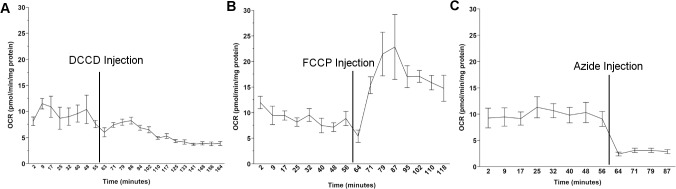
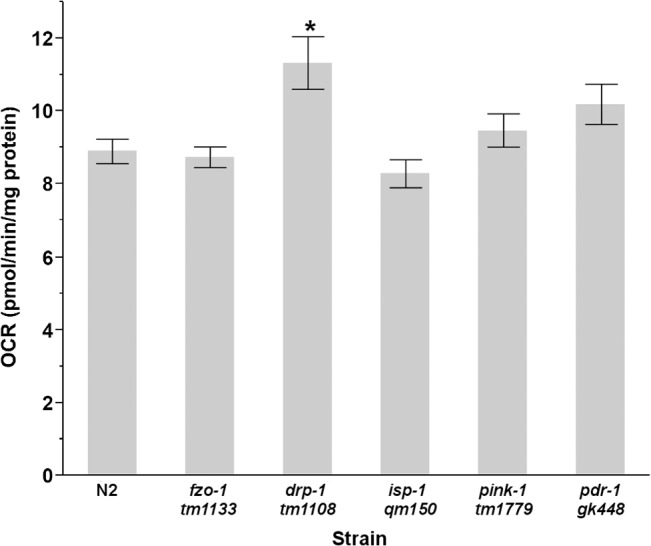
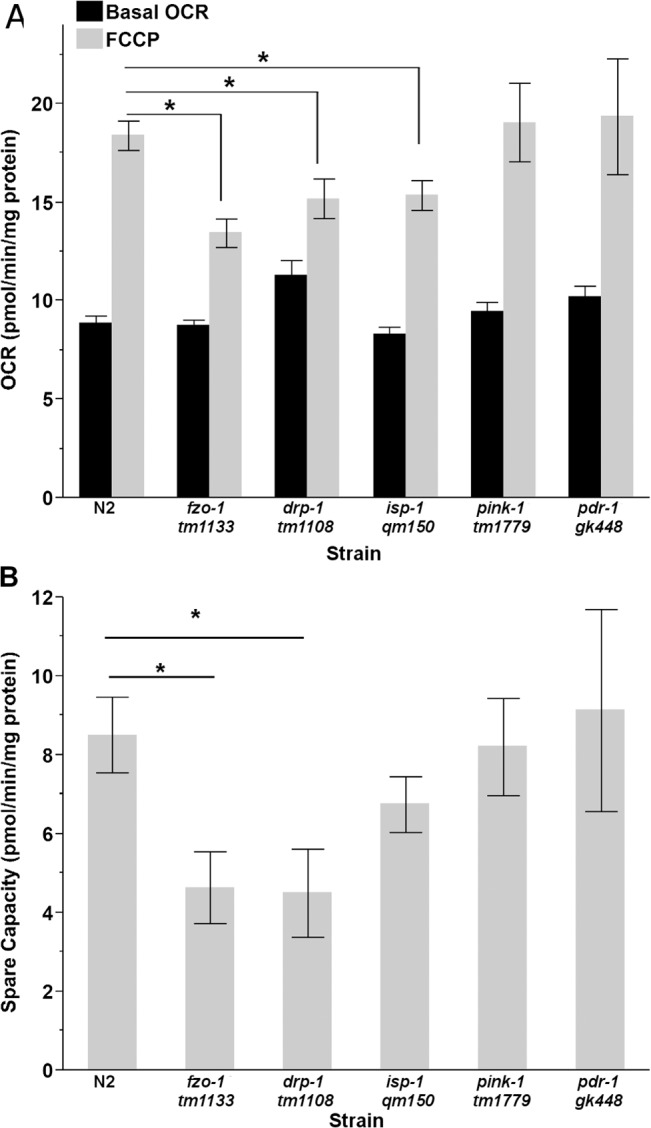
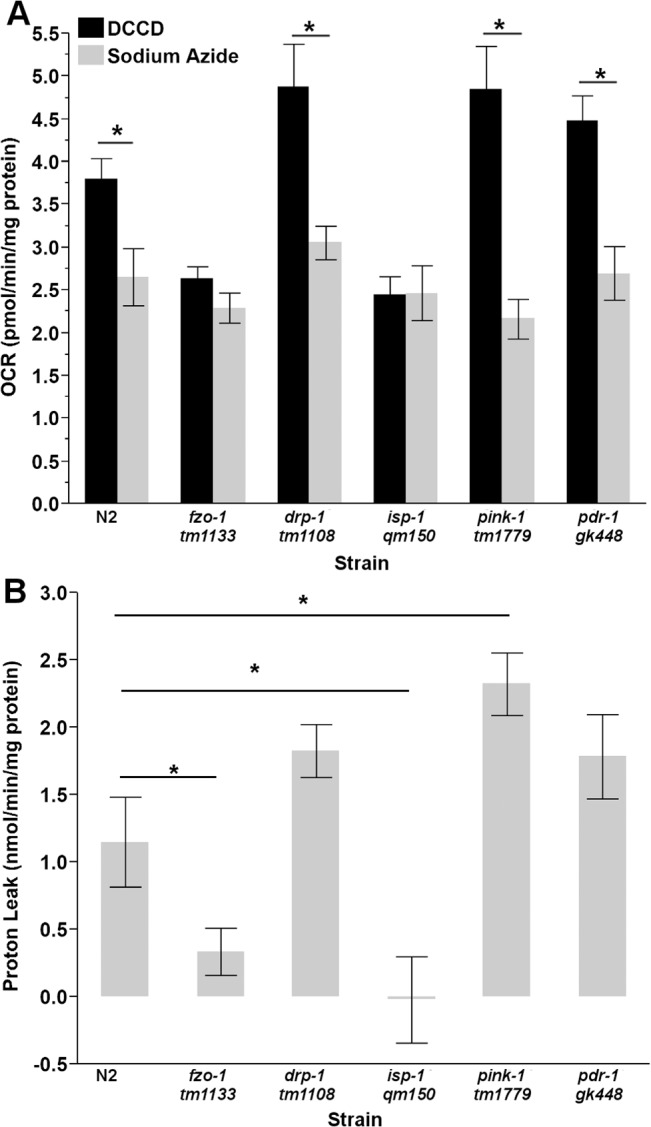
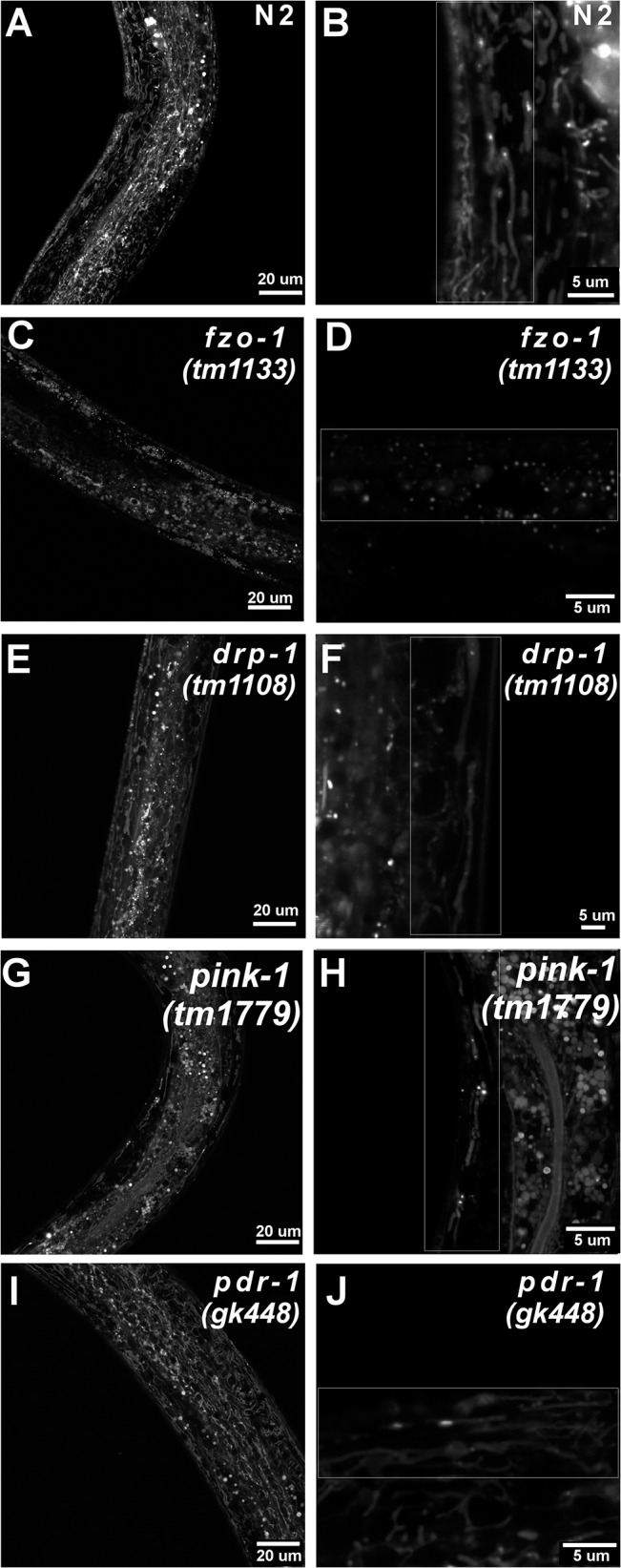
Mitochondrial dysfunction has been linked to myriad human diseases and toxicant exposures, highlighting the need for assays capable of rapidly assessing mitochondrial health in vivo. Here, using the Seahorse XFe24 Analyzer and the pharmacological inhibitors dicyclohexylcarbodiimide and oligomycin (ATP-synthase inhibitors), carbonyl cyanide 4-(trifluoromethoxy) phenylhydrazone (mitochondrial uncoupler) and sodium azide (cytochrome c oxidase inhibitor), we measured the fundamental parameters of mitochondrial respiratory chain function: basal oxygen consumption, ATP-linked respiration, maximal respiratory capacity, spare respiratory capacity and proton leak in the model organism Caenhorhabditis elegans. Since mutations in mitochondrial homeostasis genes cause mitochondrial dysfunction and have been linked to human disease, we measured mitochondrial respiratory function in mitochondrial fission (drp-1)-, fusion (fzo-1)-, mitophagy (pdr-1, pink-1)-, and electron transport chain complex III (isp-1)-deficient C. elegans. All showed altered function, but the nature of the alterations varied between the tested strains. We report increased basal oxygen consumption in drp-1; reduced maximal respiration in drp-1, fzo-1, and isp-1; reduced spare respiratory capacity in drp-1 and fzo-1; reduced proton leak in fzo-1 and isp-1; and increased proton leak in pink-1 nematodes. As mitochondrial morphology can play a role in mitochondrial energetics, we also quantified the mitochondrial aspect ratio for each mutant strain using a novel method, and for the first time report increased aspect ratios in pdr-1- and pink-1-deficient nematodes.
Conflict of interest statement
Figures
References
-
- Susin SA, Lorenzo HK, Zamzami N, Marzo I, Snow BE, Brothers GM, et al. Molecular characterization of mitochondrial apoptosis-inducing factor. Nature. 1999;397(6718):441–6. - PubMed
-
- Liu Z, Butow RA. Mitochondrial retrograde signaling. Annu Rev Genet. 2006;40:159–85. - PubMed
-
- Nicholls DG. Mitochondria and calcium signaling. Cell calcium. 2005;38(3):311–7. - PubMed
-
- Fernie AR, Carrari F, Sweetlove LJ. Respiratory metabolism: glycolysis, the TCA cycle and mitochondrial electron transport. Current opinion in plant biology. 2004;7(3):254–61. - PubMed
-
- Schaefer AM, Taylor RW, Turnbull DM, Chinnery PF. The epidemiology of mitochondrial disorders—past, present and future. Biochimica et Biophysica Acta (BBA)-Bioenergetics. 2004;1659(2):115–20. - PubMed
Publication types
MeSH terms
Substances
Grants and funding
LinkOut - more resources
Full Text Sources
Other Literature Sources
Research Materials
Miscellaneous
