


Compensatory stepping in Parkinson's disease is still a problem after deep brain stimulation randomized to STN or GPi
- PMID: 26108960
- PMCID: PMC4556849
- DOI: 10.1152/jn.01052.2014
Compensatory stepping in Parkinson's disease is still a problem after deep brain stimulation randomized to STN or GPi
Abstract
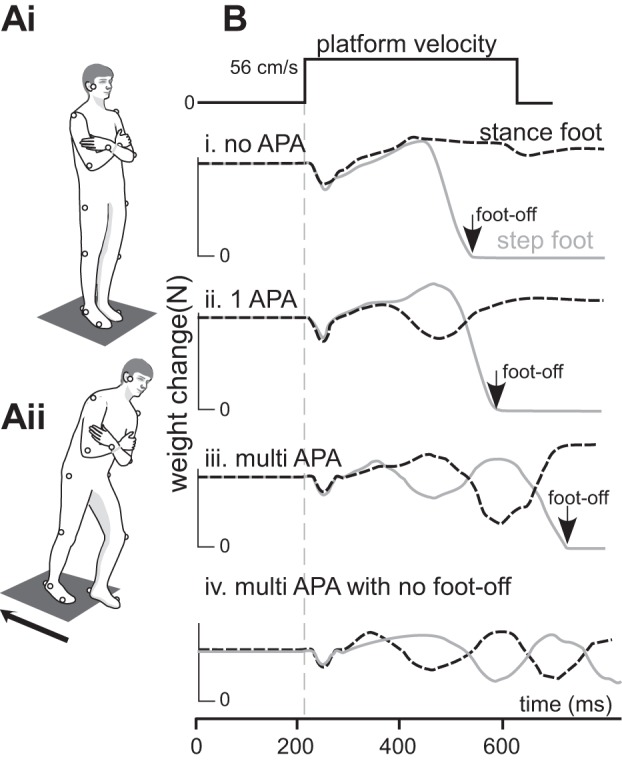
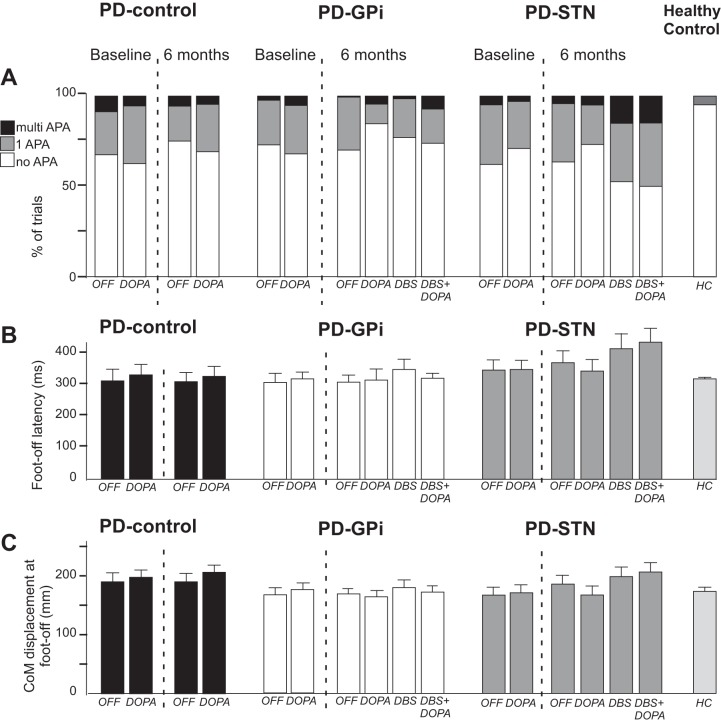
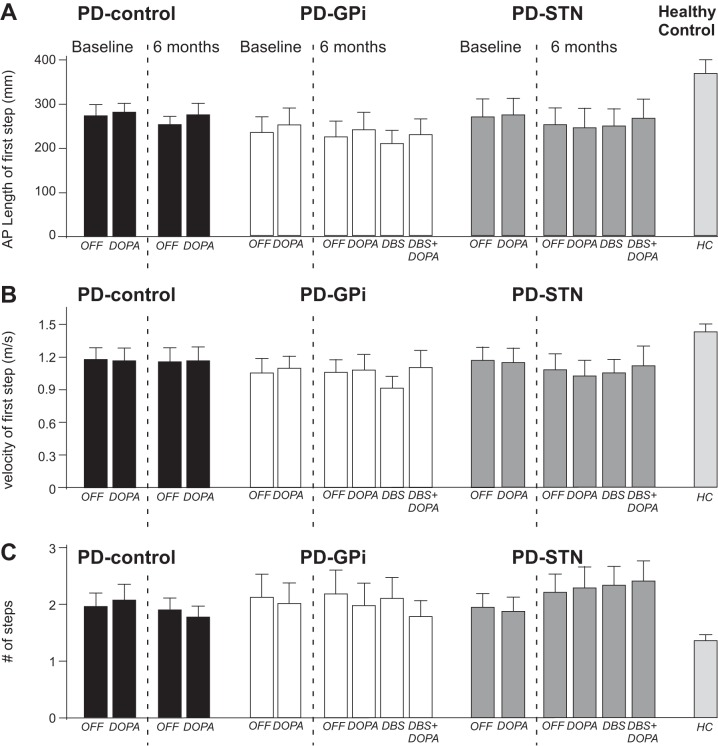
The effects of deep brain stimulation (DBS) on balance in people with Parkinson's disease (PD) are not well established. This study examined whether DBS randomized to the subthalamic nucleus (STN; n = 11) or globus pallidus interna (GPi; n = 10) improved compensatory stepping to recover balance after a perturbation. The standing surface translated backward, forcing subjects to take compensatory steps forward. Kinematic and kinetic responses were recorded. PD-DBS subjects were tested off and on their levodopa medication before bilateral DBS surgery and retested 6 mo later off and on DBS, combined with off and on levodopa medication. Responses were compared with PD-control subjects (n = 8) tested over the same timescale and 17 healthy control subjects. Neither DBS nor levodopa improved the stepping response. Compensatory stepping in the best-treated state after surgery (DBS+DOPA) was similar to the best-treated state before surgery (DOPA) for the PD-GPi group and the PD-control group. For the PD-STN group, there were more lateral weight shifts, a delayed foot-off, and a greater number of steps required to recover balance in DBS+DOPA after surgery compared with DOPA before surgery. Within the STN group five subjects who did not fall during the experiment before surgery fell at least once after surgery, whereas the number of falls in the GPi and PD-control groups were unchanged. DBS did not improve the compensatory step response needed to recover from balance perturbations in the GPi group and caused delays in the preparation phase of the step in the STN group.
Keywords: Parkinson's disease; balance; compensatory stepping; deep brain stimulation.
Figures
References
-
- Bloem BR, Grimbergen YA, Cramer M, Willemsen M, Zwinderman AH. Prospective assessment of falls in Parkinson's disease. J Neurol 248: 950–958, 2001. - PubMed
-
- Burchiel K, Anderson V, Favre J, Hammerstad F. Comparison of pallidal and subthalamic nucleus deep brain stimulation for advanced Parkinson's disease: results of a randomized, blinded pilot study. Neurosurgery 45: 1375–1384, 1999. - PubMed
Publication types
MeSH terms
Substances
Grants and funding
LinkOut - more resources
Full Text Sources
Other Literature Sources
Medical
