


The role of exosomes in peripheral nerve regeneration
- PMID: 26109947
- PMCID: PMC4468764
- DOI: 10.4103/1673-5374.156968
The role of exosomes in peripheral nerve regeneration
Abstract
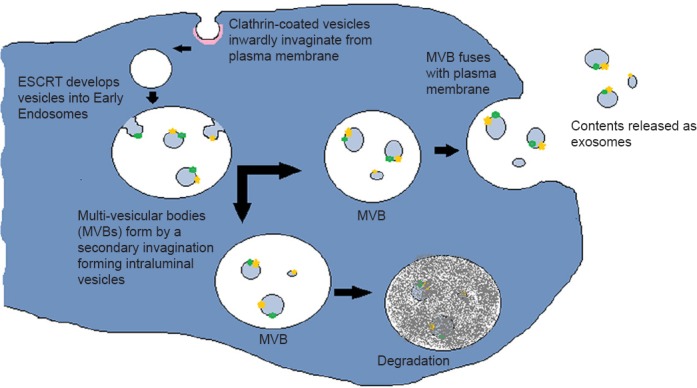
Peripheral nerve injuries remain problematic to treat, with poor functional recovery commonly observed. Injuries resulting in a nerve gap create specific difficulties for axonal regeneration. Approaches to address these difficulties include autologous nerve grafts (which are currently the gold standard treatment) and synthetic conduits, with the latter option being able to be impregnated with Schwann cells or stem cells which provide an appropriate micro-environment for neuronal regeneration to occur. Transplanting stem cells, however, infers additional risk of malignant transformation as well as manufacturing difficulties and ethical concerns, and the use of autologous nerve grafts and Schwann cells requires the sacrifice of a functioning nerve. A new approach utilizing exosomes, secreted extracellular vesicles, could avoid these complications. In this review, we summarize the current literature on exosomes, and suggest how they could help to improve axonal regeneration following peripheral nerve injury.
Keywords: Schwann cell; axonal regeneration; exosome; extracellular vesicle; microRNA; microvesicle; nerve gap; neurite outgrowth; peripheral nerve injury; stem cell.
Conflict of interest statement
Figures
References
-
- Alvarez-Erviti L, Seow Y, Yin H, Betts C, Lakhal S, Wood MJ. Delivery of siRNA to the mouse brain by systemic injection of targeted exosomes. Nat Biotechnol. 2011;29:341–345. - PubMed
-
- Alvarez ML, Khosroheidari M, Kanchi Ravi R, DiStefano JK. Comparison of protein, microRNA, and mRNA yields using different methods of urinary exosome isolation for the discovery of kidney disease biomarkers. Kidney Int. 2012;82:1024–1032. - PubMed
-
- Asplund M, Nilsson M, Jacobsson A, von Holst H. Incidence of traumatic peripheral nerve injuries and amputations in Sweden between 1998 and 2006. Neuroepidemiology. 2009;32:217–228. - PubMed
Publication types
LinkOut - more resources
Full Text Sources
Other Literature Sources
Miscellaneous