


Socio-economic position as an intervention against overweight and obesity in children: a systematic review and meta-analysis
- PMID: 26112253
- PMCID: PMC4481703
- DOI: 10.1038/srep11354
Socio-economic position as an intervention against overweight and obesity in children: a systematic review and meta-analysis
Abstract
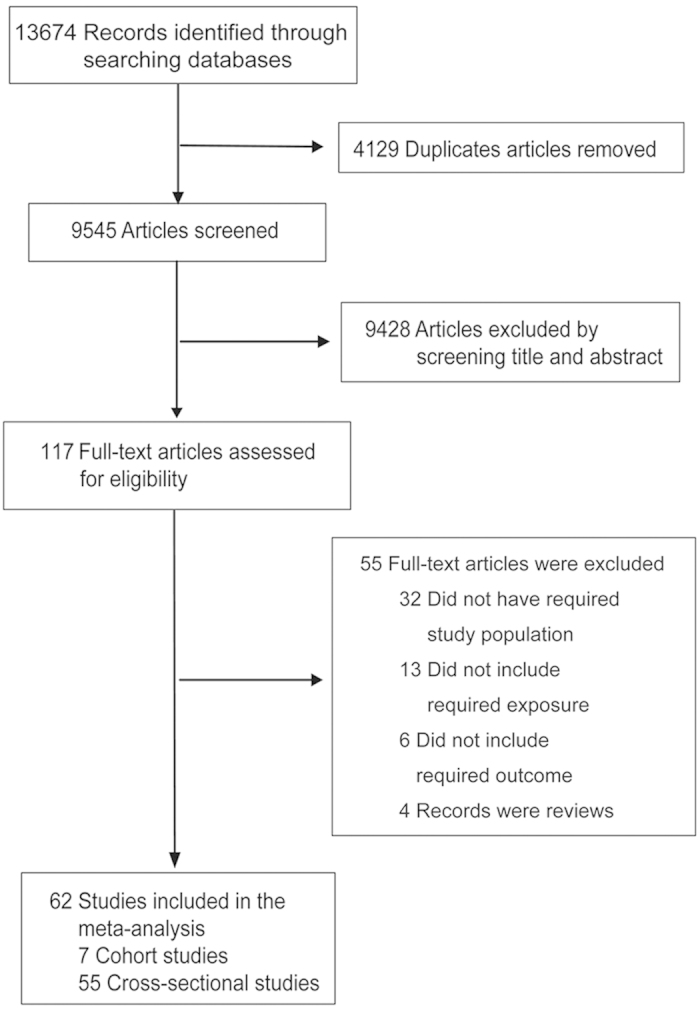
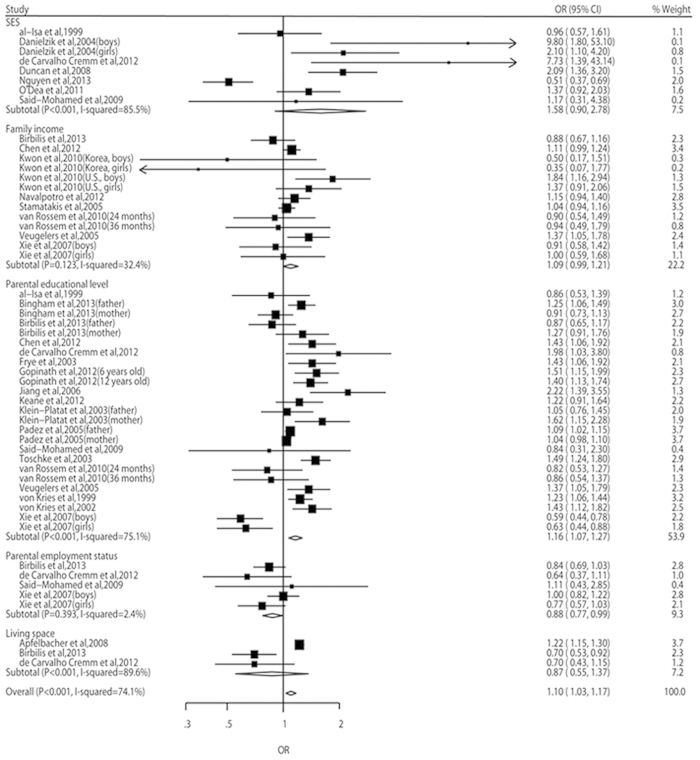
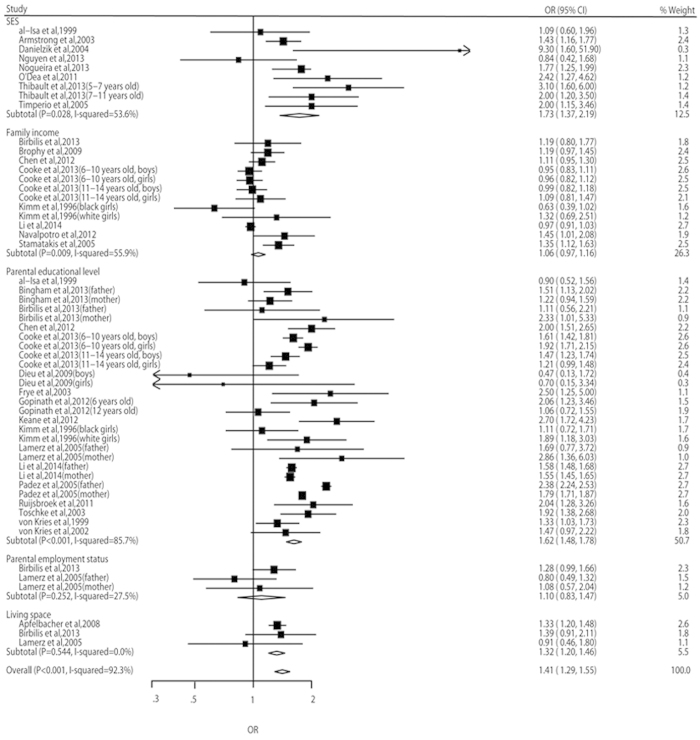
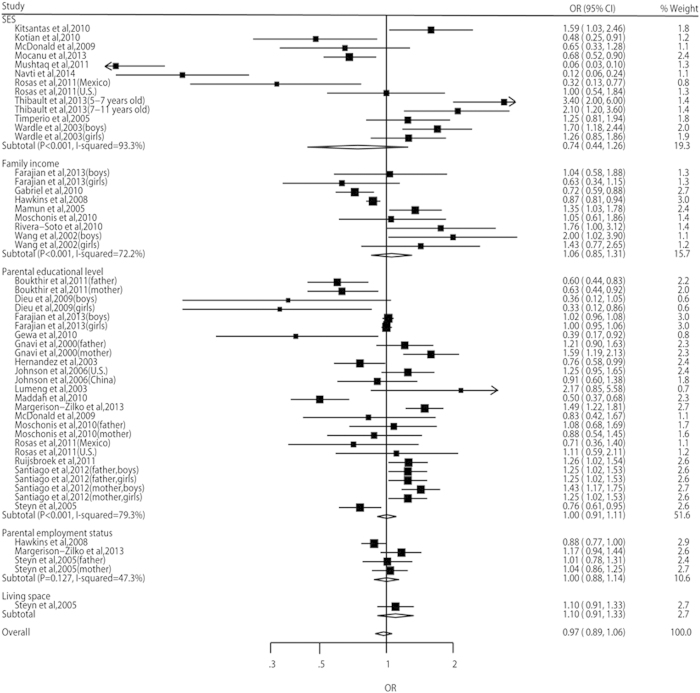
Studies that investigated the association between socio-economic position (SEP) and obesity in children suggest inconsistent results. The aim of this study is to summarize and quantify the current evidence on SEP and risks of overweight and obesity in children aged 0-15 years. Relevant studies published between 1990 to Sep 4, 2014 were searched in Medline, Web of Science, Embase, and the Cochrane Database of Systematic Reviews. Risk estimates from individual studies were pooled using random-effects models, according to lowest vs the highest SEP category. A total of 62 articles were included in the meta-analysis. The odds of both overweight risk and obesity risk were higher in the children with lowest SEP than in those with highest SEP (OR, 1.10, 95% CI: 1.03-1.17, and OR, 1.41, 95% CI: 1.29-1.55, respectively). Sub-group analyses showed that the inverse relationships between SEP and childhood overweight and obesity were only found in high-income countries and in more economic developed areas. In conclusion, our study suggests that children with lower SEP had higher risks of overweight and obesity, and the increased risks were independent of the income levels of countries.
Figures
References
-
- Dietz W. H. Health consequences of obesity in youth: childhood predictors of adult disease. Pediatrics. 101, 518–525 (1998). - PubMed
-
- Freedman D. S. Clustering of coronary heart disease risk factors among obese children. J Pediatr Endocrinol Metab. 15, 1099–1108 (2002). - PubMed
-
- Bammann K. et al. Socioeconomic factors and childhood overweight in Europe: results from the multi-centre IDEFICS study. Pediatr Obes. 8, 1–12 (2013). - PubMed
-
- Crespo C. J. et al. Television watching, energy intake, and obesity in US children: results from the third National Health and Nutrition Examination Survey, 1988-1994. Arch Pediatr Adolesc Med. 155, 360–365 (2001). - PubMed
Publication types
MeSH terms
LinkOut - more resources
Full Text Sources
Other Literature Sources
Medical
Molecular Biology Databases
