. 2015 Jul;27(7):1968-84.
doi: 10.1105/tpc.15.00105. Epub 2015 Jun 26.

Mitochondrial Dihydrolipoyl Dehydrogenase Activity Shapes Photosynthesis and Photorespiration of Arabidopsis thaliana

Affiliations

Mitochondrial Dihydrolipoyl Dehydrogenase Activity Shapes Photosynthesis and Photorespiration of Arabidopsis thaliana

Stefan Timm et al. Plant Cell. 2015 Jul.

Abstract

Mitochondrial dihydrolipoyl dehydrogenase (mtLPD; L-protein) is an integral component of several multienzyme systems involved in the tricarboxylic acid (TCA) cycle, photorespiration, and the degradation of branched-chain α-ketoacids. The majority of the mtLPD present in photosynthesizing tissue is used for glycine decarboxylase (GDC), necessary for the high-flux photorespiratory glycine-into-serine conversion. We previously suggested that GDC activity could be a signal in a regulatory network that adjusts carbon flux through the Calvin-Benson cycle in response to photorespiration. Here, we show that elevated GDC L-protein activity significantly alters several diagnostic parameters of cellular metabolism and leaf gas exchange in Arabidopsis thaliana. Overexpressor lines displayed markedly decreased steady state contents of TCA cycle and photorespiratory intermediates as well as elevated NAD(P)(+)-to-NAD(P)H ratios. Additionally, increased rates of CO2 assimilation, photorespiration, and plant growth were observed. Intriguingly, however, day respiration rates remained unaffected. By contrast, respiration was enhanced in the first half of the dark phase but depressed in the second. We also observed enhanced sucrose biosynthesis in the light in combination with a lower diel magnitude of starch accumulation and breakdown. These data thus substantiate our prior hypothesis that facilitating flux through the photorespiratory pathway stimulates photosynthetic CO2 assimilation in the Calvin-Benson cycle. They furthermore suggest that this regulation is, at least in part, dependent on increased light-capture/use efficiency.


Figures

Figure 1.
Figure 1.
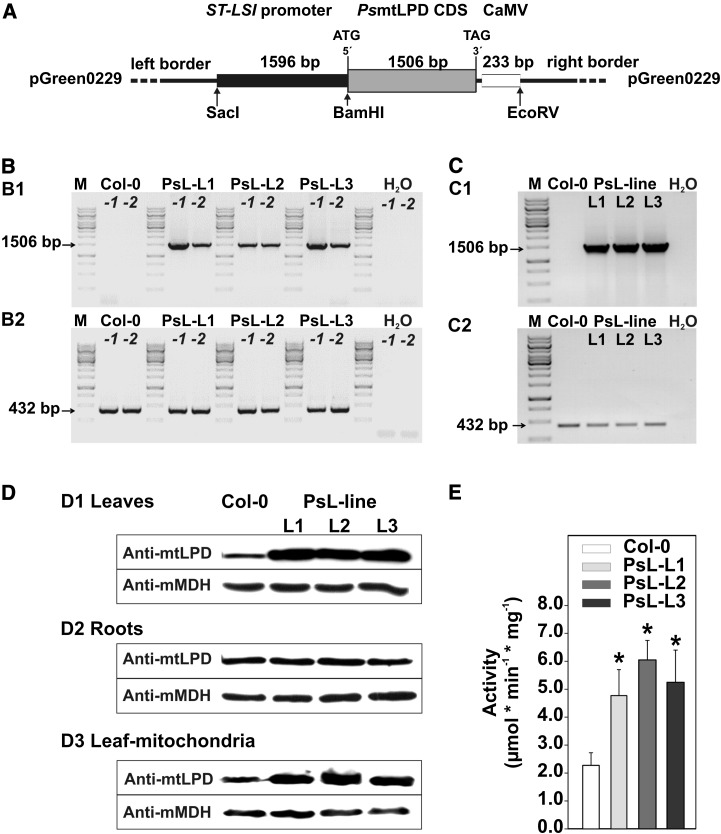
Generation and Verification of mtLPD Overexpressors. (A) Schematic overview of the mtLPD overexpression construct. (B) PCR verification of the transformed construct into the genome of transgenic lines (B1) and the corresponding loading control (B2). (C) RT-PCR verification of the full-length mtLPD transcript (C1) using signals of the constitutively expressed 40S ribosomal protein S16 gene as calibration control (C2). (D) Immunoblot of leaves, roots, and isolated mitochondria using a specific antibody against mtLPD and mitochondrial malate dehydrogenase (mMDH) as loading control. (E) Enzymatic activity of mtLPD in overexpressor and wild-type mitochondria. Values are means ± sd from four technical replicates. Asterisks indicate values that were significantly different from the wild-type control based on Student’s t test (*P < 0.05).
Figure 2.
Figure 2.
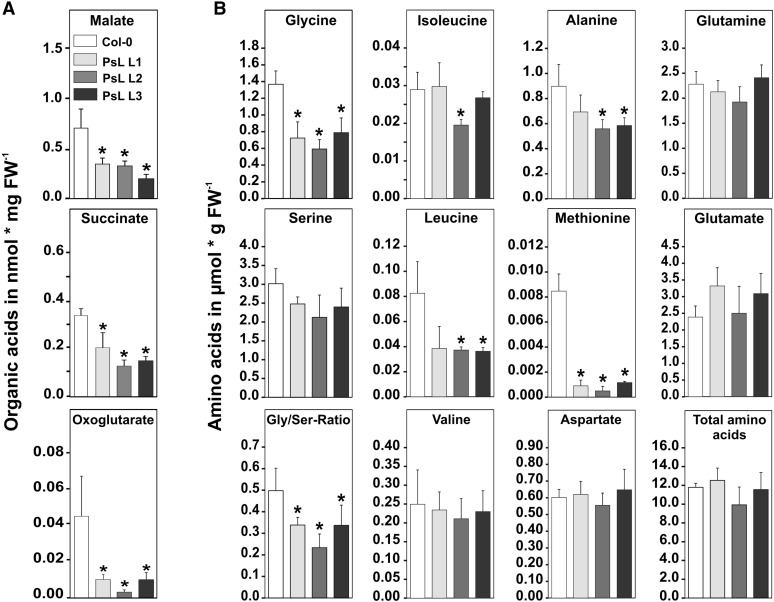
Changes in Mitochondrial Metabolites in mtLPD Overexpressors. Leaf material was harvested at the end of the light period from plants at growth stage 5.1 according to Boyes et al. (2001). Absolute steady state contents of three representatives of the TCA cycle (A) and selected amino acids (B) (complete list are given in Supplemental Table 1). Values are means ± sd of five independent biological replicates. Asterisks indicate values that were significantly different from the wild-type control based on Student’s t test (*P < 0.05). FW, fresh weight.
Figure 3.
Figure 3.
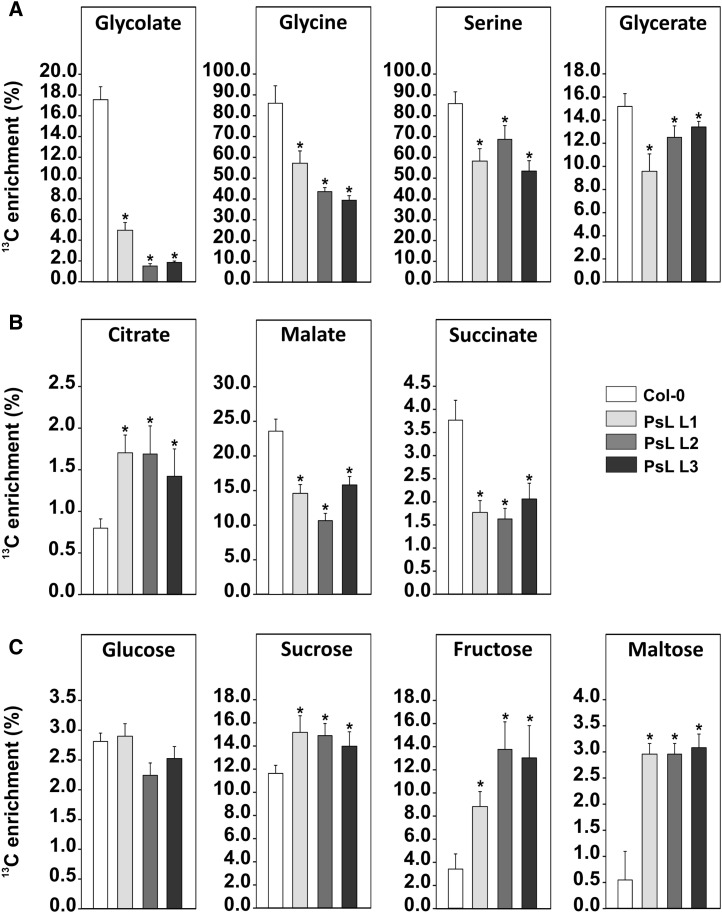
13C Isotope Enrichment in Selected Intermediates of Photorespiration, the TCA Cycle, and Soluble Sugars. Leaf discs were harvested from plants at growth stage 5.1 according to Boyes et al. (2001) after 6 h of illumination. 13C glycine labeling (3 h) was performed under growth conditions, leaf discs were harvested, and 13C enrichment of selected intermediates analyzed by GC-MS. Shown are representatives of photorespiration (A), the TCA cycle (B), and soluble sugars (C). Values are given as means ± sd from at least five biological and two technical replicates. Asterisks indicate values that were statistically significant based on Student’s t test (P < 0.05). For a comprehensive analysis of 13C enrichment see Supplemental Figure 2 and Supplemental Table 2.
Figure 4.
Figure 4.
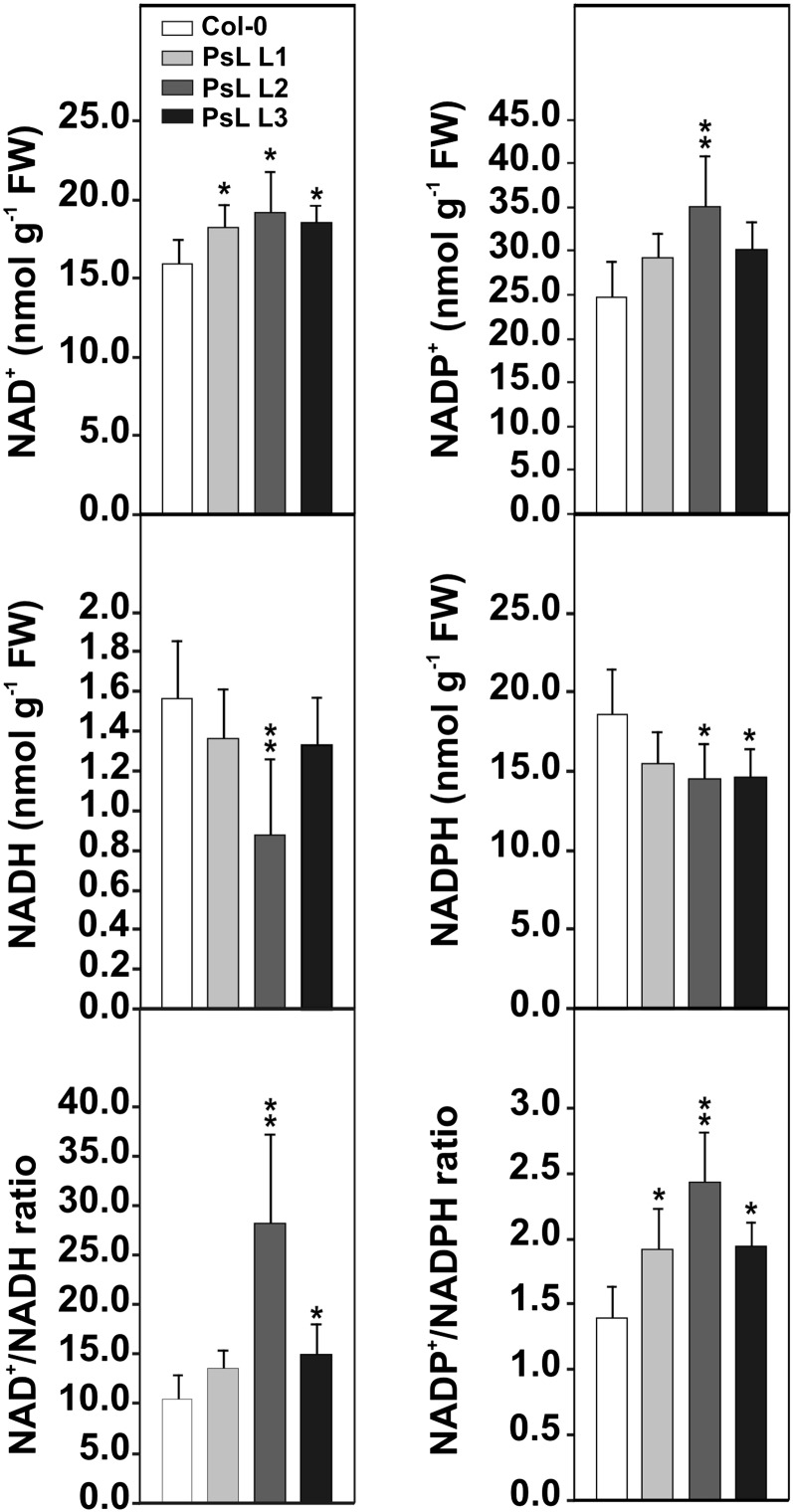
Pyridine Nucleotide Levels in Leaves of mtLPD Overexpressors. Leaf material was harvested at the end of the light period (9 h light) from plants at growth stage 5.1 according to Boyes et al. (2001). Values are mean ± sd of five independent biological replicates. Asterisks indicate values significantly different from the wild-type control based on Student´s t test (*P < 0.05; **P < 0.01). FW, fresh weight.
Figure 5.
Figure 5.
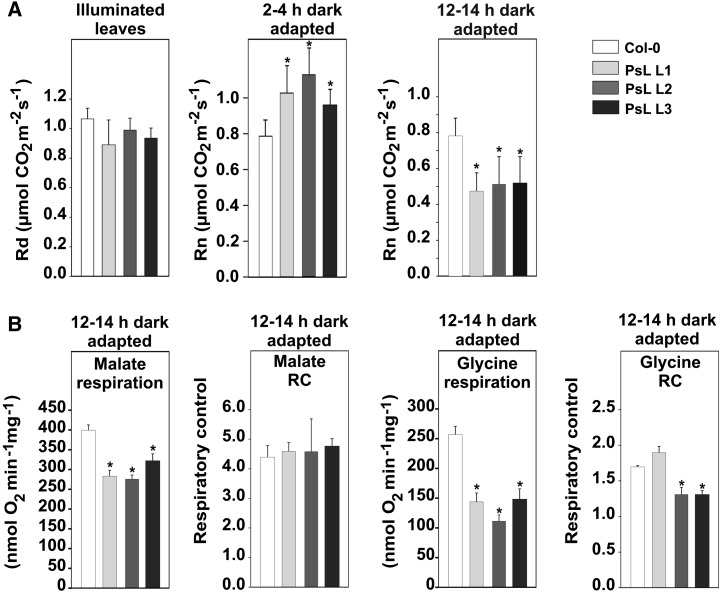
Respiratory Gas Exchange and Mitochondrial Respiration of mtLPD Lines. (A) Fully expanded leaves from plants at growth stage 5.1 (Boyes et al., 2001) were used for determination of the respiratory CO2 release during illumination and after dark adaptation (2 to 4 and 12 to 14 h, respectively; n > 4) by gas-exchange measurements. (B) Malate and glycine respiration of intact mitochondria from mtLPD overexpressors and the wild type (n = 4). Respiratory coupling of mitochondria was verified by determination of respiratory control values (RC) from the transition from state 3 to state 4. RC values were in the range of previous reports (Keech et al., 2005) confirming that isolated organelles were intact and of good quality. Asterisks indicate values significantly different from the wild-type control based on Student’s t test (*P < 0.05).
Figure 6.
Figure 6.
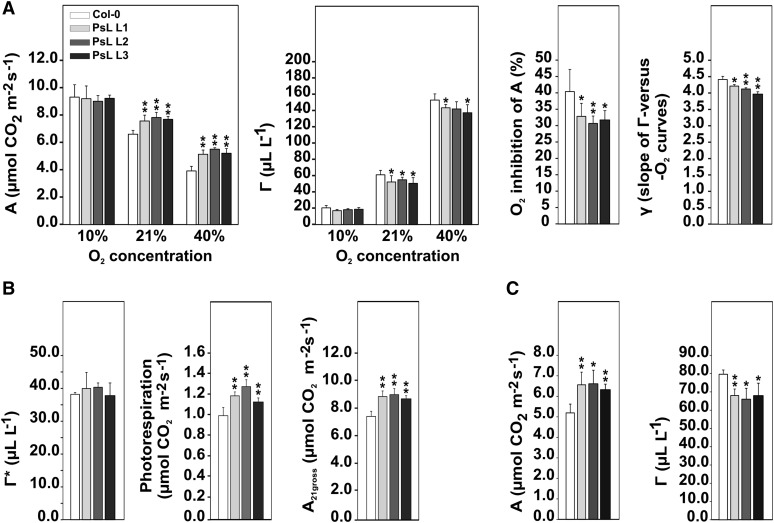
Photosynthetic Parameters of mtLPD Overexpression Lines. For gas-exchange measurements plants were grown to growth stage 5.1 (Boyes et al., 2001) under normal air conditions (21% O2, 390 ppm CO2) with a photoperiod of 10/14-h day/night. (A) Shown are net CO2 uptake (A), CO2 compensation points (Γ), oxygen inhibition, and slopes of the oxygen response curves (γ) of mtLPD lines compared with the wild type (n > 5; *P < 0.05, **P < 0.01). (B) CO2 compensation points in the absence of dark respiration (Γ*), rates of photorespiration, and gross photosynthesis (n = 5; *P < 0.05, **P < 0.01). All measurements were performed using a light intensity of 1000 µmol m−2 s−1. (C) A and Γ determination at a light intensity of 250 µmol m−2 s−1.
Figure 7.
Figure 7.
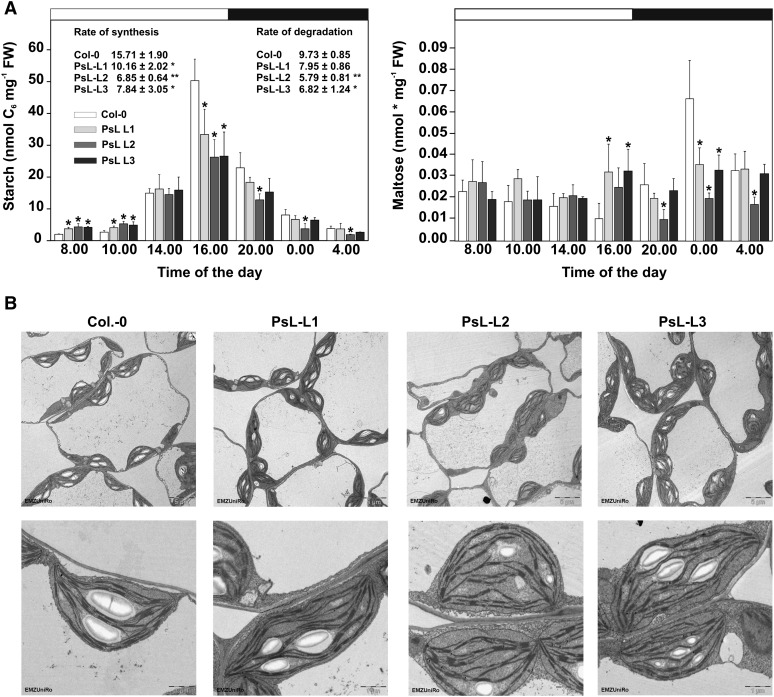
Starch Metabolism and Visualization in mtLPD Lines. (A) Leaf material was harvested from plants at growth stage 5.1 (Boyes et al., 2001) in a diurnal rhythm (4-h interval) and analyzed enzymatically for starch contents and by gas chromatography for maltose. Rates of starch biosynthesis or degradation are slopes of a linear regression of all daytime or nighttime values over the duration of the day and night, respectively. Given are means ± sd (n = 5), and asterisks indicate values significantly different from the wild type based on Student’s t test (*P < 0.05, **P < 0.01). (B) Transmission electron micrographs of sections of leaves of 10-week-old wild-type and mtLPD1 overexpression plants. Representative sections are shown at magnifications of 1400× (upper panel) and 7100× (lower panel).

References

    1. Aliyev J.A. (2012). Photosynthesis, photorespiration and productivity of wheat and soybean genotypes. Physiol. Plant. 145: 369–383. - PubMed
    1. Anderson L.E. (1971). Chloroplast and cytoplasmic enzymes. II. Pea leaf triose phosphate isomerases. Biochim. Biophys. Acta 235: 237–244. - PubMed
    1. Andrews T.J., Lorimer G.H., Tolbert N.E. (1973). Ribulose diphosphate oxygenase. I. Synthesis of phosphoglycolate by fraction-1 protein of leaves. Biochemistry 12: 11–18. - PubMed
    1. Araújo W.L., Ishizaki K., Nunes-Nesi A., Larson T.R., Tohge T., Krahnert I., Witt S., Obata T., Schauer N., Graham I.A., Leaver C.J., Fernie A.R. (2010). Identification of the 2-hydroxyglutarate and isovaleryl-CoA dehydrogenases as alternative electron donors linking lysine catabolism to the electron transport chain of Arabidopsis mitochondria. Plant Cell 22: 1549–1563. - PMC - PubMed
    1. Araújo W.L., Tohge T., Osorio S., Lohse M., Balbo I., Krahnert I., Sienkiewicz-Porzucek A., Usadel B., Nunes-Nesi A., Fernie A.R. (2012). Antisense inhibition of the 2-oxoglutarate dehydrogenase complex in tomato demonstrates its importance for plant respiration and during leaf senescence and fruit maturation. Plant Cell 24: 2328–2351. - PMC - PubMed

Publication types

MeSH terms

LinkOut - more resources