


The antimicrobial propeptide hCAP-18 plasma levels in neutropenia of various aetiologies: a prospective study
- PMID: 26119962
- PMCID: PMC4484407
- DOI: 10.1038/srep11685
The antimicrobial propeptide hCAP-18 plasma levels in neutropenia of various aetiologies: a prospective study
Abstract
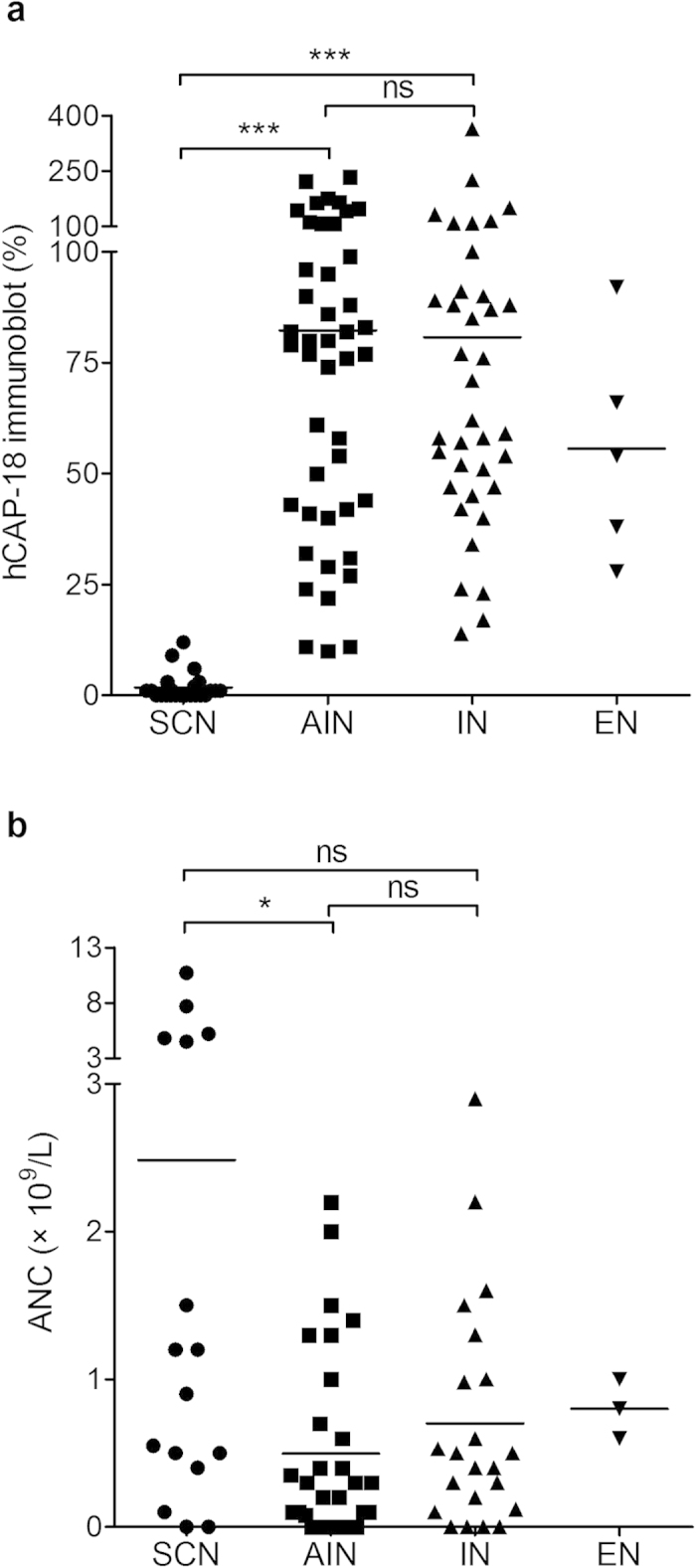
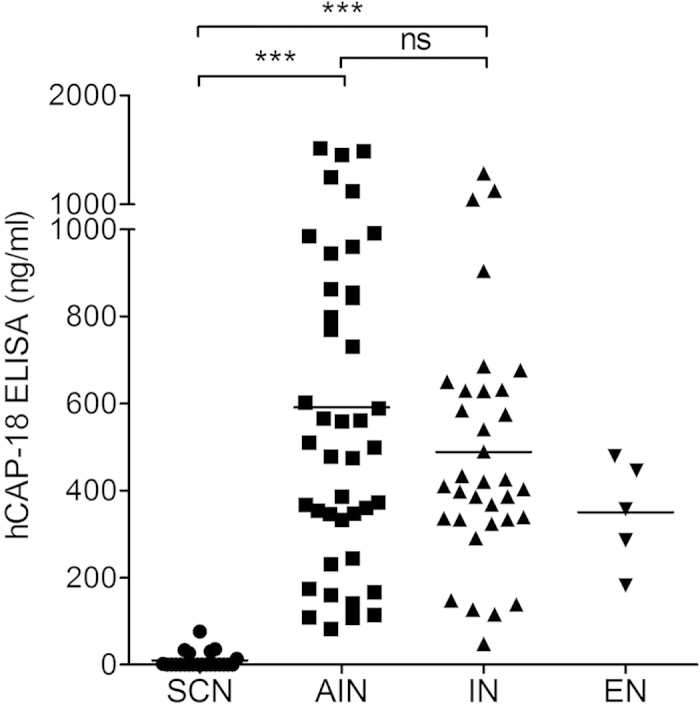
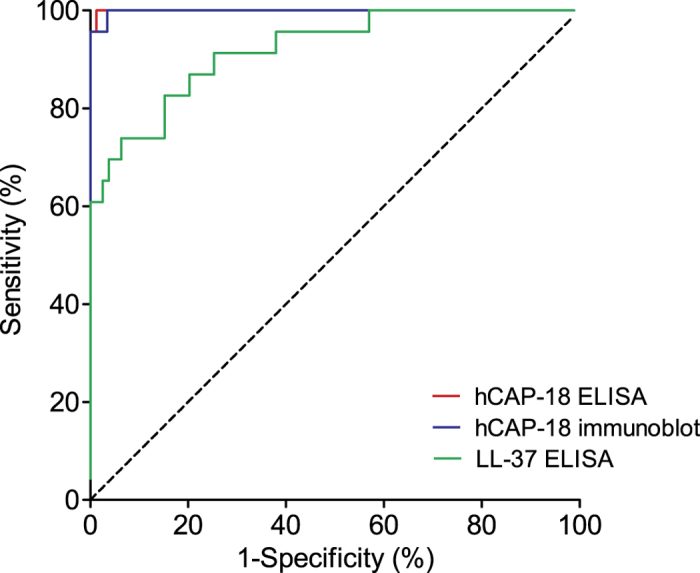
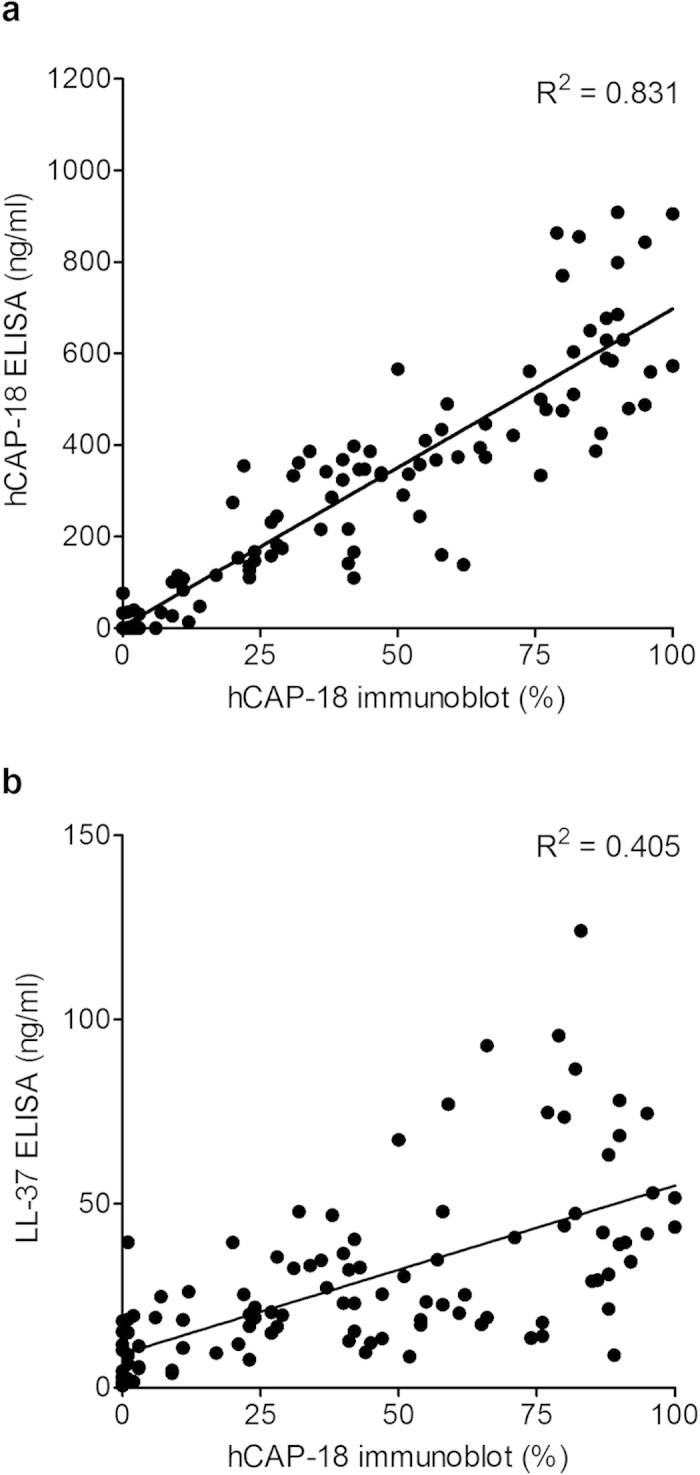
The underlying cause of neutropenia may be difficult to determine due to similar clinical presentation in many neutropenic conditions. The neutrophil protein hCAP-18 (pro-LL-37) is a major component of neutrophil secondary granules and in this prospective study we assessed the use of hCAP-18 levels in blood plasma for differential diagnosis of neutropenic patients (n = 133) of various aetiologies. Plasma levels of hCAP-18 were determined using immunoblot and ELISA. Patients with severe congenital neutropenia (n = 23) presented with the lowest levels of plasma hCAP-18 and differential diagnostic accuracy revealed high sensitivity (100%) and specificity (98.8%) for hCAP-18 ELISA. The correlation coefficient of the hCAP-18 ELISA versus immunoblotting was (R = 0.831) and that of the peptide LL-37 ELISA versus immunoblotting was (R = 0.405) (P < 0.001). Plasma hCAP-18 levels thus displayed high diagnostic value in differential diagnosis of chronic neutropenia. Neutropenic patients with Shwachman-Diamond syndrome, Barth syndrome, Cohen syndrome, acute myeloid leukaemia and specific granule deficiency presented with reduced plasma hCAP-18 levels as well. The blood plasma level of hCAP-18 was thus low in conditions in which the neutrophil antibacterial propeptide hCAP-18 is deficient, i.e. severe congenital neutropenia and neutrophil-specific granule deficiency, and in conditions in which bone marrow myelopoiesis is negatively affected.
Conflict of interest statement
M.L-A.A., G.C., K.L-A.P. are inventors in a patent (# 7591997) owned by the company Mabtech (Sweden) "Method for determining the susceptibility of a subject to infection". Mabtech had no part in initiating the present study, had no influence on study design, data collection and analysis of data, writing the report or in the decision to submit this report for publication. The company has no part in funding of this study. The other authors (T.U.M., N.B., Y.Y., J.M.T.K.) have no conflicts of interest to declare.
Figures
References
-
- Nathan C. Neutrophils and immunity: challenges and opportunities. Nat Rev Immunol 6, 173–182 (2006). - PubMed
-
- Boxer L. A. How to approach neutropenia. Hematology Am Soc Hematol Educ Program 2012, 174–182 (2012). - PubMed
-
- Niemeyer C. M. & Baumann I. Classification of childhood aplastic anemia and myelodysplastic syndrome. Hematology Am Soc Hematol Educ Program 2011, 84–89 (2011). - PubMed
-
- Walkovich K. & Boxer L. A. How to approach neutropenia in childhood. Pediatr Rev 34, 173 (2013). - PubMed
Publication types
MeSH terms
Substances
LinkOut - more resources
Full Text Sources
Other Literature Sources
