


Climate change and air pollution: Effects on pollen allergy and other allergic respiratory diseases
- PMID: 26120514
- PMCID: PMC4479458
- DOI: 10.1007/s40629-014-0003-7
Climate change and air pollution: Effects on pollen allergy and other allergic respiratory diseases
Abstract
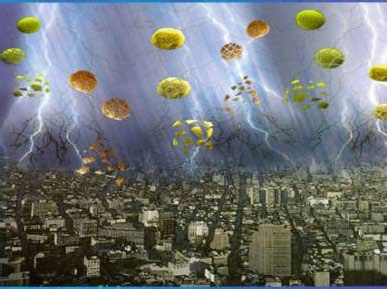
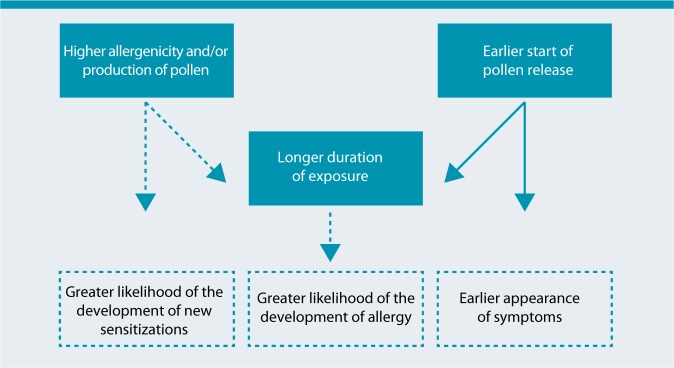
The observational evidence indicates that recent regional changes in climate, particularly temperature increases, have already affected a diverse set of physical and biological systems in many parts of the world. Allergens patterns are also changing in response to climate change and air pollution can modify the allergenic potential of pollen grains especially in the presence of specific weather conditions. Although genetic factors are important in the development of asthma and allergic diseases, their rising trend can be explained only by changes occurring in the environment and urban air pollution by motor vehicles has been indicated as one of the major risk factors responsible for this increase. Despite some differences in the air pollution profile and decreasing trends of some key air pollutants, air quality is an important concern for public health in the cities throughout the world. Due to climate change, air pollution patterns are changing in several urbanized areas of the world with a significant effect on respiratory health. The underlying mechanisms of all these interactions are not well known yet. The consequences on health vary from decreases in lung function to allergic diseases, new onset of diseases, and exacerbation of chronic respiratory diseases. In addition, it is important to recall that an individual's response to pollution exposure depends on the source and components of air pollution, as well as meteorological conditions. Indeed, some air pollution-related incidents with asthma aggravation do not depend only on the increased production of air pollution, but rather on atmospheric factors that favor the accumulation of air pollutants at ground level. Associations between thunderstorms and asthma morbidity of pollinosis-affected people have also been identified in multiple locations around the world (Fig.1). Cite this as D'Amato G, Bergmann KC, Cecchi L, Annesi-Maesano I, Sanduzzi A, Liccardi G, Vitale C, Stanziola A, D'Amato M. Climate change and air pollution - Effects on pollen allergy and other allergic respiratory diseases. Allergo J Int 2014; 23: 17-23 DOI 10.1007/s40629-014-0003-7 A factor clouding the problem is that laboratory evaluations do not reflect what happens during natural exposition. Considering these aspects, governments worldwide, international organizations, and cooperations such as the World Health Organization (WHO) and the European Health Policy of the European Union (EU) are facing a growing problem of the respiratory effects induced by gaseous and particulate pollutants arising from motor vehicle emissions.
Keywords: Air pollution; airways hyperresponsiveness; bronchial asthma; climate change; environment; respiratory allergy.
References
-
- Hegerl GC, Zwiers FW, Braconnot P, Gillett NP, Luo Y, Marengo JA, et al. et al. Understanding and attributing climate change. In: Solomon S, Qin D, Manning M, Chen Z, Marquis M, Averyt KB, et al.et al., editors. In Climate change 2007: the physical science basis. Contribution of the Working Group I to the Fourth Assessment Report of the Intergovernmental Panel on Climate Change. Cambridge, UK and New York: Cambridge University Press; 2007. pp. 663–746.
-
- Parry ML, Canziana OF, Palutikof J A N, Agarwal P, Agrawala S, et al. Technical summary. In: Parry ML, Canziana OF, Palutikof JP, van der Linden PJ, Hansen CE, et al., editors. In Climate change 2007: impacts, adaptation, and vulnerabilities. Contribution of Working Group II to the Fourth Assessment Report of the Intergovernmental Panel on Climate Change. Cambridge, UK: Cambridge University Press; 2007. pp. 23–78.
Publication types
LinkOut - more resources
Full Text Sources
Other Literature Sources
Medical
