


Cardiorespiratory Fitness, Sedentary Behaviour and Physical Activity Are Independently Associated with the Metabolic Syndrome, Results from the SCAPIS Pilot Study
- PMID: 26120842
- PMCID: PMC4486454
- DOI: 10.1371/journal.pone.0131586
Cardiorespiratory Fitness, Sedentary Behaviour and Physical Activity Are Independently Associated with the Metabolic Syndrome, Results from the SCAPIS Pilot Study
Erratum in
-
Correction: Cardiorespiratory Fitness, Sedentary Behaviour and Physical Activity Are Independently Associated with the Metabolic Syndrome, Results from the SCAPIS Pilot Study.PLoS One. 2018 May 22;13(5):e0197801. doi: 10.1371/journal.pone.0197801. eCollection 2018. PLoS One. 2018. PMID: 29787585 Free PMC article.
Abstract
Background: Previous studies on the relation between lifestyle and the metabolic syndrome lack one or several aspects of the physical activity pattern in the analyses or cardiorespiratory fitness. Likewise, both uni- and triaxial accelerometry have been used, though, the predictive validity of these two modes has not been compared.
Objectives: The aims of the present study were firstly to investigate the independent relation between cardiorespiratory fitness and physical activity pattern to the metabolic syndrome (MetS) and secondly to examine the predictive validity of uni- and triaxial accelerometry, respectively.
Methods: Data was extracted from the SCAPIS pilot study (n=930, mean age 57.7 yrs). Physical activity pattern was assessed by accelerometry. Cardiorespiratory fitness was estimated using cycle ergometry. MetS was defined per the Adult Treatment Panel III from the National Cholesterol Education Program definition.
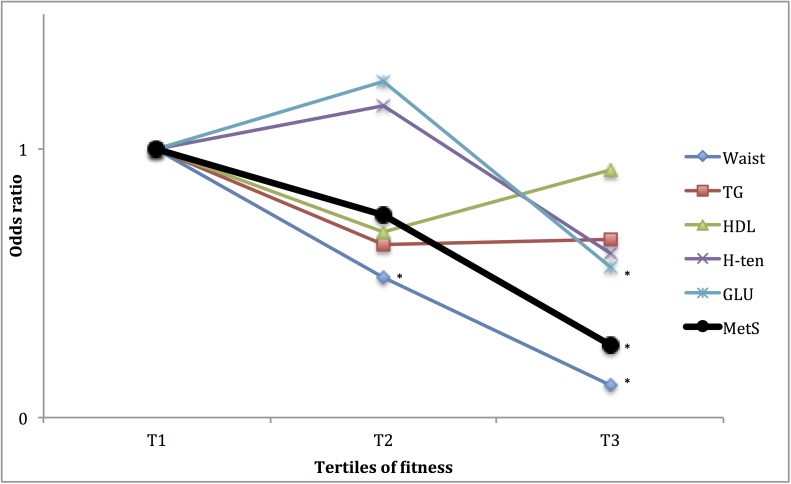
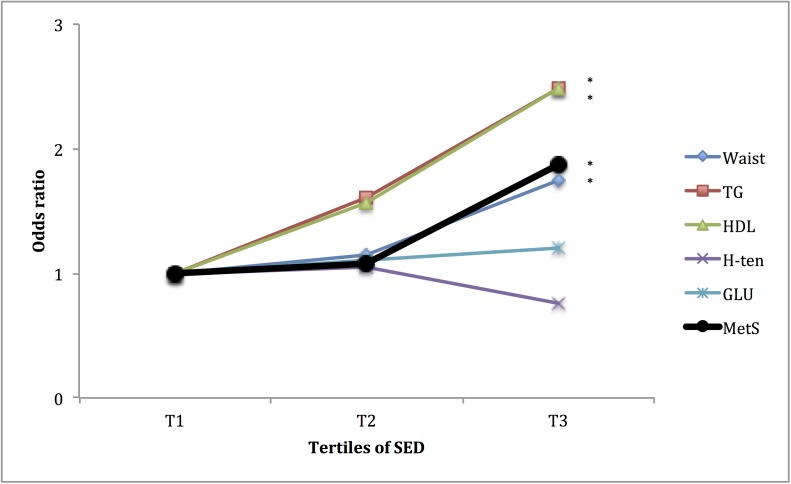
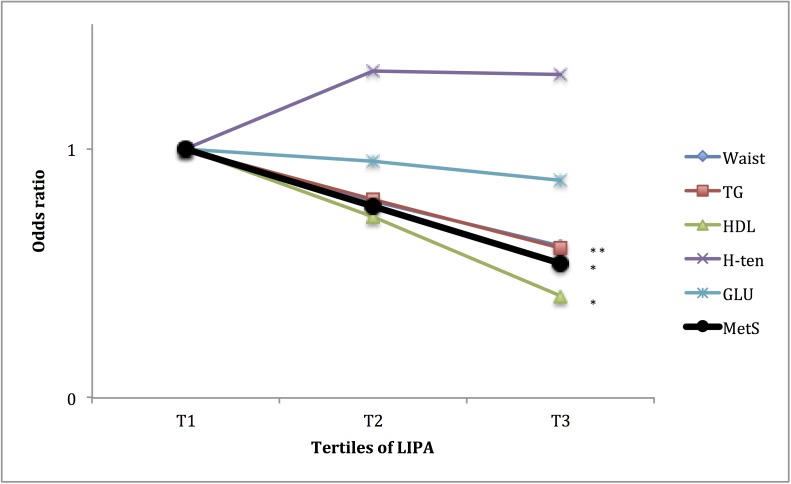
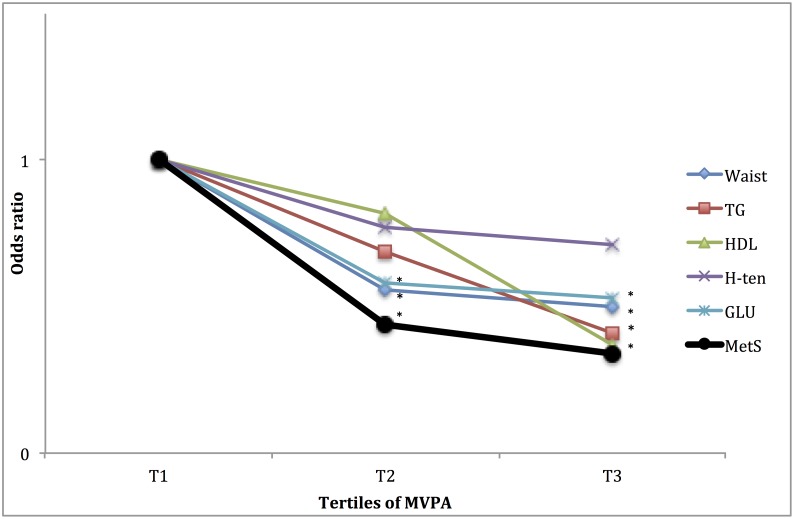
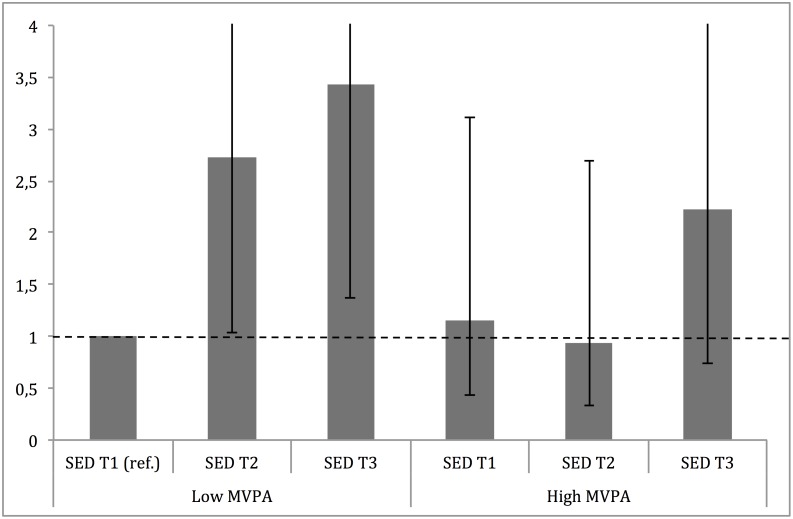
Results: Time spent sedentary (OR: 2.38, 95% CI: 1.54-4.24 for T3 vs T1), in light intensity (OR: 0.50, 95% CI: 0.28-0.90) and in moderate-to-vigorous activity (OR: 0.33, 95% CI: 0.18-0.61), as well as cardiorespiratory fitness (OR: 0.24, 95% CI:0.12-0.48), were all independently related to the prevalence of MetS after adjustment for potential confounders, fitness and/or the other aspects of the physical activity pattern. In addition, we found that triaxial analyses were more discriminant, with ORs farther away from the reference group and additional significant ORs.
Conclusion: The finding that several aspects of the physical activity pattern reveal independent relations to the MetS makes new possible targets for behaviour change of interest, focusing on both exercise and everyday life. When assessing the risk status of a patient, it is advised that triaxial accelerometry is used.
Conflict of interest statement
Figures
References
-
- Expert Panel on Detection E, Treatment of High Blood Cholesterol in A (2001) Executive Summary of The Third Report of The National Cholesterol Education Program (NCEP) Expert Panel on Detection, Evaluation, And Treatment of High Blood Cholesterol In Adults (Adult Treatment Panel III). JAMA 285: 2486–2497. - PubMed
Publication types
MeSH terms
LinkOut - more resources
Full Text Sources
Other Literature Sources
Medical
