


Salivary MicroRNA in Pancreatic Cancer Patients
- PMID: 26121640
- PMCID: PMC4486170
- DOI: 10.1371/journal.pone.0130996
Salivary MicroRNA in Pancreatic Cancer Patients
Abstract
Background: Pancreatic cancer is the fourth leading cause of cancer death in Western countries, with the lowest 1-year survival rate among commonly diagnosed cancers. Reliable biomarkers for pancreatic cancer diagnosis are lacking and are urgently needed to allow for curative surgery. As microRNA (miRNA) recently emerged as candidate biomarkers for this disease, we explored in the present pilot study the differences in salivary microRNA profiles between patients with pancreatic tumors that are not eligible for surgery, precancerous lesions, inflammatory disease or cancer-free patients as a potential early diagnostic tool.
Methods: Whole saliva samples from patients with pancreatic cancer (n = 7), pancreatitis (n = 4), IPMN (n = 2), or healthy controls (n = 4) were obtained during endoscopic examination. After total RNA isolation, expression of 94 candidate miRNAs was screened by q(RT)PCR using Biomark Fluidgm. Human-derived pancreatic cancer cells were xenografted in athymic mice as an experimental model of pancreatic cancer.
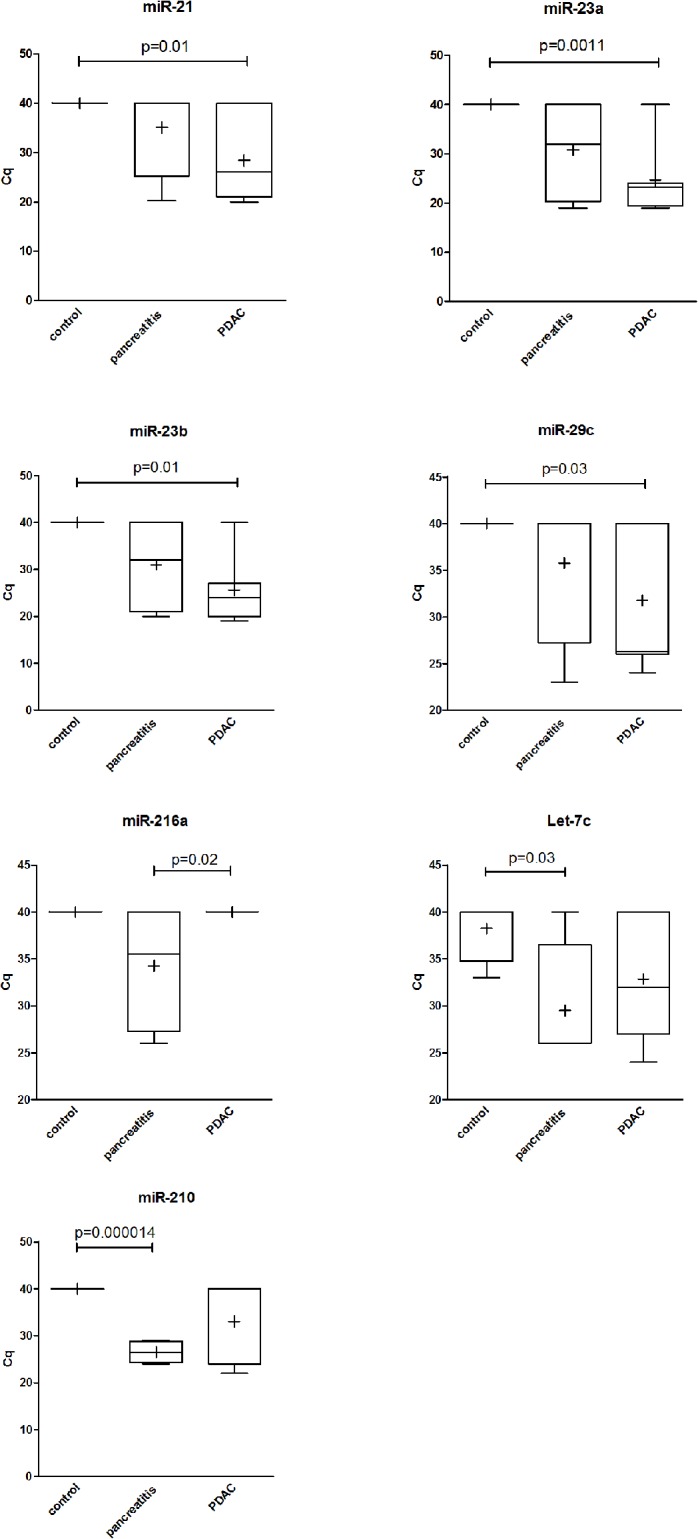
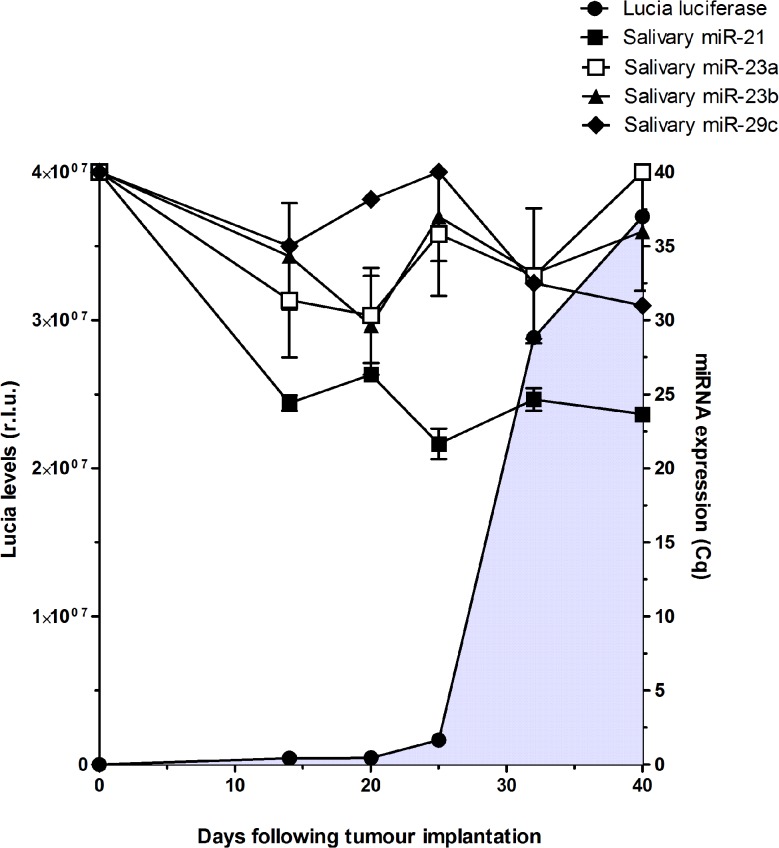
Results: We identified hsa-miR-21, hsa-miR-23a, hsa-miR-23b and miR-29c as being significantly upregulated in saliva of pancreatic cancer patients compared to control, showing sensitivities of 71.4%, 85.7%, 85,7% and 57%, respectively and excellent specificity (100%). Interestingly, hsa-miR-23a and hsa-miR23b are overexpressed in the saliva of patients with pancreatic cancer precursor lesions. We found that hsa-miR-210 and let-7c are overexpressed in the saliva of patients with pancreatitis as compared to the control group, with sensitivity of 100% and 75%, and specificity of 100% and 80%, respectively. Last hsa-miR-216 was upregulated in cancer patients as compared to patients diagnosed with pancreatitis, with sensitivity of 50% and specificity of 100%. In experimental models of PDAC, salivary microRNA detection precedes systemic detection of cancer cells markers.
Conclusions: Our novel findings indicate that salivary miRNA are discriminatory in pancreatic cancer patients that are not eligible for surgery. In addition, we demonstrate in experimental models that salivary miRNA detection precedes systemic detection of cancer cells markers. This study stems for the use of salivary miRNA as biomarker for the early diagnosis of patients with unresectable pancreatic cancer.
Conflict of interest statement
Figures
References
-
- Cancer Facts & Figures 2013 [Internet]. [cited 10 Feb 2014]. Available: http://www.cancer.org/research/cancerfactsfigures/cancerfactsfigures/can...
-
- Burris HA 3rd, Moore MJ, Andersen J, Green MR, Rothenberg ML, Modiano MR, et al. Improvements in survival and clinical benefit with gemcitabine as first-line therapy for patients with advanced pancreas cancer: a randomized trial. J Clin Oncol Off J Am Soc Clin Oncol. 1997;15: 2403–2413. - PubMed
-
- Pancreatic Cancer Action Network [Internet]. Available: http://www.pancan.org/
MeSH terms
Substances
LinkOut - more resources
Full Text Sources
Other Literature Sources
Medical
Research Materials
