


Review
doi: 10.1155/2015/143720.
Epub 2015 Jun 1.
Metal-Based Nanoparticles and the Immune System: Activation, Inflammation, and Potential Applications
Affiliations
- PMID: 26125021
- PMCID: PMC4466342
- DOI: 10.1155/2015/143720
Item in Clipboard
Review
Metal-Based Nanoparticles and the Immune System: Activation, Inflammation, and Potential Applications
Biomed Res Int.
2015.
Abstract
Nanomaterials, including metal-based nanoparticles, are used for various biological and medical applications. However, metals affect immune functions in many animal species including humans. Different physical and chemical properties induce different cellular responses, such as cellular uptake and intracellular biodistribution, leading to the different immune responses. The goals of this review are to summarize and discuss the innate and adaptive immune responses triggered by metal-based nanoparticles in a variety of immune system models.
Figures
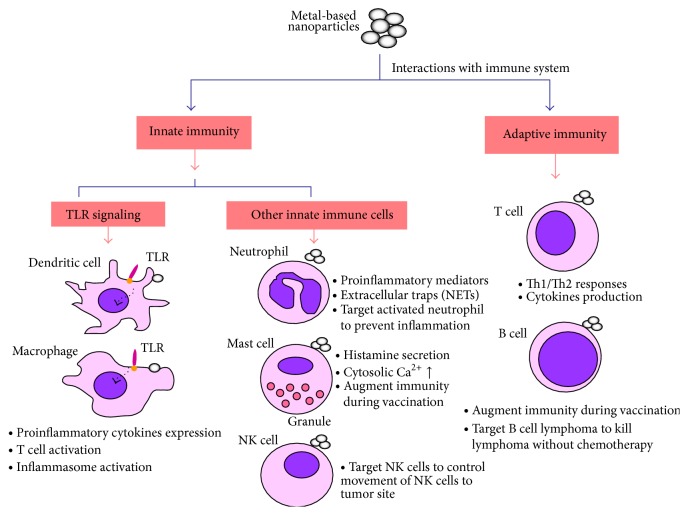
Metal-based nanoparticles interaction with immune system.
References
-
- Durán N., Marcato P. D., de Souza G. I. H., Alves O. L., Esposito E. Antibacterial effect of silver nanoparticles produced by fungal process on textile fabrics and their effluent treatment. Journal of Biomedical Nanotechnology. 2007;3(2):203–208. doi: 10.1166/jbn.2007.022. - DOI
Publication types
MeSH terms
LinkOut - more resources
Full Text Sources
Other Literature Sources
