


Type III home sleep testing versus pulse oximetry: is the respiratory disturbance index better than the oxygen desaturation index to predict the apnoea-hypopnoea index measured during laboratory polysomnography?
- PMID: 26129636
- PMCID: PMC4486950
- DOI: 10.1136/bmjopen-2015-007956
Type III home sleep testing versus pulse oximetry: is the respiratory disturbance index better than the oxygen desaturation index to predict the apnoea-hypopnoea index measured during laboratory polysomnography?
Abstract
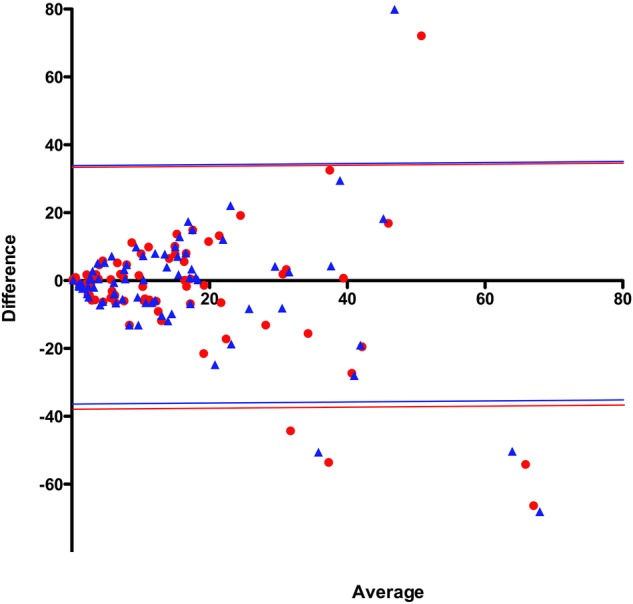
Objectives: In its guidelines on the use of portable monitors to diagnose obstructive sleep apnoea, the American Academy of Sleep Medicine endorses home polygraphy with type III devices recording at a minimum airflow the respiratory effort and pulse oximetry, but advises against simple pulse oximetry. However, oximetry is widely available and simple to use in the home. This study was designed to compare the ability of the oxygen desaturation index (ODI) based on oximetry alone with a stand-alone pulse oximeter (SPO) and from the oximetry channel of the ApneaLink Plus (ALP), with the respiratory disturbance index (RDI) based on four channels from the ALP to predict the apnoea-hypopnoea index (AHI) from laboratory polysomnography.
Design: Cross-sectional diagnostic accuracy study.
Setting: Sleep medicine practice of a multispecialty clinic.
Participants: Patients referred for laboratory polysomnography with suspected sleep apnoea. We enrolled 135 participants with 123 attempting the home sleep testing and 73 having at least 4 hours of satisfactory data from SPO and ALP.
Interventions: Participants had home testing performed simultaneously with both a SPO and an ALP. The 2 oximeter probes were worn on different fingers of the same hand. The ODI for the SPO was calculated using Profox software (ODI(SOX)). For the ALP, RDI and ODI were calculated using both technician scoring (RDI(MAN) and ODI(MAN)) and the ALP computer scoring (RDI(RAW) and ODI(RAW)).
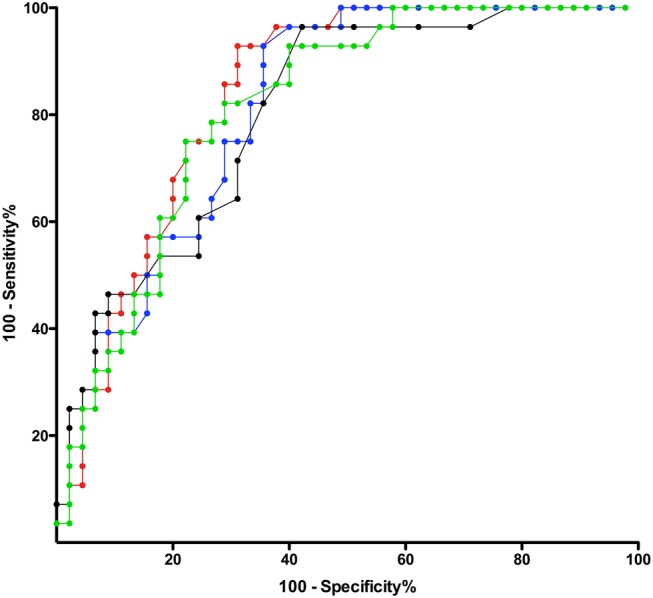
Results: The receiver-operator characteristic areas under the curve for AHI ≥ 5 were RDI(MAN) 0.88 (95% confidence limits 0.81-0.96), RDI(RAW) 0.86 (0.76-0.94), ODI(MAN) 0.86 (0.77-0.95), ODI(RAW) 0.84 (0.75-0.93) and ODI(SOX) 0.83 (0.73-0.93).
Conclusions: We conclude that the RDI and the ODI, measured at home on the same night, give similar predictions of the laboratory AHI, measured on a different night. The differences between the two methods are small compared with the reported night-to-night variation of the AHI.
Keywords: SLEEP MEDICINE; home testing; sleep apnea.
Published by the BMJ Publishing Group Limited. For permission to use (where not already granted under a licence) please go to http://group.bmj.com/group/rights-licensing/permissions.
Figures


References
Publication types
MeSH terms
LinkOut - more resources
Full Text Sources
Other Literature Sources
Miscellaneous
