From cell senescence to age-related diseases: differential mechanisms of action of senescence-associated secretory phenotypes
- PMID: 26129674
- PMCID: PMC4911181
- DOI: 10.5483/bmbrep.2015.48.10.122
From cell senescence to age-related diseases: differential mechanisms of action of senescence-associated secretory phenotypes
Erratum in
-
Erratum to: From cell senescence to age-related diseases: differential mechanisms of action of senescence-associated secretory phenotypes.BMB Rep. 2016 Nov;49(11):641-650. doi: 10.5483/bmbrep.2016.49.11.122. BMB Rep. 2016. PMID: 27881217 No abstract available.
Abstract
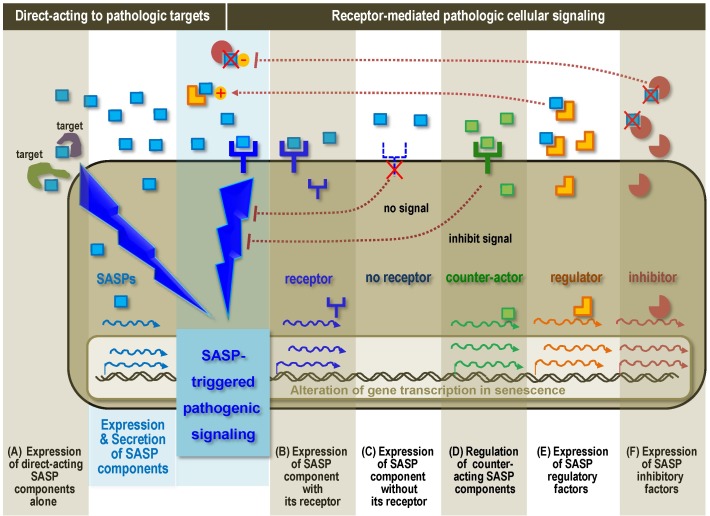
Cellular senescence is a process by which cells enter a state of permanent cell cycle arrest. It is commonly believed to underlie organismal aging and age-associated diseases. However, the mechanism by which cellular senescence contributes to aging and age-associated pathologies remains unclear. Recent studies showed that senescent cells exert detrimental effects on the tissue microenvironment, generating pathological facilitators or aggravators. The most significant environmental effector resulting from senescent cells is the senescence-associated secretory phenotype (SASP), which is constituted by a strikingly increased expression and secretion of diverse pro-inflammatory cytokines. Careful investigation into the components of SASPs and their mechanism of action, may improve our understanding of the pathological backgrounds of age-associated diseases. In this review, we focus on the differential expression of SASP-related genes, in addition to SASP components, during the progress of senescence. We also provide a perspective on the possible action mechanisms of SASP components, and potential contributions of SASP-expressing senescent cells, to age-associated pathologies.
Figures