


Is the supine position associated with loss of airway patency in unconscious trauma patients? A systematic review and meta-analysis
- PMID: 26129809
- PMCID: PMC4486423
- DOI: 10.1186/s13049-015-0116-0
Is the supine position associated with loss of airway patency in unconscious trauma patients? A systematic review and meta-analysis
Abstract
Background: Airway compromise is a leading cause of death in unconscious trauma patients. Although endotracheal intubation is regarded as the gold standard treatment, most prehospital providers are not trained to perform ETI in such patients. Therefore, various lateral positions are advocated for unconscious patients, but their use remains controversial in trauma patients. We conducted a systematic review to investigate whether the supine position is associated with loss of airway patency compared to the lateral position.
Methods: The review protocol was published in the PROSPERO database (Reg. no. CRD42012001190). We performed literature searches in PubMed, Medline, EMBASE, Cochrane Library, CINAHL and British Nursing Index and included studies related to airway patency, reduced level of consciousness and patient position. We conducted meta-analyses, where appropriate. We graded the quality of evidence with the GRADE methodology. The search was updated in June 2014.
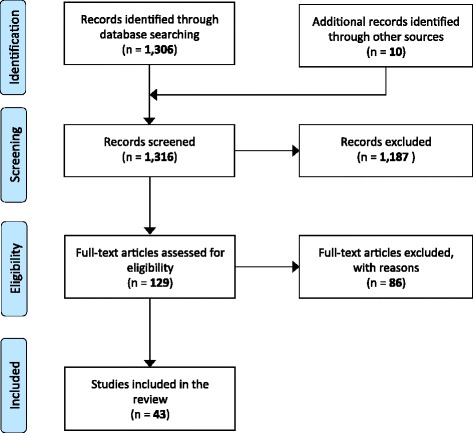
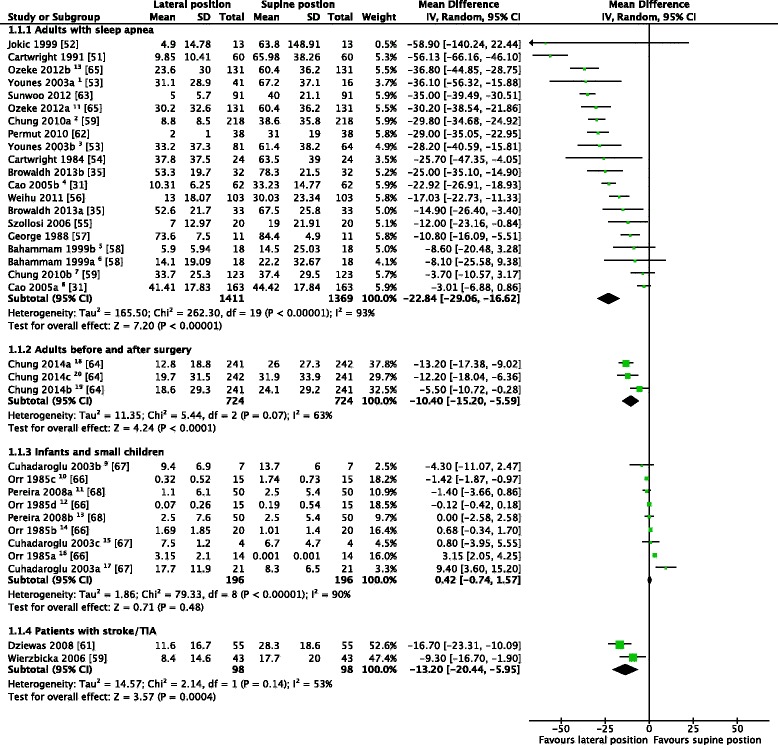
Results: We identified 1,306 publications, 39 of which were included for further analysis. Sixteen of these publications were included in meta-analysis. We did not identify any studies reporting direct outcome measures (mortality or morbidity) related to airway compromise caused by the patient position (lateral vs. supine position) in trauma patients or in any other patient group. In studies reporting only indirect outcome measures, we found moderate evidence of reduced airway patency in the supine vs. the lateral position, which was measured by the apnea/hypopnea index (AHI). For other indirect outcomes, we only found low or very low quality evidence.
Conclusions: Although concerns other than airway patency may influence how a trauma patient is positioned, our systematic review provides evidence supporting the long held recommendation that unconscious trauma patients should be placed in a lateral position.
Figures
References
-
- Sasser S, Varghese M, Kellermann A, Lormand JD. 2.2.1 The need. In: Sasser S, Varghese M, Kellermann A, Lormand JD, editors. Prehospital trauma care systems. Geneva: World Health Organization; 2005. pp. 7–8.
-
- Smith CE, Walls RM, Lockey D, Kuhnigk H. Advanced Airway Management and Use of Anesthetic Drugs. In: Søreide E, Grande CM, editors. Prehospital Trauma Care. New York: Marcel Dekker, Inc; 2001. pp. 203–253.
-
- PHTLS Committee of NAEMT . Airway and Ventilation. In: McSwain NE, editor. PHTLS - Basic and Advanced Prehospital Trauma Life Support. 7. St. Louis: Mosby JEMS, Elsevier; 2011. pp. 133–177.
-
- American College of Surgeons Committee on Trauma . Airway and Ventilatory Management. In: Rotondo MF, editor. Advanced Trauma Life Support for Doctors - Student Course Manual. 9. Chicago: American College of Surgeons; 2012. pp. 30–49.
Publication types
MeSH terms
LinkOut - more resources
Full Text Sources
Other Literature Sources
Medical
