Evaluation of 19-gauge endoscopic ultrasonography aspiration needles using various echoendoscopes
- PMID: 26135509
- PMCID: PMC4440372
- DOI: 10.1055/s-0033-1359212
Evaluation of 19-gauge endoscopic ultrasonography aspiration needles using various echoendoscopes
Abstract
Background and study aims: 19-gauge (19G) needles are used for EUS-guided tissue acquisition and interventions. The aim of the current study was to compare the functional characteristics of 19G EUS needles by means of using various echoendoscopes in a bench simulator.
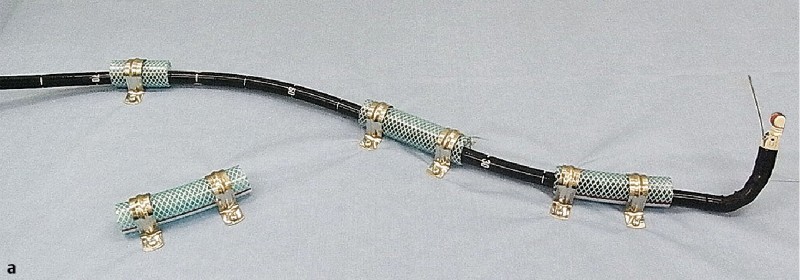
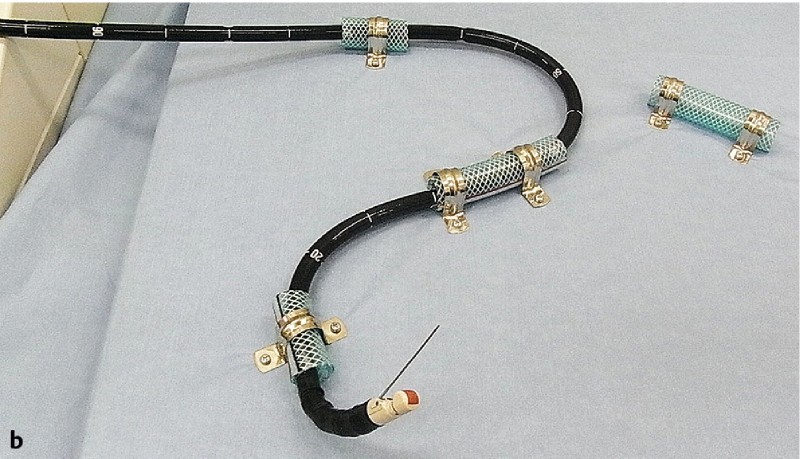
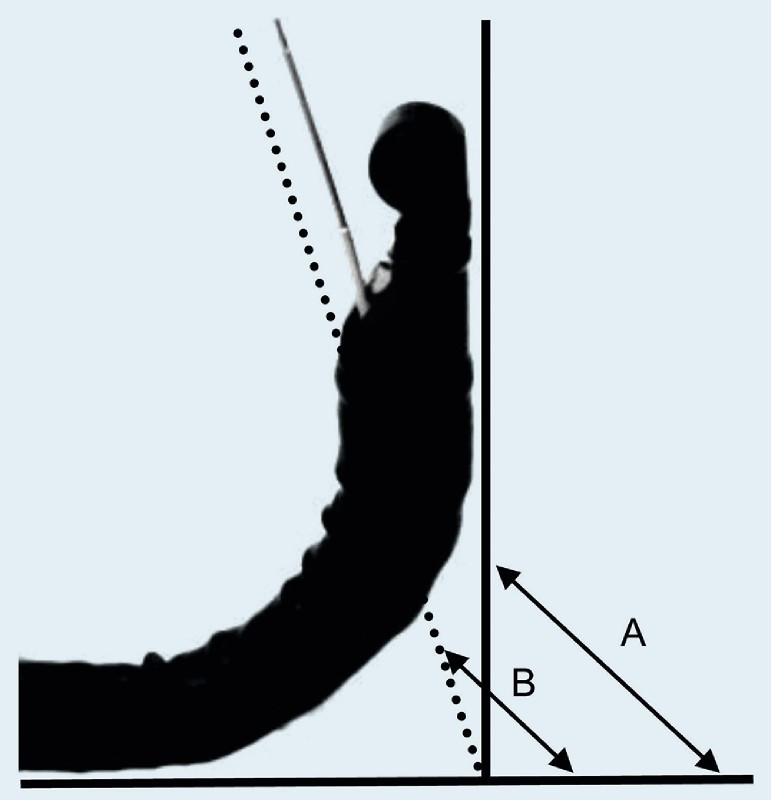
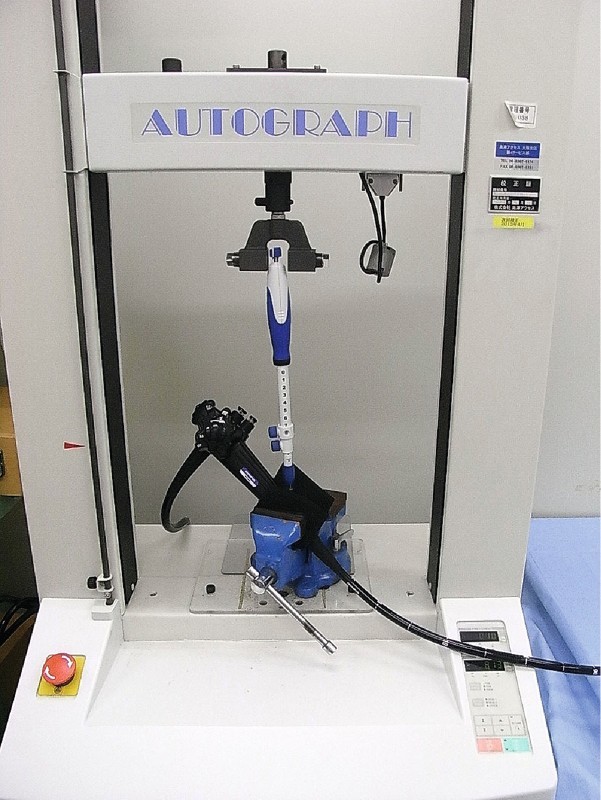
Methods: The angles achieved for 19G needles (EchoTip: ET-19G, EchoTip Flex: ExF-19G, Expect: Ex-19G, and ProCore: PC-19G) and for the distal tip of the echoendoscope were evaluated for maximal angulation settings of the distal tip and the elevator. Also the resistance to advancement of the 19G needles at these endoscope settings was assessed. All evaluations were done with endoscopes in a straight and in a curved position.
Results: There was no large discrepancy for scope and needle angles among all echoendoscopes except for the slim Pentax scope (EG-3270UK). The ExF-19G and PC-19G needles showed better optimal angles in various conditions compared to standard 19G needles. In straight scope position, out of the 20 conditions (5 endoscopes × 2 positions of the distal tip × 2 elevator positions) the numbers of optimal angulations achieved for the Ex-19G, ExF-19G, ET-19G, and PC-19G, were 11 /20 (55 %), 20 /20 (100 %), 14 /20 (70 %) and 18 /20 (90 %), respectively. However, regarding resistance, it was impossible to advance theneedle with 14 /20 settings (70 %) for the Ex-19G, 3 /20 (15 %) for the ExF-19G, 10 /20 (50 %) for the ET-19G and 7 /20 (35 %) for the PC-19G. When the scopes were bent, with regard to the force needed to advance the needle, the numbers of optimal settings, for the Ex-19G, ExF-19G, ET-19G, and PC-19G, were 1 (5 %), 13 (65 %), 6 (30 %) and 8 (40 %), respectively. The mean maximum resistance to advancement was less for the ExF-19G than for the other needless in almost all scope and angle conditions (p < 0.05).
Conclusion: Although there was no difference between needles, the resistance to passage was least with the flexible 19-gauge needle (ExF-19G).
Conflict of interest statement
Figures
References
-
- Iwashita T, Yasuda I, Doi S. et al.Use of samples from endoscopic ultrasound-guided 19-gauge fine-needle aspiration in diagnosis of autoimmune pancreatitis. Clin Gastroenterol Hepatol. 2012;10:316–322. - PubMed
-
- Varadarajulu S, Bang J Y, Hebert-Magee S. Assessment of the technical performance of the flexible 19-gauge EUS-FNA needle. Gastrointest Endosc. 2012;76:336–343. - PubMed
-
- Varadarajulu S, Lopes T L, Wilcox C M. et al.EUS versus surgical cyst-gastrostomy for management of pancreatic pseudocysts. Gastrointest Endosc. 2008;68:649–655. - PubMed
-
- Itoi T, Binmoeller K F, Shah J. et al.Clinical evaluation of a novel lumen-apposing metal stent for endosonography-guided pancreatic pseudocyst and gallbladder drainage (with video) Gastrointest Endosc. 2012;75:870–876. - PubMed
-
- Park D H, Lee S S, Moon S H. et al.Endoscopic ultrasound-guided versus conventional transmural drainage for pancreatic pseudocysts: a prospective randomized trial. Endoscopy. 2009;41:842–848. - PubMed
LinkOut - more resources
Full Text Sources
Other Literature Sources
Research Materials