


Demographic patterns of cutaneous T-cell lymphoma incidence in Texas based on two different cancer registries
- PMID: 26136403
- PMCID: PMC4567029
- DOI: 10.1002/cam4.472
Demographic patterns of cutaneous T-cell lymphoma incidence in Texas based on two different cancer registries
Abstract
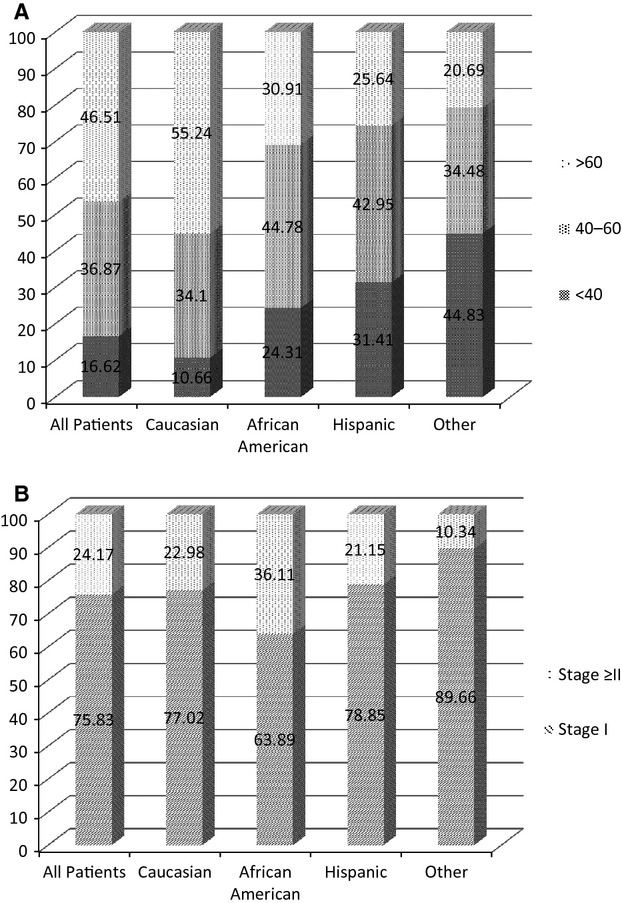
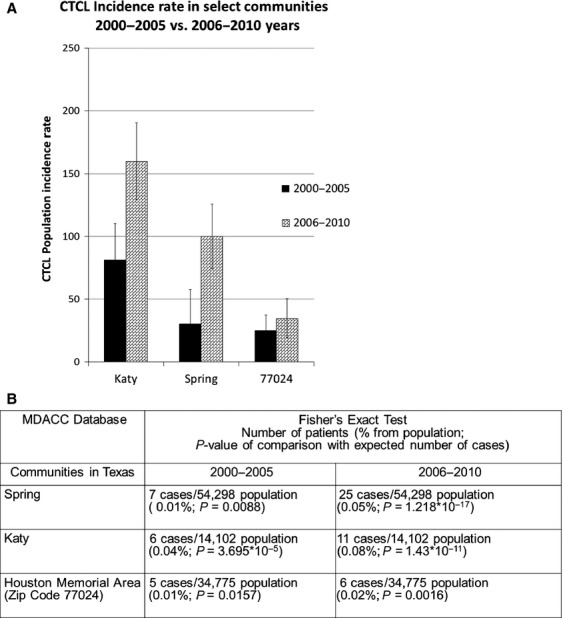
Cutaneous T-cell lymohomas (CTCLs) are rare, but potentially devastating malignancies, with Mycosis fungoides and Sézary Syndrome being the most common. In our previous study, we identified and described regions of geographic clustering of CTCL cases in Texas by analyzing ~1990 patients using two distinct cancer registries. In the current work, we describe in detail demographic patterns for this malignancy in our study population and apply logistic regression models to analyze the incidence of CTCL by sex, race, age, and clinical stage at the time of diagnosis. Furthermore, using Fisher's exact test, we analyze changes in incidence over time in the identified Houston communities with unusually high CTCL incidence. While CTCL primarily affects Caucasian individuals >55 years old, we confirm that it presents at a younger age and with more advanced disease stages in African-American and Hispanic individuals. Also, we demonstrate a significant increase in CTCL incidence over time in the identified communities. Spring, Katy, and Houston Memorial areas had high baseline rates. Furthermore, a statistically significant disease surge was observed in these areas after ~2005. This report supplements our initial study documenting the existence of geographic clustering of CTCL cases in Texas and in greater detail describes demographic trends for our patient population. The observed surge in CTCL incidence in the three identified communities further argues that this malignancy may be triggered by one or more external etiologic agents.
Keywords: Cutaneous T-cell lymphoma (CTCL); Sézary syndrome; demographic patterns; geographic clustering; mycosis fungoides.
© 2015 The Authors. Cancer Medicine published by John Wiley & Sons Ltd.
Figures
References
-
- Willemze R, Jaffe ES, Burg G, Cerroni L, Berti E, Swerdlow SH, et al. WHO-EORTC classification for cutaneous lymphomas. Blood. 2005;105:3768–3785. - PubMed
-
- Buzzell RA. Carcinogenesis of cutaneous malignancies. Dermatol. Surg. 1996;22:209–215. - PubMed
-
- Criscione VD. Weinstock MA. Incidence of cutaneous T-cell lymphoma in the United States, 1973–2002. Arch. Dermatol. 2007;143:854–859. - PubMed
-
- Alsaleh QA, Nanda A, Al-Ajmi H, et al. Clinicoepidemiological features of mycosis fungoides in Kuwait, 1991–2006. Int. J. Dermatol. 2010;49:1393–1398. - PubMed
Publication types
MeSH terms
Grants and funding
LinkOut - more resources
Full Text Sources
Other Literature Sources
