


Cost and cost-effectiveness of soil-transmitted helminth treatment programmes: systematic review and research needs
- PMID: 26137945
- PMCID: PMC4499443
- DOI: 10.1186/s13071-015-0885-3
Cost and cost-effectiveness of soil-transmitted helminth treatment programmes: systematic review and research needs
Abstract
Background: In this time of rapidly expanding mass drug administration (MDA) coverage and the new commitments for soil-transmitted helminth (STH) control, it is essential that resources are allocated in an efficient manner to have the greatest impact. However, many questions remain regarding how best to deliver STH treatment programmes; these include which age-groups should be targeted and how often. To perform further analyses to investigate what the most cost-effective control strategies are in different settings, accurate cost data for targeting different age groups at different treatment frequencies (in a range of settings) are essential.
Methods: Using the electronic databases PubMed, MEDLINE, and ISI Web of Knowledge, we perform a systematic review of costing studies and cost-effectiveness evaluations for potential STH treatment strategies. We use this review to highlight research gaps and outline the key future research needs.
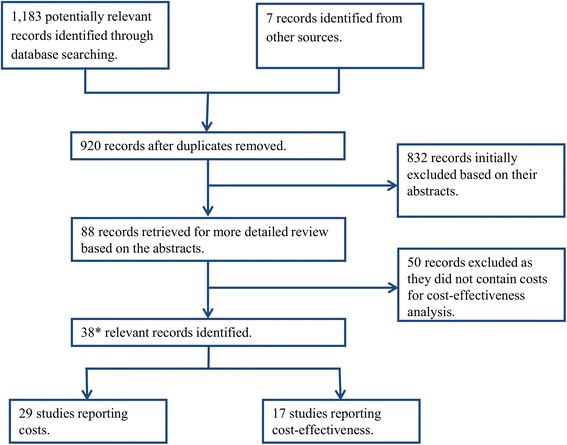
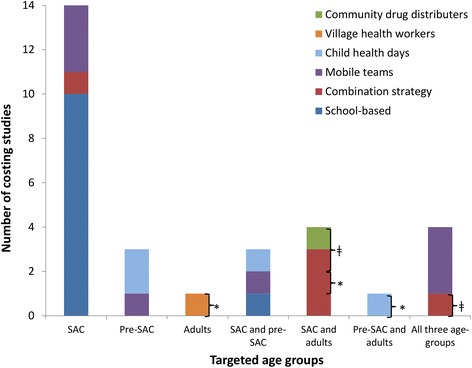
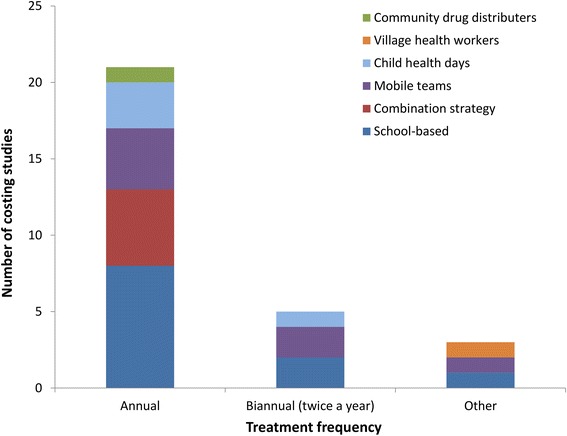
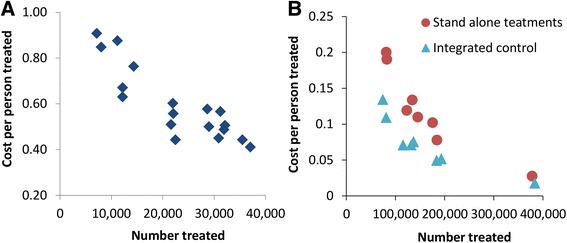
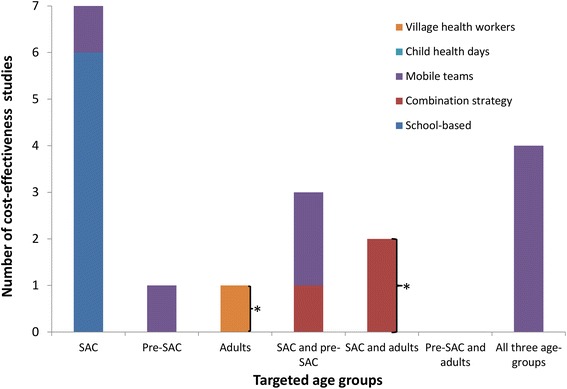
Results: We identified 29 studies reporting costs of STH treatment and 17 studies that investigated its cost-effectiveness. The majority of these pertained to programmes only targeting school-aged children (SAC), with relatively few studies investigating alternative preventive chemotherapy (PCT) treatment strategies. The methods of cost data collection, analysis and reporting were highly variable among the different studies. Only four of the costing studies were found to have high applicability for use in forthcoming economic evaluations. There are also very few studies quantifying the costs of increasing the treatment frequency.
Conclusions: The absence of cost data and inconsistencies in the collection and analysis methods constitutes a major research gap for STH control. Detailed and accurate costs of targeting different age groups or increasing treatment frequency will be essential to formulate cost-effective public health policy. Defining the most cost-effective control strategies in different settings is of high significance during this period of expanding MDA coverage and new resource commitments for STH control.
Figures
References
-
- World Health Organization . Preventive Chemotheraphy in Human Helminthiasis. Geneva, Switzerland: World Health Organization; 2006.
-
- World Health Organization: Prevention and control of schistosomiasis and soil-transmitted helminthiasis, 2002. [http://whqlibdoc.who.int/trs/WHO_TRS_912.pdf] - PubMed
-
- Hotez PJ, Bundy DAP, Beegle K, Brooker S, Drake L, de Silva N, et al. Helminth Infections: Soil-transmitted Helminth Infections and Schistosomiasis. Disease Control Priorities in Developing Countries. 2. New York: Oxford University Press; 2006.
-
- Global Partners Are Taking the “Neglect” out of “Neglected Tropical Diseases” [http://www.gatesfoundation.org/Media-Center/Press-Releases/2014/04/Globa...]
Publication types
MeSH terms
Substances
Grants and funding
LinkOut - more resources
Full Text Sources
Other Literature Sources
Miscellaneous
