Diet-Induced Weight Loss Alters Functional Brain Responses during an Episodic Memory Task
- PMID: 26139105
- PMCID: PMC5644894
- DOI: 10.1159/000437157
Diet-Induced Weight Loss Alters Functional Brain Responses during an Episodic Memory Task
Abstract
Objective: It has been suggested that overweight is negatively associated with cognitive functions. The aim of this study was to investigate whether a reduction in body weight by dietary interventions could improve episodic memory performance and alter associated functional brain responses in overweight and obese women.
Methods: 20 overweight postmenopausal women were randomized to either a modified paleolithic diet or a standard diet adhering to the Nordic Nutrition Recommendations for 6 months. We used functional magnetic resonance imaging to examine brain function during an episodic memory task as well as anthropometric and biochemical data before and after the interventions.
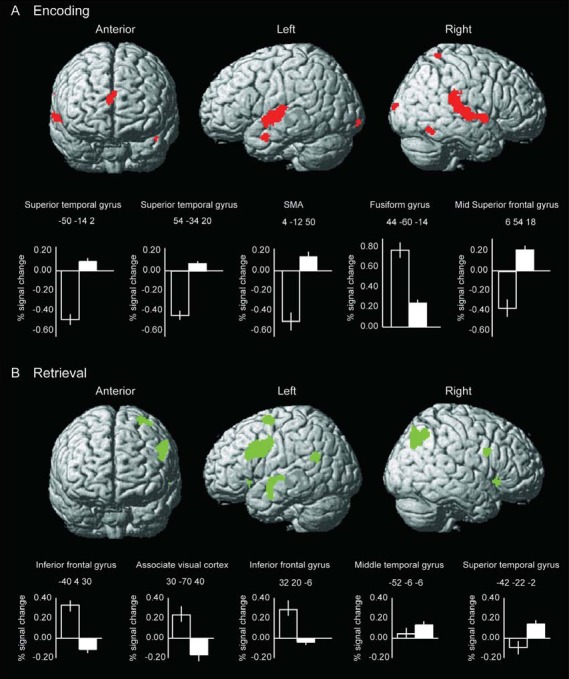
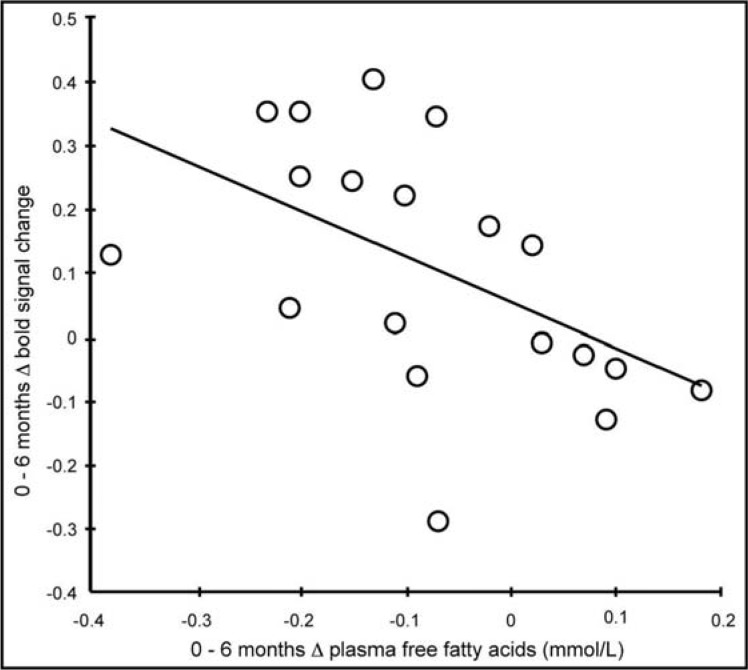
Results: Episodic memory performance improved significantly (p = 0.010) after the dietary interventions. Concomitantly, brain activity increased in the anterior part of the right hippocampus during memory encoding, without differences between diets. This was associated with decreased levels of plasma free fatty acids (FFA). Brain activity increased in pre-frontal cortex and superior/middle temporal gyri. The magnitude of increase correlated with waist circumference reduction. During episodic retrieval, brain activity decreased in inferior and middle frontal gyri, and increased in middle/superior temporal gyri.
Conclusions: Diet-induced weight loss, associated with decreased levels of plasma FFA, improves episodic memory linked to increased hippocampal activity.
Trial registration: ClinicalTrials.gov NCT00692536.
© 2015 S. Karger GmbH, Freiburg.
Figures
References
-
- Finucane MM, Stevens GA, Cowan MJ, Lin JK, Paciorek CJ, Gitanjali MS, Gutierrez HR, Lu Y, Bahalim AN, Farzadfar F, Riley LM, Ezzati M. National, regional, and global trends in body-mass index since 1980: systematic analysis of health examination surveys and epidemiological studies with 960 country-years and 9·1 million participants. Lancet. 2011;377:557–567. - PMC - PubMed
-
- Visscher TLS, Seidell JC. The public health impact of obesity. Annu Rev Public Health. 2001;22:355–375. - PubMed
-
- Norton S, Matthews FE, Barnes DE, Yaffe K, Brayne C. Potential for primary prevention of Alzheimer's disease: an analysis of population-based data. Lancet Neurol. 2014;13:788–794. - PubMed
Publication types
MeSH terms
Associated data
LinkOut - more resources
Full Text Sources
Other Literature Sources
Medical