Transcriptome and ultrastructural changes in dystrophic Epidermolysis bullosa resemble skin aging
- PMID: 26143532
- PMCID: PMC4505166
- DOI: 10.18632/aging.100755
Transcriptome and ultrastructural changes in dystrophic Epidermolysis bullosa resemble skin aging
Abstract
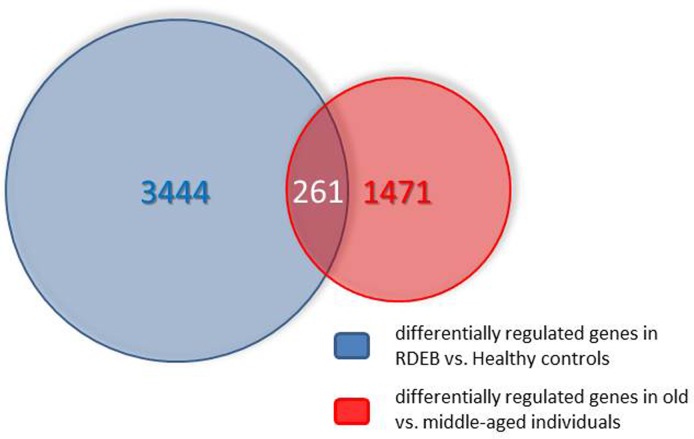
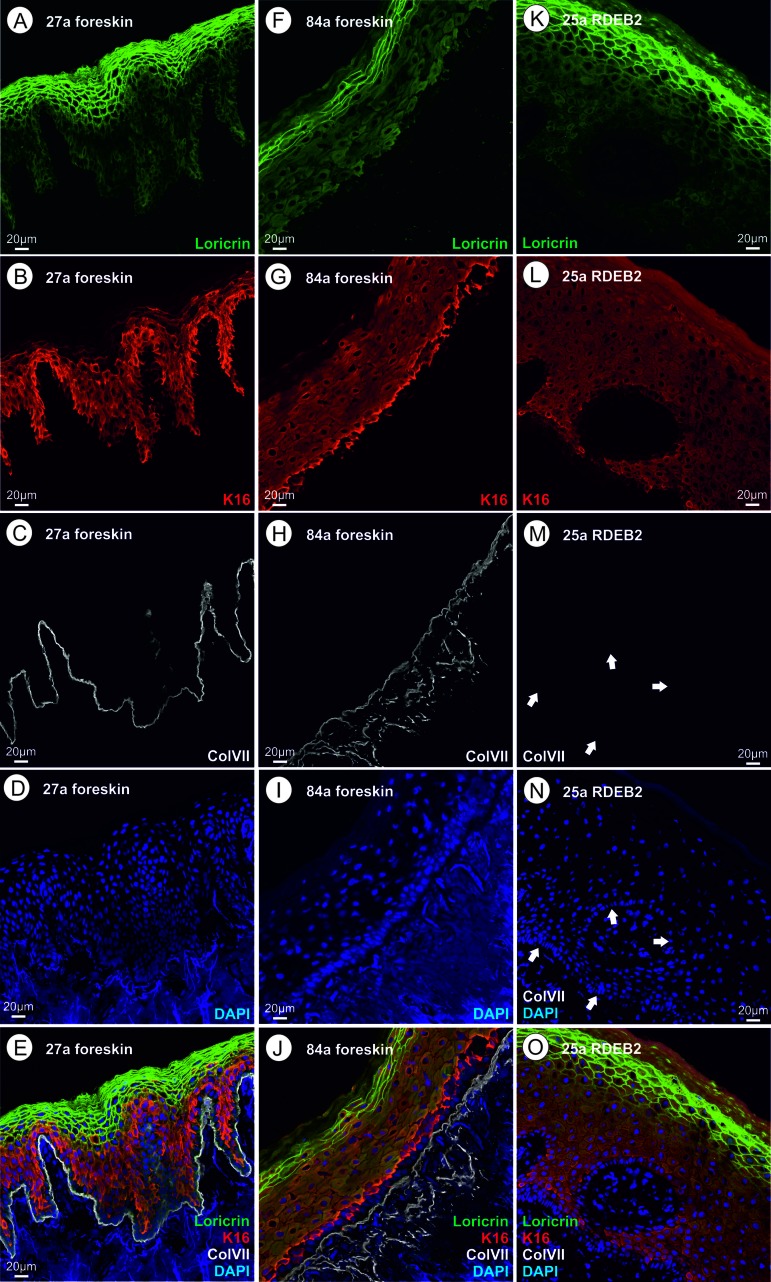
The aging process of skin has been investigated recently with respect to mitochondrial function and oxidative stress. We have here observed striking phenotypic and clinical similarity between skin aging and recessive dystrophic Epidermolysis bullosa (RDEB), which is caused by recessive mutations in the gene coding for collagen VII,COL7A1. Ultrastructural changes, defects in wound healing, and inflammation markers are in part shared with aged skin. We have here compared the skin transcriptomes of young adults suffering from RDEB with that of sex- and age-matched healthy probands. In parallel we have compared the skin transcriptome of healthy young adults with that of elderly healthy donors. Quite surprisingly, there was a large overlap of the two gene lists that concerned a limited number of functional protein families. Most prominent among the proteins found are a number of proteins of the cornified envelope or proteins mechanistically involved in cornification and other skin proteins. Further, the overlap list contains a large number of genes with a known role in inflammation. We are documenting some of the most prominent ultrastructural and protein changes by immunofluorescence analysis of skin sections from patients, old individuals, and healthy controls.
Keywords: bullous skin disease; collagen; immune fluorescence microscopy; keratin; loricrin; microarray analysis of skin aging.
Conflict of interest statement
The authors have no conflict of interests to declare.
Figures
References
-
- Bauer JW, Schaeppi H, Kaserer C, Hantich B, Hintner H. Large melanocytic nevi in hereditary epidermolysis bullosa. Journal of the American Academy of Dermatology. 2001;44:577–584. - PubMed
-
- Baroni A, Buommino E, De Gregorio V, Ruocco E, Ruocco V, Wolf R. Structure and function of the epidermis related to barrier properties. Clinics in dermatology. 2012;30:257–262. - PubMed
-
- Minematsu T, Yamamoto Y, Nagase T, Naito A, Takehara K, Iizaka S, Komagata K, Huang L, Nakagami G, Akase T, Oe M, Yoshimura K, Ishizuka T, et al. Aging enhances maceration-induced ultrastructural alteration of the epidermis and impairment of skin barrier function. Journal of dermatological science. 2011;62:160–168. - PubMed
-
- Ramos-e-Silva M, Boza JC, Cestari TF. Effects of age (neonates and elderly) on skin barrier function. Clinics in dermatology. 2012;30:274–276. - PubMed
-
- Brazma A, Hingamp P, Quackenbush J, Sherlock G, Spellman P, Stoeckert C, Aach J, Ansorge W, Ball CA, Causton HC, Gaasterland T, Glenisson P, Holstege FC, et al. Minimum information about a microarray experiment (MIAME)-toward standards for microarray data. Nature genetics. 2001;29:365–371. - PubMed
Publication types
MeSH terms
Grants and funding
LinkOut - more resources
Full Text Sources
Other Literature Sources
Medical