


A Major Role of DNA Polymerase δ in Replication of Both the Leading and Lagging DNA Strands
- PMID: 26145172
- PMCID: PMC4517859
- DOI: 10.1016/j.molcel.2015.05.038
A Major Role of DNA Polymerase δ in Replication of Both the Leading and Lagging DNA Strands
Abstract
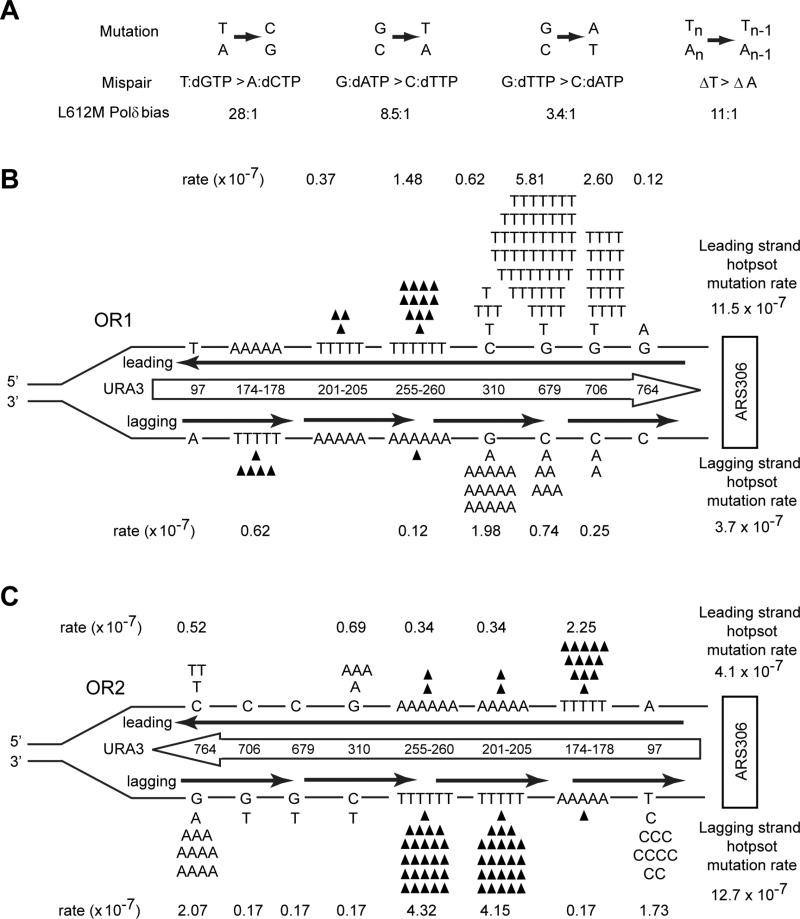
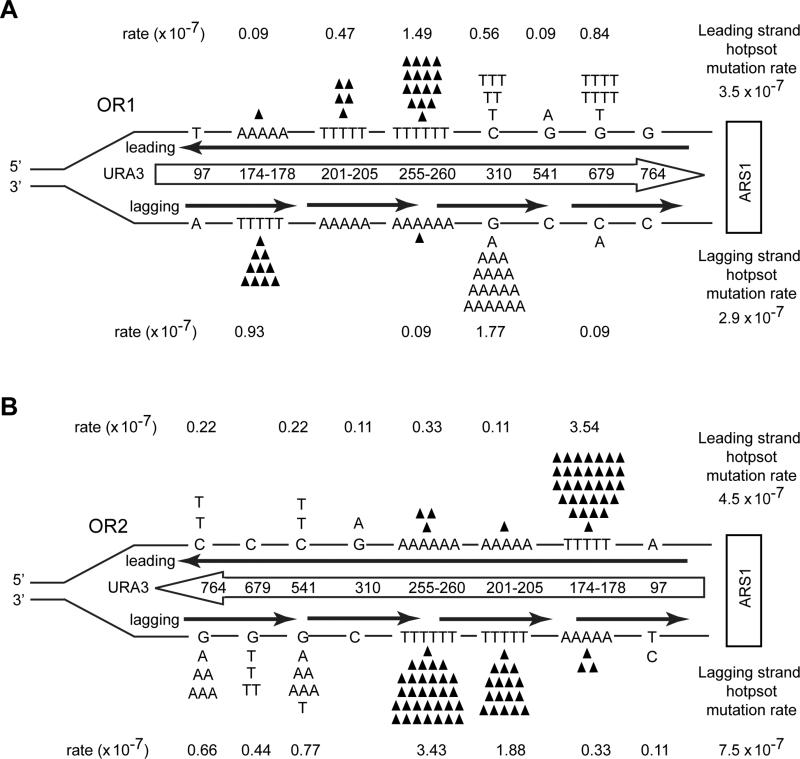
Genetic studies with S. cerevisiae Polδ (pol3-L612M) and Polε (pol2-M644G) mutant alleles, each of which display a higher rate for the generation of a specific mismatch, have led to the conclusion that Polε is the primary leading strand replicase and that Polδ is restricted to replicating the lagging strand template. Contrary to this widely accepted view, here we show that Polδ plays a major role in the replication of both DNA strands, and that the paucity of pol3-L612M-generated errors on the leading strand results from their more proficient removal. Thus, the apparent lack of Polδ contribution to leading strand replication is due to differential mismatch removal rather than differential mismatch generation. Altogether, our genetic studies with Pol3 and Pol2 mutator alleles support the conclusion that Polδ, and not Polε, is the major DNA polymerase for carrying out both leading and lagging DNA synthesis.
Copyright © 2015 Elsevier Inc. All rights reserved.
Figures




Comment in
-
Reconsidering DNA Polymerases at the Replication Fork in Eukaryotes.Mol Cell. 2015 Jul 16;59(2):139-41. doi: 10.1016/j.molcel.2015.07.004. Mol Cell. 2015. PMID: 26186286 Free PMC article.
-
Who Is Leading the Replication Fork, Pol ε or Pol δ?Mol Cell. 2016 Feb 18;61(4):492-493. doi: 10.1016/j.molcel.2016.01.017. Mol Cell. 2016. PMID: 26895421 Free PMC article. No abstract available.
-
Response to Burgers et al.Mol Cell. 2016 Feb 18;61(4):494-495. doi: 10.1016/j.molcel.2016.01.018. Mol Cell. 2016. PMID: 26895422 No abstract available.
References
Publication types
MeSH terms
Substances
Grants and funding
LinkOut - more resources
Full Text Sources
Other Literature Sources
Molecular Biology Databases